“The air was fragrant with a thousand trodden aromatic herbs, with fields of lavender, and with the brightest roses blushing in tufts all over the meadows.”
(William C. Bryant, American poet)
When we think of lavender, we see purple flowers swaying gracefully on long stems and we can almost smell its sweet fragrance. Lavender has to be one of the most loved and well-known plants the world over - and has been for thousands of years! And rightly so because it’s definitely not just a pretty face, it’s the ultimate allrounder. Its flowers, dried or fresh, have that inimitable, very recognisable scent, it’s good for you, it’s a real stunner of a plant and it’s a fantastic go-to for crafty DIY projects and personal, hand-made gifts. And did we mention that it’s got edible flowers and can be used in cooking? The list is endless really, so we’ve gone and picked our absolute favourite ideas and stories on all things lavender and created the ultimate purple inspiration for you.
In short: lavender is an easy-care, sun-loving plant that attracts bees and butterflies, dries beautifully and has been used for its scent for thousands of years. English lavender is the type most used in cooking (always buy culinary grade). Lavender is widely used to help people relax and sleep, although the scientific evidence is still limited, and its essential oil should be diluted and never swallowed. Read on for the main types, how to grow and dry lavender, recipes, and décor and gift ideas.
The History of Lavender
Lavender has been used for over 2,500 years as an ornamental shrub, for its fragrance, in cooking as well as for its therapeutic benefits. It is said that the Greeks used it to ease sore throats, headaches and gastritis. Lavender was also one of the holy herbs used to prepare the Holy Essence and is mentioned in the Bible. Its earliest mentions come from the Mediterranean area and reaches as far back as Ancient Egypt. Folklore has it that Cleopatra used lavender to seduce both Julius Caesar and Mark Antony. While history tells us she definitely seduced both men, surely lavender can’t take all the credit for it. What we do know for certain though is that lavender was revered in those days already because when Tutankhamun’s tomb was opened, archaeologists found traces of still-fragrant lavender! Fast forward close to 2000 years and ladies would hide small lavender pouches in their cleavage to lure in suitors.
Going back to the Romans though. Lavender takes its name from the Latin ‘lavare’ which means ‘to wash’. That makes perfect sense as the Romans used Lavender to scent their baths, beds, clothes and even hair. We can thank them for bringing lavender to the rest of Europe, especially introducing it to Britain and planting it throughout France. It seems, it was love at first sight for the Brits and the French. Ever since, lavender has adorned every classic English cottage garden and southern France would not be the same without its rows and rows of rich purple flowers swaying in a warm summer breeze, as far as the eye can see. 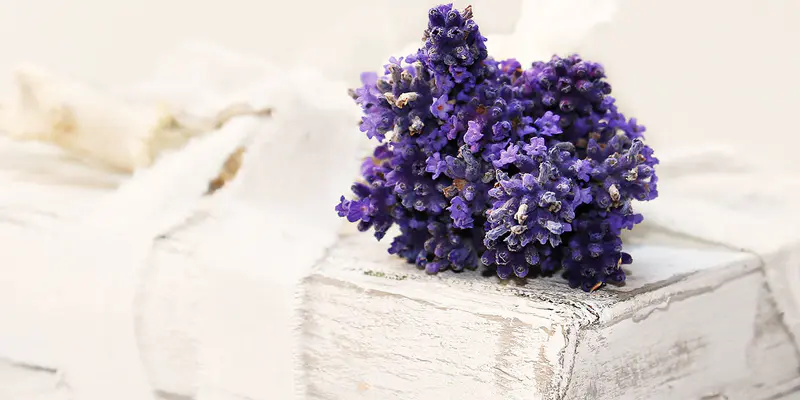
Image by S. Hermann & F. Richter from Pixabay
Types of Lavender
It’s likely that you’ll smell lavender before you even see it. The plant has such a distinctive scent. But did you know that the plant actually belongs to the mint family? There are some forty-odd species of lavender, but we seem to have kept it quite simple and mostly divvied them up into Spanish, Portuguese, French and English Lavender. They are, together with Lavandin, the most popular ones.
English (or common) Lavender
Compared to its French cousin, it is smaller, but has a stronger scent. It’s also more cold-tolerant, which is likely a must for any British resident. It usually blooms from late spring to midsummer and makes a fantastic border or container plant. It’s the most popular of all lavender species, probably because it also produces strong, aromatic oil that can be used in perfumes and soaps, and as a flavouring.
A note on culinary lavender: English lavender (Lavandula angustifolia) is the type most used for cooking and baking, and Munstead and Hidcote are popular culinary varieties. Grosso and Provence (lavandins, a hybrid of English lavender) are also sometimes used, but have a stronger, more camphor-like flavour. Only cook with lavender sold as culinary grade.
French Lavender
Southern France’s lavender farms - the stuff summer dreams are made of! French Lavender can grow up to a metre tall, but its flowers are lighter with a milder scent. They will bloom from spring to autumn and need warmer climates to do really well. French Lavender is grown for potpourris, sachets and of course for perfumes.
Portuguese (or spike) Lavender
This one has an even stronger scent than its British cousin. Its delicate, pale lilac flowers sway on graceful long stems from late spring to late summer. Oil made from Portuguese lavender is widely used in perfumes and soaps.
Spanish Lavender
The flower of Spanish Lavender rewards you with quite the transformation as it grows. Its distinctive white flowers with long ear-like petals change to pink and deep purple as the plant matures. It grows to a medium height, and can tolerate a bit more humidity than its English cousin. It blooms from mid spring to late summer. Spanish Lavender makes a great container plant but is often used in mass plantings. In this species, only the leaves are fragrant and are usually used for essential oils and potpourris but not for culinary purposes.
Our fav species:
Edelweiss, Betty’s Blue, Nana Alba, Miss Katherine, Thumbelina Leigh, Royal Velvet, Hidcote Giant, Kew Head, Ballerina, Fathead, Royal Splendor.
Photo by Rebecca Matthews on Unsplash
How to Grow Lavender
Whether you have your own backyard, have only room for one more pot plant or whether you are looking for some summer inspiration for your balcony, make sure you find a corner to squeeze in lavender. It will add colour and scent to any space. We found a website that has excellent practical gardening tips and awesome ideas, that are easy to follow and cover a range of possibilities. But first. Let us inspire you with these amazing photos of lavender fields around the world!
These days, lavender is cultivated in just about every temperate region across all continents, from Europe to India, Africa to North and South America, and in New Zealand and Australia. It is super easy to grow! Its purple flowers will attract butterflies, bees, and other pollinators to your garden all summer long (see our guide to creating a butterfly garden). Grow lavender in your flower bed, alongside your herb garden or in a container – somewhere where you can enjoy its fragrance up close. When you choose a lavender plant, double check the instructions but in general, lavender is pretty forgiving and if you follow these basic tips for planting it outdoors, you’ll be rewarded with a beautiful bloom for many years.
Light: Your plant loves warmth. It’ll need full sun and well-draining soil. In hot summer climates, afternoon shade may be needed.
Soil: Lavender needs well-draining, low to moderately fertile soil, so no need to add organic matter or fertiliser. It also won’t need mulching, but if you decide to add mulch, use a very fine one. Less is more in this case.
Water: Lavender is drought tolerant and doesn’t need frequent watering, it certainly doesn’t like wet feet. The plant will only need a little extra care and water when it is still young.
Planting Time: That depends on the area you live in, so best to check in with your local garden centre. As a rule of thumb, if you live somewhere with mild winters it’s better to plant your lavender in early autumn so that the roots have time to get established during the cooler winter months and are ready for summer.
Potting lavender: There is not much of a difference in care between potting up your lavender or planting it in your garden. As long as the plant is in a warm and sunny spot and doesn’t get too cold during winter, it will do very well. So, if your winters are on the arctic side, bring your pots inside and let them watch the cold weather from a warm and sunny window sill.
Trimming and Pruning: Harvest your fresh lavender stalks right through summer and use them either fresh or dry; or just deadhead (cut off) spent blossoms to get a second flowering out of the plant. Start pruning the plant once it’s 2 years old. Cut back the woody stems by one-third every spring and you’ll be rewarded with better foliage and flowering.
Our fav gardening ideas:
Why not grow a lavender plant underneath your washing line so that your washing can pick up its lovely scent when drying in a summer breeze?
Grow lavender along a garden path. The plant will love the extra heat reflected from the walkway and it’ll also fill the air with its lovely scent as you brush past it.
Lavender not only attracts butterflies and pollinators to your garden, it’s also a good neighbour to other plants. Because it is so fragrant, beetles and other pests avoid it. Even deer keep away from it.
Lavender pulls off a stunning look all by itself, but will also dazzle as underplanting around roses, or paired with vibrant Californian Poppies or ornamental grasses for example.
Pair it in your herb garden with oregano and rosemary and especially with equally sun-loving, drought resistant plants such as echinacea, sage, or thyme.

Photo by Dana DeVolk on Unsplash
How to Dry Lavender
Drying lavender is super easy. All you have to do is tie your lavender stems, perhaps a dozen or so, together in a bunch, and hang them upside down. Just to make sure the stems won’t fall down, use a rubber band to tie them up because your lavender will shrink slightly when drying. Hang up your bunch of lavender in a dark, dust-free place with good ventilation. If you are looking for more creative ideas on how to dry flowers and how to use them, check out our guide to drying flowers. And if you’re short on time, browse our dried and preserved flowers, delivered same day across Sydney, Melbourne and Brisbane when you order before the daily cut-off. Our guide to caring for dried flowers will help them last.
Our fav tip:
If you’re not using it straight away, store your dried lavender in a glass jar with a tight lid, so that its oils and its fragrance can’t escape. Keep it away from direct sunlight and humidity and it will hold its colour and scent for longer.
The Uses and Benefits of Lavender
“There are some things, after all, that Sally Owens knows for certain: Always throw spilled salt over your left shoulder. Keep rosemary by your garden gate. Add pepper to your mashed potatoes. Plant roses andlavender, for luck. Fall in love whenever you can.”
(Alice Hoffman, American novelist, “Practical Magic”)
The uses for lavender, dried or fresh, are only limited by your imagination! Are you looking for an easy way to spruce up your home and garden, soothing aromas for your bath, an extra lift for your cooking and baking, crafty, beautiful gifts? Lavender is all that and more.
Here are our top ideas for:
Cooking and baking with lavender
Making the most of the goodness of lavender
Lavender DIY 101: Dried lavender home décor ideas
Cooking and baking with lavender
First up and very important:
Less is more when using lavender in your recipes! It can give your dish a wonderful lift but use too much of it and you might feel like biting into a bar of soap! Remember also that the potency of lavender flowers increases with drying.
Find culinary lavender. Avoid eating lavender flowers from florists, nurseries, or garden centres. They will often have been treated with pesticides and are not food crops.
With all that out of the way, let’s get to the fun part and check out all the wonderful uses of culinary lavender. Like some of our most popular herbs, rosemary, sage, and thyme lavender is a member of the mint family. It doesn’t just enhance a recipe, it’ll also look good; no wonder then that lavender, along with fresh edible flowers are making a real comeback in kitchens everywhere. Its flowers and leaves can be used fresh, its stems and buds can be used dried. Of all the varieties, English lavender is the one used most in cooking. It has the sweetest fragrance of them all with light notes of citrus.
It’s time to get experimenting – our fav easy fixes:
As a rule of thumb, in most recipes, rosemary can be replaced by culinary lavender. It’s a particularly nice replacement for rosemary in bread recipes.
It is lovely paired with fennel and oregano and its cousins rosemary, thyme and sage
For a pop of (unusual) colour, doll up your salad with a couple of lavender flowers. We are eating with our eyes as well so they say!
Put some lavender and sugar together into a sealed glass jar. After a couple of weeks, you’ll have slightly scented sugar which will add a lovely note to your baking or even a custard, sorbets and ice-cream.
Don’t throw away the stems! Use them for your fruit kebabs or even shrimp or meat kebabs for your next summer BBQ.
And whilst we’re talking summer BBQ: pop a lavender flower in your glass of champagne. It not only tastes good, but it also looks pretty.
If you are curious about culinary lavender and are ready to give it a go, here are some baking and cooking recipes for you.
Our fav lavender recipes on the web:
How to Cook With Lavender so Your Food Doesn’t Taste Like Soap | Bon Appétit. Not just informative, but also fun to read with a couple of delicious recipes.
Culinary Lavender, Whats Cooking America. This one doesn’t just have a raft of sweet and savoury recipes; it also talks about other uses of lavender and links to a great piece on edible flowers.
Blackberry Lavender Cake | Sally's Baking Addiction. We’ve added this one because it’s simply high tea, birthday and Mother’s Day worthy (nudge, nudge, wink wink)! And because we’ve used Sally’s recipes before – so far they were as delicious as they looked!

Photo by Olga Tutunaru on Unsplash
Lavender and Wellbeing: What We Know
Lavender must be the ultimate R&R plant, and people have used it for thousands of years. Its oil is used in aromatherapy and natural beauty products, and dried lavender flowers are often used in sachets and potpourris to help with sleep and relaxation. Research into lavender is ongoing and the evidence is still limited, so think of it as a lovely extra, not a treatment. Talk to your doctor or pharmacist about any health concern.
People use lavender for:
Relaxation and calm: a few drops of lavender oil in a diffuser, a lavender-scented candle or a bunch of dried lavender in your bedroom can make a space feel calmer. Some studies suggest lavender’s scent may help ease feelings of stress, but it is not a treatment for anxiety or depression. If you’re struggling, please speak to your GP.
Better sleep: lavender has scented bedlinen for centuries, and many people find its aroma helps them unwind at bedtime. Keep a small sachet of dried lavender in your linen drawer or by your pillow.
Aches and pains: lavender oil is a traditional remedy for headaches and muscle aches, but there is little strong evidence that it works. See a health professional for ongoing pain.
Skin care: lavender essential oil is a popular ingredient in cleansers, toners and moisturisers. It can irritate sensitive skin, so always dilute it and patch-test first, and see a doctor for burns, wounds or skin conditions.
Researchers have also looked at lavender for memory, blood pressure and hair growth, but these findings are early and shouldn’t be relied on.
Photo by Christin Hume on Unsplash
An ode to lavender oil
Lavender essential oil deserves its own mention. It is a highly concentrated extract, so a few drops are all you need. It is most often breathed in (in a diffuser or a bowl of steaming water) or diluted in a carrier oil before going on your skin. Please don’t swallow essential oils, and keep them away from children and pets. Lavender oil can cause headaches or a skin rash in some people, so stop using it if you notice any side effects, and check with your doctor first if you are pregnant, breastfeeding or taking medication.
Our fav lavender R&R ideas:
For all things that are good for your body and soul, head to the The Nerdy Farm Wife post. You’ll find some creative ways to use lavender for nifty potions and luxurious lotions. Easy recipes, amazing ideas – not nerdy at all!
And for an instant moment of calm, why not fill a glass jar with dried lavender flowers with a tea candle on top. So easy, so pretty, and so relaxing.
Home Décor With Dried Lavender
Have we mentioned that dried flowers are the new best thing since sliced bread? Pampas Grass has a cult following by now, interior designers swear on it, and dried floral arrangements are taking the events scene by storm. So much so, that you can now get an amazing range of professionally dried, long-lasting flowers and bouquets at the click of your mouse. And lavender is right there in the thick of it all. Lavender has always been a go-to for decorations and home decor, no doubt about that, but the dried flowers buzz and the resurgence of boho chic has given it a whole new boost. Where pampas grass will deliver the statement piece you are looking for, lavender will deliver the accent, the finishing touch.
You don’t need a French farmhouse to make lavender look good. The flowers, dried or fresh, will always shine in a bunch all by themselves, but also make a great companion to other dried blooms and grasses – all with the added bonus of lavender’s sweet scent. Have a look at the dried flowers the team at Flowers Across has created, or read our guide to using dried flowers in your home décor. The cool thing about your bunch of lavender is that it’ll add charm and calm to any room. Place it in your bedroom for a good night’s sleep, in your bathroom for some relaxation or your hallway for a warm welcome home.
Our fav home décor ideas:
For a contemporary look, pair your dried lavender with a few sprigs of eucalyptus for contrasting shape and complementary colour. Pop it into a silver or glass vessel. No water needed.
Mosquitoes and moths really don’t like the smell of lavender. A bunch of lavender in your bedroom not only looks good, it may also help keep them away. For more ideas, see our list of mosquito-repellent plants and flowers.
Still need more inspo? Check out these décor ideas here.

Photo by Kenny Timmer on Unsplash
Lavender DIY 101: Dried lavender home décor and gift ideas
Home décor and lavender DIY goes kind of hand in hand. There are so many crafty ideas that will add a nice touch to your place, complete a festive occasion or make a lovely, personal gift. We've gone and picked some of the ideas we felt were the niftiest, craftiest, and happiest ones.
Our fav gift and DIY ideas
“Love Actually” comes to mind: For next level gift wrapping, add a handful of dried lavender buds or sprigs of fresh lavender to your gift wrapping. It’ll look pretty and will smell lovely for weeks.
Make your very own aromatic wreath with dried lavender. It is super easy to make and will add a lovely welcome to your front door or an eye-catching, fragrant centre piece to your Sunday brunch table. Why not make a lavender wreath for Christmas? The purple flowers will match well with the classic Christmas greens and reds. For the ‘how to’, and a couple of other ideas, check out the video on the HGTV website here.
We stumbled across this website here and were inspired by the range of ideas. It’ll not give you the instructions, but the nudge, the unexpected, the rustic, the simple but effective, and the wow. We especially loved the table decorations!
We found this lavender lime potpourri recipe and thought we had better share it with you! Zesty, calming and pretty.
You’d be wrong to think lavender sachets are something only your grandmother would have used in her linen cupboard! We can’t stress the calming qualities of lavender enough; so to help with getting some serious zzzzs and to keep your bedsheets and towels fragrant and fresh, there is still nothing quite like a little sachet of dried lavender popped in between them. Check out these little sachet cuties here. They come with instructions. All you need are some scraps of pretty fabric, lavender and a few other bits. They’ll make adorable presents as well!
Short on time? Our Lavender & Green Tea Bath Soak, Lavender & Orange Blossom Room Spray and Lavender Eye Pillow make easy lavender gifts.
Right, we’ve given you the lowdown on lavender – it’s time to get creative. Whether you’re a whizz in the kitchen, have two green thumbs, are a DIY genius or are looking for a bit of R&R, give lavender a go. And on that note, we’d really like to hear about your lavender creations, warts and all. With pictures if possible. Which one was your favourite recipe? What have you done with your dried lavender? What are you using your lavender essential oil for? How do you keep your lavender flowering? Let us know and your feedback, tips and ideas will ultimately create ‘the not so secret benefits and uses of lavender’.
Photo by rocknwool on Unsplash
More Flower Guides You Might Like
Love cooking with flowers? Read our guides to dried edible flowers and flowers you can eat. Have a cat or dog? Lavender isn’t pet-safe, so see our list of pet-safe flowers for cats and dogs.