Sydney – what a place to live or visit! It’s known for its stunning beaches, picturesque harbour, and eye-catching Opera House. But what many visitors – and even Sydney-siders – overlook are the city’s diverse and often majestic trees grouped in parks, lining streets and adding charm to neighbourhoods. They are very much part of the city’s culture and heritage.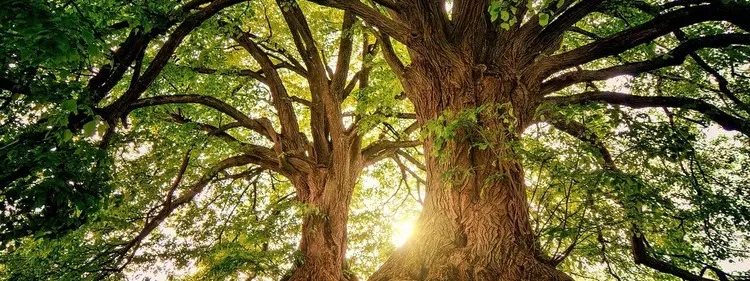
Image by jplenio from Pixabay
Sydney’s Iconic Trees at a Glance
Moreton Bay fig (Ficus macrophylla): giant shade trees. See them in the Domain, along Anzac Parade in Moore Park and in Centennial Park.
Jacaranda (Jacaranda mimosifolia): purple blooms from late October to November. Try McDougall Street in Kirribilli or the University of Sydney quad.
Sydney blue gum (Eucalyptus saligna): tall native gum with a smooth, pale trunk. See it in Centennial Parklands and at the University of Sydney.
Norfolk Island pine (Araucaria heterophylla): the classic seaside tree. Look along Sydney’s beachfronts and Lang Road in Centennial Parklands.
Southern magnolia (Magnolia grandiflora): big, scented white flowers in summer. Look in Wynyard Park and along Elizabeth Bay Road.
Why Sydney’s Trees Matter
Walk along the streets of Surry Hills, and you may find Golden Rain Trees creating a natural arch along the road. Stroll through the leafy suburbs of Balmain or Queens Park, or check out the Domain with its massive Moreton Bay Figs. And from late October through November, the purple blooms of the jacarandas put on a show like no other.
Green spaces, tree canopies and opportunities to connect with nature are also vital to our health and well-being. There’s a genuine drive to ditch screen time for green time, green desking, green walking and looking at simple ways to increase the time we spend outdoors, slow down, get some fresh air and exercise. And Sydney offers plenty of beautiful parks, tree-lined streets and recreational areas to do just that.
If you are visiting Sydney or simply looking for a fantastic picnic spot, a trip to the stunning Centennial Parklands or the Western Sydney Parklands should be on top of your list! But many of Sydney’s suburbs are also a treasure trove of majestic trees and plantings. In fact, the city has a detailed plan to increase canopy cover, help biodiversity, create habitat for native fauna and add tree species to the urban landscape that will also thrive in street environments.
On the other hand, there are also many ways to bring nature inside. A simple way to green up your indoors is with some beautiful, easy-care pot plants. To start, our team at Flowers Across has a fantastic range of indoor plants for you.
But first, let us take you on a tour of Sydney’s most iconic trees. In no particular order, here are five of the most stunning tree species that call Sydney home. Revered by many, they are all integral to the city’s urban landscape.
The Moreton Bay Fig (Ficus macrophylla)

Photo by Alex Proimos from Sydney, Australia on Wikimedia Commons, CC BY 2.0, cropped

We will start the list with one of the city’s most iconic trees. Native to the east coast of Australia, it was planted widely in Sydney’s parks from the 19th century and can be found in several parks and public spaces around the city and its suburbs.
There’s a reason why you’re unlikely to find it on anyone’s balcony – unless someone grows it as a bonsai tree! This impressive fig tree can grow up to 50 metres tall, and its canopy can also span up to 50 metres. It needs space and is one of the best ‘picnic trees’ with the scent of purple figs in the air and its large canopy providing ample shade.
It’s a beautiful tree with a thick trunk and large, heart-shaped leaves. But it’s the small purple figs that make this tree so special. Edible but not particularly interesting for our palates, its fruit is a favourite and an essential food resource among local birds. In fact, one study showed that the Moreton Bay Fig tree attracts well over 80 bird species. Common ones are Figbirds (the name kind of gave that one away), Currawongs and doves. The tree is not just a favourite with birds, though. The fruit often attracts fruit bats and possums; Brush Turkeys and Wonga Pigeons pick the figs on the ground.
Where to see Moreton Bay figs in Sydney
If you head over to Moore Park, you will find Port Jackson and Moreton Fig trees lining Anzac Parade. The trees were popular with early settlers in Australia as they would provide shade for their cattle and their homes. In Moore Park, Charles Moore, then Director of the Botanic Gardens, planted the fig trees along Anzac Parade dating all the way back to the 1860s.
Within the Centennial Parklands, you will also find a trio of massive Moreton Bay Fig trees, thought to be older than the park itself. We reckon they’ll make the perfect spot for a summer’s day out.
Did you know? Sydney’s significant tree register
The City of Sydney has gathered a fantastic register of significant trees. You may say that this sounds slightly on the dull side unless you are an avid arborist. But, we reckon, it’s well worth checking it out. And here’s why: Some of the most distinctive and impressive Moreton Bay Fig trees were planted as early as the 1850s and usually accompanied notable buildings, such as the University of Sydney or the Victoria Barracks. They were trees of choice when public gardens and parks were created and lined significant streets such as Elizabeth Bay Road or Observatory Hill. And that makes the register a good guide through some of the history of Sydney as well.
The Jacaranda (Jacaranda mimosifolia)

Image by pattyjansen from Pixabay
Also called “the Dream Tree”, the Jacaranda is another famed and very recognisable tree in Sydney, loved for its vibrant purple flowers that bloom for a few weeks from late October to November.
Jacarandas in bloom are celebrated and revered similarly to the cherry blossoms in Japan. For a few short weeks, the streets of Sydney, its parks and reserves bust out in a purple haze – so much so that in some areas, you can join Jacaranda walking tours and celebrate the arrival of their blooms at various events.
These trees usually grow 10 to 15 metres tall, with a canopy just as wide, like a massive, elegant umbrella. Jacarandas are native to South America but have become a beloved symbol of Sydney’s natural beauty – ringing in the warmer months with a most stunning display of blooms and a blue and purple petal carpet blanketing lawns, sidewalks and streets. At the same time, that blanket of fallen petals is perhaps the number one reason not to grow a Jacaranda tree near a pool!
“This most beautiful flowering tree is a native of Brazil, and no garden of any pretentions can be said to be complete without a plant of it. The specimen in the Botanic Garden is well worth a journey of 50 miles to see. Its beautiful rich lavender blossoms, and its light feathery foliage, render it the gem of the season.”
(Sydney Morning Herald, 5 December 1868/ MHNSW)
Where to see jacarandas in Sydney
Google “Jacaranda Walks Sydney”, and your computer will spit out close to 3 million results. For a few weeks from late October, some of Sydney’s streets are abuzz with revellers walking under the purple canopy of the Jacarandas and just about risking their lives to get that perfect Instagram moment.
McDougall Street in Kirribilli and the University of Sydney quad are the best known. Hunters Hill, the Royal Botanic Garden, Camden, First Fleet Park at The Rocks and many other streets and suburbs are also perfect for admiring these purple wonders.
Further afield, Grafton in northern NSW holds a whole jacaranda festival, perfect for a road trip. The Urban List Sydney has compiled a great list of the best spots in and around Sydney and its suburbs, with fantastic imagery to prove their point.
Did you know? Jacarandas and Sydney
Jacarandas aren’t native to Australia, but they have a long history here. The first trees arrived in the 1800s, and they were planted widely across Sydney in the early 20th century, in streets, schools and backyards.
Have you ever wondered where the name ‘Jacaranda’ came from? The name comes from the Tupi-Guarani languages of South America, where the tree is native. The flowers have a mild, sweet scent that some say resembles grape soda.
The Sydney Blue Gum (Eucalyptus saligna)

Photo by Poyt448, Peter Woodard on Wikimedia Commons, CC BY-SA 4.0, cropped

“The gum tree is Australian, as Aussie as can be,
And there’s no more Australian than the eucalyptus tree.”
(Francis Duggan, The Gum Tree is Australian
What is a Eucalyptus tree doing on this list? It is such a common tree in Australia, with over 700 species recorded. However, we felt gum trees are quintessentially Australian, and the Sydney Blue Gum deserves its place in our top five – not just for its name, but because it is simply quite spectacular.
The Sydney Blue Gum is a good-looking and tall native tree that grows mostly within 120 km of the Australian coastline. Its look surely must have contributed to its name: the tree’s trunk is a striking pale blue-grey. Its young branches and leaves do have a bluish tint, which becomes more pronounced as the foliage ages.
People also love the Sydney Blue Gum Tree for its stunning flowers, which bloom in clusters from December through to February/March. The flowers are creamy white in colour and are rich in nectar, attracting birds, bees and butterflies. Bird species such as the rainbow lorikeets, cockatoos and honeyeaters use the tree for nesting and foraging.
Where to see Sydney blue gums
Although Blue Gum trees are dotted all around the city’s parks and recreational areas, it’s worth checking out the various gum species at the Centennial Parklands. Immerse yourself in this beautiful woodland and forget you are within the Sydney city limits. And if you happen to be near the University of Sydney, the trees there were planted in the late 1800s, so they are well over 100 years old.
How about celebrating Australia’s National Eucalypt Day with a true Blue Gum experience? We highly recommend a trip to the Blue Gum Forest in Blue Mountains National Park, a magical stand of towering blue gums in the Grose Valley. A truly stunning part of New South Wales!
Did you know? Eucalyptus through history
People have long used Eucalyptus trees for their wood and medicinal properties. In traditional Aboriginal medicine, people used them for their antiseptic and anti-inflammatory properties. European settlers later recognised its commercial value, utilising its timber for construction, furniture and paper production. These days, people commonly use the Blue Gum tree’s wood for outdoor furniture, decking, veneer, and other purposes. Eucalyptus leaves, of course, have become a very popular aromatherapy oil.
The Norfolk Island Pine (Araucaria heterophylla)

Photo by David Edwards on Wikimedia Commons, CC BY 3.0, cropped

As the name suggests, this tree is endemic to Norfolk Island. However, this iconic evergreen has found its second home in Sydney, becoming very much part of the city’s landscape over time. Captain James Cook recorded the tree when he visited Norfolk Island in 1774, on his second voyage. Early British settlers introduced the Norfolk Island Pine to this region in the late 18th century. Captivated by its beauty, it soon became a popular choice for landscaping and coastal planting.
Norfolk Island Pines are easily recognisable due to their symmetrical, pyramid-shaped crowns and distinct, overlapping branches. Their towering height and striking appearance have made them quite a popular choice for urban landscapes. But it’s not just their ornamental shape that makes these trees stand out in a crowd. Native to Norfolk Island, they thrive in coastal areas with mild climates. They have adapted to withstand salt spray, strong winds, and poor soil conditions. Due to their shallow root system, you’ll find them most commonly growing in sandy or rocky soils near the coastline. Overall, Sydney provides the perfect habitat for the Norfolk Island Pine and makes it feel right at home.
This tree plays a crucial role in attracting wildlife, providing habitat and food sources for quite a few animals. Its dense foliage provides shelter for birds such as the Tawny Frogmouths, lorikeets and kookaburras; they use its branches for perching spots or nesting. The seeds of the pinecones of the Norfolk Island Pine attract native animals such as possums and parrots.
Where to see Norfolk Island pines in Sydney
Probably one of the most recognisable trees because of its shape and slightly twirly branches, Norfolk Island Pines were quite fashionable trees. Vaucluse House is a house and park well worth a visit, with or without a Norfolk Island pine: it used to have a beautiful one in its pleasure garden! These days, you’ll find Norfolk Island Pines all along the coastline, adorning parks and green spaces.
However, some of the most majestic Norfolk Island Pines are standing tall and proud in the Centennial Parklands, along Lang Road and Federation Way, as well as on Moore Park Golf Course. These grand old dames are over one hundred years old.
Did you know? It’s not a true pine
Tricked you! Despite its name, the Norfolk Island Pine is not a true pine but belongs to the Araucariaceae family. We don’t know about you, but we’re not too worried about which family it belongs to. It looks like a pine, feels like a pine and is an overall eye-catching tree.
The Southern Magnolia or American Bull Bay (Magnolia grandiflora)

Photo by Ianaré Sévi on Wikimedia Commons, CC BY-SA 3.0, cropped

Although people can find this grand dame of a tree all around the globe, we just had to include it in our top five. The Southern Magnolia – this elegant beauty – is one of our all-time favourite trees, and Sydney has a whole lot of them.
A compact evergreen with large, glossy leaves, it grows well in Sydney’s climate and looks stunning all year round. It’s not necessarily a shade tree like a Jacaranda, which usually has a wide, umbrella-like canopy. But its large and dense foliage can create privacy and a green outlook year-round.
But the real treat is its fragrant, creamy white flowers, which bloom from late spring through summer. These Magnolia flowers live up to their name; they truly are ‘grand’. Scented and up to 30 cm large, they add a lovely hint of perfume to warm summer evenings.
This magnolia is quite a global citizen. Native to the Southeastern United States, it was introduced to Britain in the early 18th century and, from there, likely found its way over to Australia. However, Pierre Magnol, a French botanist from Montpellier, lends his name to it.
Let’s get back to Sydney, though, where Magnolia grandiflora is not only an ornamental tree in many parks and green spaces but is also a bit of a backyard favourite.
Where to see southern magnolias in Sydney
Sydney is quite a green city and is working on developing even more natural spaces, outlooks and shelters. A tree master plan is in place to improve biodiversity, adapt to future climates, and use the right trees for the right environment. All up, the future is looking pretty green.
But some of the Magnolias in Sydney were planted well over 100 years ago. The most striking and oldest ones have been added to the City of Sydney Significant Tree Register. It’s worth checking out as it will be a great resource when working out your Magnolia tour through the city.
As with many of the other trees that made it onto the register, you can find many magnificent Southern Magnolias planted near historic buildings and significant public services and along some of the older streets of Sydney. For example, Wynyard Park is the home of a Magnolia grandiflora alongside various majestic pine, fig and oak trees. Significant trees, planted around 1880, also surround the Royal Prince Alfred Hospital. If you are already on the way to check out the Moreton Bay Figs in Elizabeth Bay Road, you’ll also find what looks to be the oldest American Bull Bay Magnolia tree at No 97. It was planted in 1870.
Did you know? Magnolias are ancient
The timber of a Magnolia grandiflora is quite hard and has been used to make furniture, veneer and pallets. Magnolias are also one of the oldest groups of flowering plants. Their ancestors appeared before bees did, which is why their tough flowers are mostly pollinated by beetles.
Final Thoughts
With our daily lives seemingly getting busier and our personal spaces, workplaces and apartments getting smaller, green spaces are more popular than ever. This is especially true for city dwellers.
Spending time in nature, exercising and filling your lungs with fresh air has become a daily habit for many Sydney-siders. And the city has recognised greenery’s vital role in our well-being and happiness. In Sydney, you don’t have to go far to find a leafy, green spot for some time out, a shady tree for your lunchtime break, or a park to walk your dog, have a game of frisbee with mates or get in a walk and catch up with your bestie.
Of course, trees are only part of this natural landscape; after all, Sydney’s beaches are world-famous and offer many opportunities to relax, let your soul dangle and replenish your energy levels.
But unlike an ocean, trees can form a landscape, add shape and accents to a park or garden, and reflect time and history. They can ring in a season. You can string fairy lights through a tree, hang a swing from its biggest bottom branch or build a hut in it. You can create memories.
Some of Sydney’s trees are well over 100 years old, their gnarly branches and wide trunks a testament to the times they’ve stood there – we are sure they’d be able to tell quite a few stories.
Whether it’s a fig in the Domain or a jacaranda down your street, there’s a tree with a story near you.
Want more trees? Read our guide to Australia’s top evergreen trees. For what’s flowering around the city in spring, see our guide to spring flowers in Sydney, or get to know Australia’s native flowers.
And if you’d like to bring a little of the outdoors in, browse our indoor plants or our native flowers in season now.