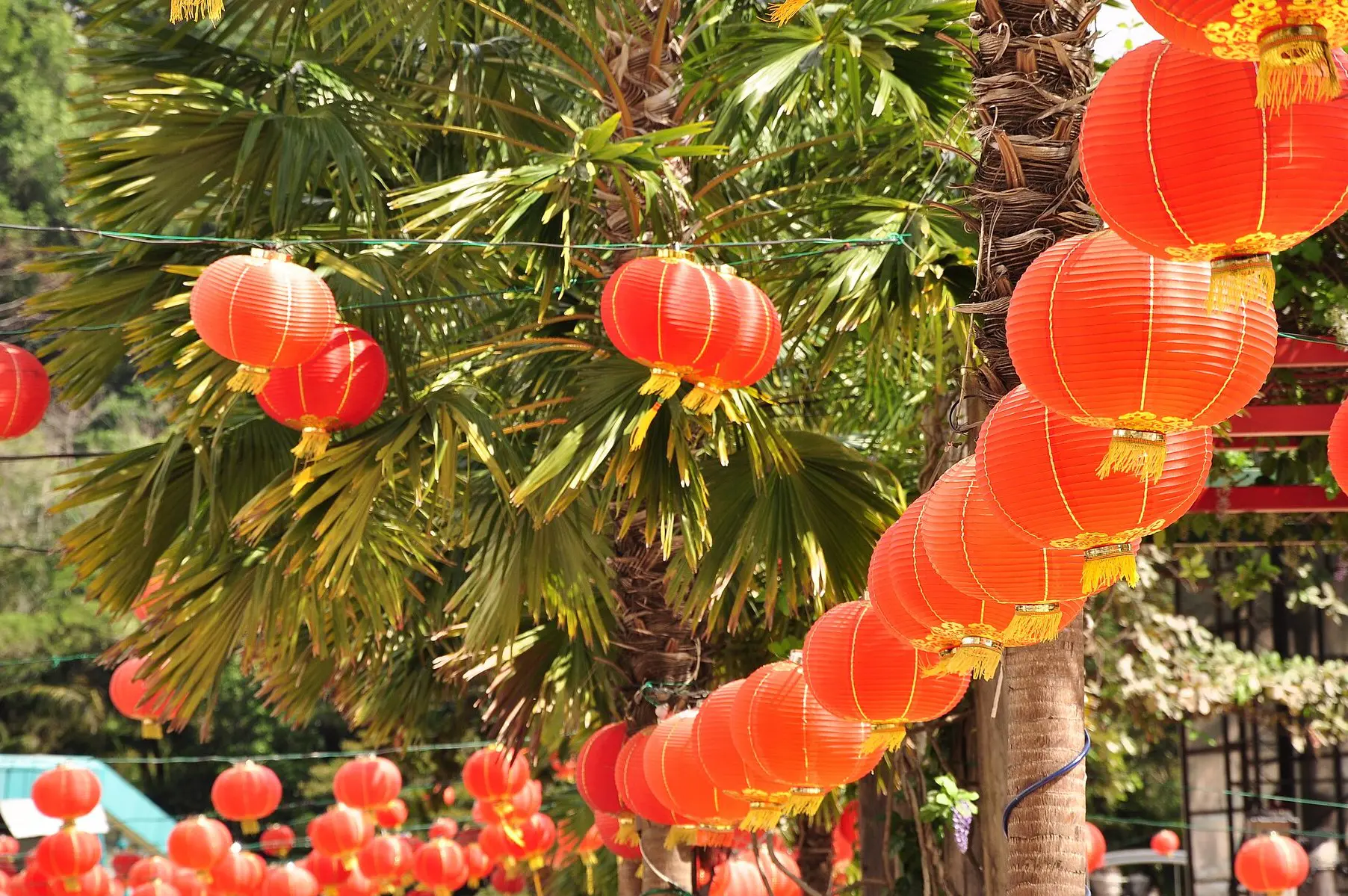
Photo by Dcubillas on Wikimedia Commons, CC BY-SA 3.0, cropped

In short: the best Lunar New Year flowers are orchids, narcissus, peonies, plum blossom and red or gold blooms, and popular plants include kumquat trees, jade plants and kalanchoes. Avoid white and yellow chrysanthemums and all-white arrangements, which are linked with funerals.
Bright lights, colourful lanterns, parades, music, and the night air punctuated with the sounds of firecrackers flashing across the sky! Lunar New Year is one of the most exciting events of the year. Its fifteen days of festivities make it one of the longest New Year celebrations in the world. Lunar New Year flowers are popular, as are many traditional ways to celebrate this wonderful time of year.
So, what is Lunar New Year, how is it celebrated, and why do flowers matter so much? This guide covers all of that, including the best Lunar New Year flowers and plants to give and what they mean.
When is Lunar New Year?
Lunar New Year, also known as Spring Festival, falls on a different day each year, between late January and mid-February, because its date is based on the lunar calendar. In 2027 it’s Saturday 6 February, the Year of the Goat, and celebrations run 15 days to the Lantern Festival on Saturday 20 February.
In contrast to a number of other East Asian countries, the Chinese community celebrates New Year on the second new moon after the beginning of the new lunar year and not the first new moon. This is due to the slightly different way in which the Chinese lunar calendar counts the lunar months.
Lunar New Year Traditions
Lunar New Year is the most important festival on the Chinese calendar. Every year hundreds of millions of people travel home to reunite with loved ones and celebrate the New Year, often called the largest annual human migration in the world.
Lunar New Year festivities last until the first full moon of the lunar calendar, culminating in the Lantern Festival. Over the 15 days, families visit each other, share food, exchange gifts, pray and carry out other ceremonies.
The festival also marks the start of spring, traditionally the time for farmers to begin planting, so people pray for a good harvest and cleanse themselves of any bad luck from the year before.
Avoiding Poverty and Bad Luck
In the days leading up to Lunar New Year, people clean their houses from top to bottom to get rid of all the dust. In Mandarin, the word for ‘dust’ sounds like the word for ‘old’, so sweeping it away clears out the bad luck of the previous year.
Cleaning is forbidden on the first day of the New Year, so it must be finished by midnight the night before. Sweeping or even washing dishes on New Year’s Day is believed to sweep the new luck away. Cleaning resumes on the second or third day.
Washing or cutting hair, using scissors or knives, breaking crockery, lending or borrowing money and arguing are also avoided, as they are thought to chase away good luck.
Inviting Wealth and Good Fortune
To bring good luck and prosperity, families eat symbolic foods such as dumplings, fish and rice cakes, display oranges or mandarins, wear new clothes and set off firecrackers. The most important custom is handing out red envelopes filled with money to children and unmarried family members.
The luckiest colours in Chinese culture are red, green and gold. Red is the colour of choice for most celebrations because it symbolises good fortune and happiness, and people whose animal sign matches the new year traditionally wear red.
Photo by Kenny Louie on Wikimedia Commons, CC BY 2.0, cropped

Lunar New Year in Australia
Asian communities across Australia have a long and proud history of celebrating Lunar New Year. Melbourne, Sydney and Brisbane’s Chinatowns host market and food stalls, lion and dragon dances, cultural performances and fireworks, with events in the suburbs and regional cities too.
Most families also gather for a reunion dinner on New Year’s Eve, where gifts are exchanged. For some, it’s the only time all year they see certain relatives.
Flowers are one of the most important gifts during Lunar New Year. Flowers represent good luck and fresh beginnings. Therefore they are found everywhere during the celebrations: adorning shops and offices, inside homes as decoration, in religious ceremonies, and given as gifts to loved ones.
The Best Lunar New Year Flowers and Plants
In Chinese culture, a flower is not just a flower. They have specific meanings based on their shape, colour, and history. Therefore, when gifting flowers during a particularly auspicious time as Lunar New Year, it is important to know what they symbolise to avoid sending the wrong message. Below are the best flowers to give for Lunar New Year and their meanings.
Orchids

Photo by Sally V on Wikimedia Commons, CC BY-SA 4.0, cropped

Elegant, delicate, and beautiful, orchids are the most popular flowers for Lunar New Year. Not only do they represent wealth and sophistication, but they also carry an additional meaning of love, unity, and fertility. Known in Mandarin as Lan Hua, orchids are great gifts for weddings, baby showers, and to young married couples.
With their connection to grace, beauty and affection, orchids also make a lovely gift for someone special. Demand is high at Lunar New Year, so order early. Choose from our orchids, from bouquets to potted orchids that last for weeks. Want to keep yours flowering? See our orchid growing guide for beginners and orchids from around the world.
Narcissus or Chinese Sacred Lily

Photo by KENPEI on Wikimedia Commons, CC BY-SA 3.0, cropped

In China the narcissus blooms naturally in January and February, which makes it a particularly auspicious flower for Lunar New Year. It is considered especially lucky if it flowers on the first day of the new year, as it signals abundance for the year ahead. In Australia narcissus flower in late winter and spring, so for Lunar New Year they’re grown from bulbs indoors or bought in bud.
Also known as the Good Luck Lily or the Water Fairy Flower, the Narcissus is actually not a lily at all but a daffodil. It is commonly planted through its bulbs or via division and its delightful fragrance gently infuses the space that it is in, setting a lovely mood for a heart-warming time with family and friends.
Peonies

Photo by Nathanieljoyce on Wikimedia Commons (CC0), cropped

Referred to as the ‘monarch of flowers’ in Chinese culture, the peony is central to Lunar New Year. It symbolises peace, prosperity, and charm and occurs in both pink and red colours. The red ones, of course, are deemed the more auspicious of the two. Peonies are so associated with Lunar New Year that they are printed on the cover of most red envelopes that are handed out during the celebrations.
Kalanchoes

Photo by Marcelochal on Wikimedia Commons, CC BY-SA 4.0, cropped

To usher in wealth and prosperity to a home, consider gifting someone kalanchoes. They come in various colours, ranging from yellow and white to lilac, pink, and orange, but it is the red coloured kalanchoe that is in greatest demand during Lunar New Year. Their vibrant bountiful blooms and compact size mean that they effortlessly brighten up the room while not taking up much space at all.
Jade Plant

Photo by Spyros Papanastasiou on Wikimedia Commons (CC0), cropped

The other auspicious colour in Chinese culture, apart from red, is deep green because it resembles the colour of the jade stone, which is highly valued in Chinese culture. Therefore, the jade plant with its shiny evergreen leaves that remain vibrant throughout the year and are shaped like coins is one of the most highly sought after plants during Lunar New Year. It is believed to attract nobility, enduring wealth, and good fortune.
Chrysanthemums

Photo by পাপৰি বৰা on Wikimedia Commons, CC BY-SA 4.0, cropped

Orange chrysanthemums, which resemble gold, symbolise wealth and prosperity, and yellow ones have long stood for longevity. Because yellow and white chrysanthemums are also used at funerals, though, many families now prefer orange or red when giving them as a gift.
For a more personal touch, add a handwritten card or gift tag. Older relatives will appreciate the thoughtful gesture.
Plum Blossom
Plum blossom flowers in late winter, often before the leaves appear, so it stands for resilience and hope. As one of the first flowers of spring, its branches are a classic Lunar New Year decoration.
Kumquat or Mandarin Tree
A potted kumquat or mandarin tree laden with golden fruit is a symbol of wealth and good fortune, and a popular gift for homes and businesses. Browse our plants for long-lasting gifts.
Gold and Red Bouquets
If you’re not sure which flower to choose, go for red and gold: red roses, red or orange gerberas, golden blooms and orchids all suit the celebration. For what each colour means, see the meanings behind every colour of rose.
Pet safety: kalanchoe, jade plant, narcissus, chrysanthemum and peony are toxic to cats and dogs (ASPCA), while orchids (Phalaenopsis) are non-toxic. If you think a pet has eaten a toxic plant, call your vet or the Animal Poisons Helpline (1300 869 738). For pet-safe gifts, see our pet-friendly flowers.
Flowers to Avoid at Lunar New Year
White and yellow chrysanthemums and all-white arrangements are linked with funerals in Chinese culture, so avoid them as Lunar New Year gifts. Choose red, gold, pink or orange instead. To learn more about the language of flowers, see our guide to floriography.
Wishing You a Happy Lunar New Year
Lunar New Year is one of the most significant and beloved celebrations in Chinese culture. With exhilarating activities and events, it is an eagerly anticipated occasion that also presents an opportunity to start afresh, to do away with the old – mentally, emotionally, and materially – and to welcome the new.
Symbolism and gifts play a huge role in the celebrations, and flowers, particularly orchids, are one of the most auspicious gifts to give. Browse our orchids and celebrate Lunar New Year with Flowers Across.