The world’s most dangerous plants can poison you if eaten, burn or blister your skin with their sap, or sting you on contact. Some, like oleander and lily of the valley, are common garden plants, while others, like the manchineel tree, grow only in the wild.
This list covers 31 dangerous plants and flowers from around the world, starting with two Australian natives. For each one we explain where it grows and why it is dangerous. If you enjoy unusual plants, you might also like our list of the world’s weirdest flowers.
#1. Wait-a-While Vine (Calamus muelleri)
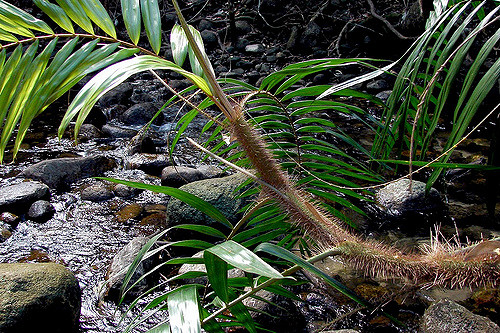
Photo by Tatters ✾ on Flickr, CC BY 2.0
Location: Northern NSW and Southern Queensland
If you ever find yourself bushwalking at the north end of the country then you’ll want to keep an eye out for the wait-a-while vine. While it’s not deadly, it can cause quite a lot of pain, so it’s not a plant you want to run into. It’s a vine like palm that is covered with sharp hooks and if you do happen to run into it, you might find yourself tangled up, hence the name.
#2. The Tar Tree (Semecarpus australiensis)

Photo by H. Zell on Wikimedia Commons, CC BY-SA 3.0

Location: Northern Territory and North Queensland.
While this tree is closely related to the cashew tree, this is one tree you’ll want to avoid. While the nuts of the tree are edible, the sap is highly irritating and you need to take care when handling any part of it. Aboriginals wanting to eat the nuts have been known to coat their hands in clay before handing the fruit, which apparently taste like cashews after they have been roasted.
#3. Hemlock (Conium maculatum)
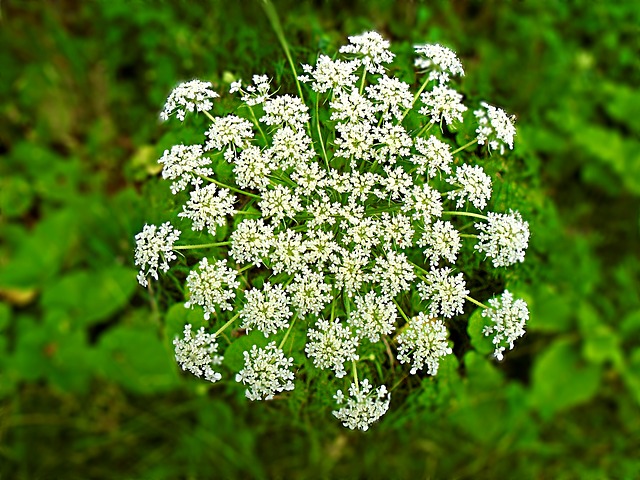
Image by dference from Pixabay
Location: Across Europe and North Africa
Probably one of the more famous flowers in this list, Hemlock gets its latin name from the Greek konas, (which means to whirl) because vertigo is one symptom of ingesting it. Because it is one of the most poisonous flowers in the list, it was used by the ancient Greeks to kill convicted prisoners, most notably in the case of Socrates. There is no antidote for hemlock and it’s so poisonous that people have died eating birds who have eaten hemlock seeds.
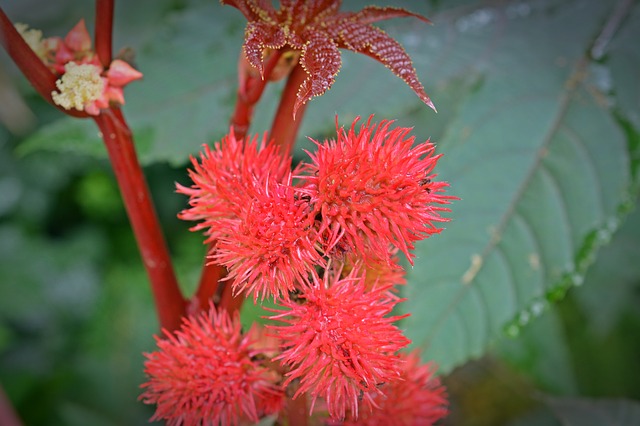
#4. Castor Oil Plant (Ricinus communis)
Location: Mediterranean, North Africa & India
The castor oil plant is, funnily enough, the source of castor oil; a widely used product. However, in its native form it’s something you’ll want to avoid. Because of its potent pollen, which rates 10/10 on the OPALS allergy scale, being near the plant can cause allergic reactions and actually touching the plant can cause rashes.
But even worse than the allergenic reactions are the seeds. They contain ricin which is one of the most potent poisons known to man. In fact, it is listed in the Guinness Book of World Records as the most poisonous plant. Just a handful of seeds contains enough ricin to kill a grown man.
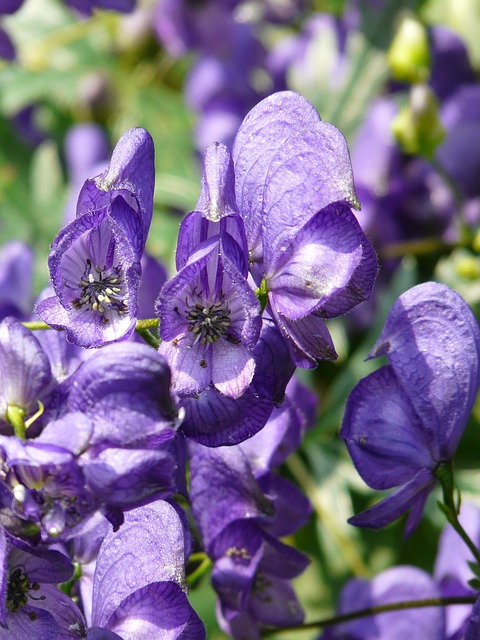
#5. Wolf’s Bane (Aconitum)
Location: Mountainous locations across the Northern Hemisphere
A flower that has also been called Monkshood and Devil’s Helmet throughout history, Wolf’s Bane derives its name from the Greek lycotonum. This suggests that it was used by the ancient Greeks to poison weapons to kill wolves.
In more recent times, the Nepalese have used it to hunt Ibex, the Ainu of Japan have used it to hunt bears and the Aleutians of Alaska used it to hunt whales. Death typically occurs within 2-6 hours of consumption. Unlike some flowers here, merely touching or smelling it is not enough to be fatal.
#6. Oleander (Nerium oleander)
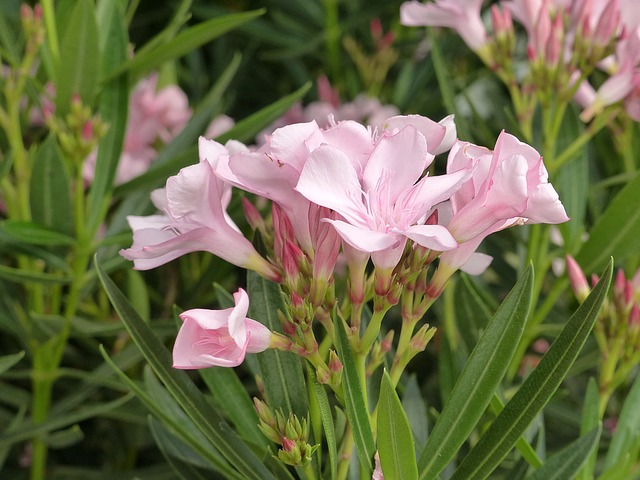
Image by yarachan from Pixabay
The oleander is one of the most poisonous and most commonly found plants in the western world. It’s for this reason that it’s responsible for more cases of poisoning than just about any other plant. Just one hospital in Sri Lanka has reported 170 cases in a three year period, even though warnings about the flower were published in local newspapers.
While the flower is deadly to humans and dogs, it seems that rodents and birds can eat the flower without any trouble. Several stories have been told about oleander throughout the ages. Some suggest that soldiers (sometimes Napoleon’s, sometimes Alexander’s) have died eating meat roasted on oleander sticks, but this is most likely untrue. Other stories involving the mass poisoning of armies with oleander honey are also untrue because oleander does not have nectar.
#7. Lily of the Valley (Convallaria majalis)
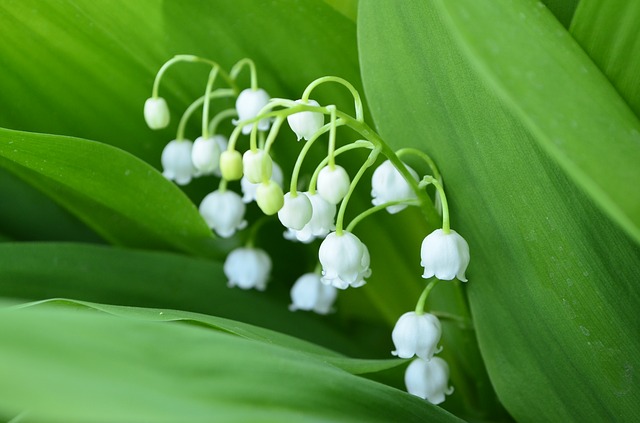
Location: Across the Northern Hemisphere
This is another commonly grown plant and one that you’ll want to avoid at all costs because all parts of the plant are poisonous, particularly the berries. Because the berries are quite attractive to look at, they’re often eaten by children, so this is not a plant you’ll want to have in the backyard if you have children. Fans of Breaking Bad will remember this as the plant used by Walter White to poison Brock.
#8. The Crab’s Eye (Abrus precatorius)

Photo by Tatters ✾ on Flickr, CC BY 2.0
Location: India & Sri Lanka
While people in Sri Lanka and India have long used the seeds for practical things such as beads and musical instruments, eating them can be deadly. The poison is similar to ricin but is said to be two orders of magnitude higher, so you might want to use beads or musical instruments with materials that won’t kill you.
#9. Manchineel Tree (Hippomane mancinella)

Photo by Daniel Lobo (Daquella manera) on Flickr, CC BY 2.0
Location: North and South America
The manchineel tree contains so many toxins that not all of them have been identified yet. The sap is toxic and can cause blistering after even a mild exposure. The toxicity is so high that it has been reported that people have been hurt after standing underneath the tree during the rain and the sap has been known to damage paint on cars.
The Caribs of South America would often use the leaves of this tree to poison the water supply of their enemies. Another time, Captain Cook ordered his men to chop some of these trees down for wood and the men charged with the work were blinded for several days. This tree is listed in the Guinness Book of World Records as the most poisonous tree.
#10. English Broom (Cytisus scoparius)
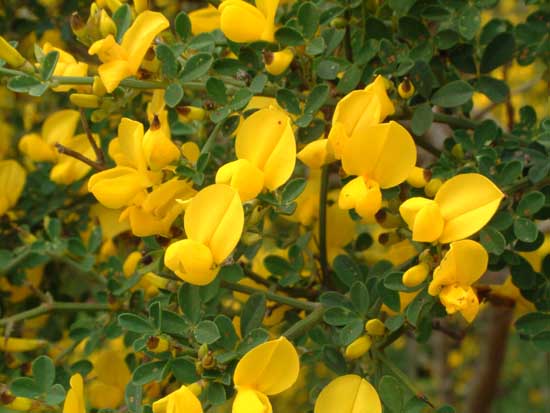
Photo by angelofer (uploaded by Esculapio) on Wikimedia Commons, CC BY-SA 2.5

Location: Europe, North America & Australia
What was once considered an attractive plant is now considered a weed in most countries. It contains toxins that can be used medicinally in low doses, but in higher doses can be deadly. Because the plant contains beans, children are particularly at risk.
Some livestock can eat the plant without trouble, but the toxins find their way into the milk, which can cause birth defects in people who drink the milk.
#11. White Snakeroot (Ageratina altissima)
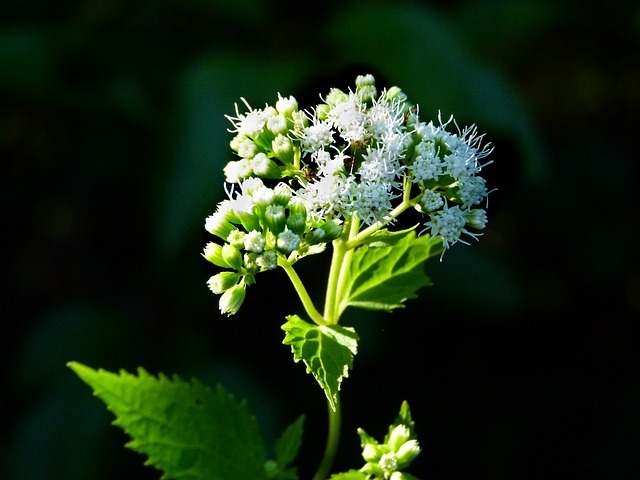
Image by Daina Krumins from Pixabay
Location: North America
This is another plant that is often eaten by livestock. Containing the toxin tremetol, when cows eat the flower their milk and meat become contaminated by it. While it’s not a problem these days due to modern industrial practices, when the US was first being settled it was responsible for the deaths of thousands of settlers, the most famous case being the mother of Abraham Lincoln.
That said, the Shawnee people had long recognised the root of the plant as having medicinal properties. They frequently used it to treat diarrhea, kidney stones and fever.
#12. Foxgloves (Digitalis)
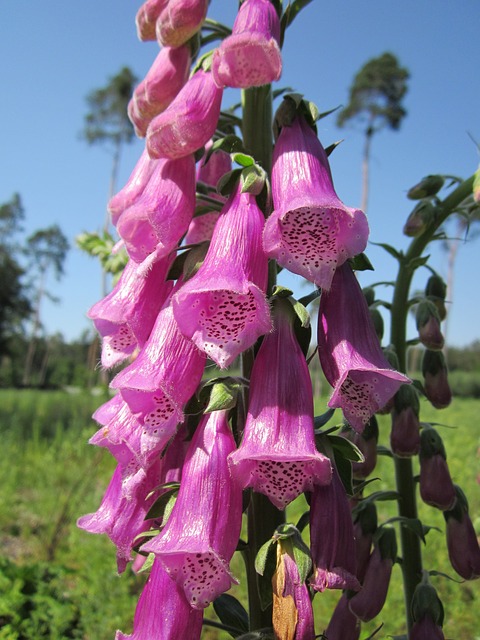
Image by WikimediaImages from Pixabay
Location: Western Europe, Central Asia & North Africa
Digitalis is an interesting case; it has actually been approved by the FDA for the treatment of heart failure, but an overdose can be fatal. In low doses it can also cause a reduction in appetite, so it has been used for weight loss in the past, but this is not recommended! While all parts of the plant are toxic, it’s generally only fatal to children, but can make adults very sick, so even if you’re on the hefty side it is not recommended at all.
#13. Devil’s Snare (Datura stramonium)
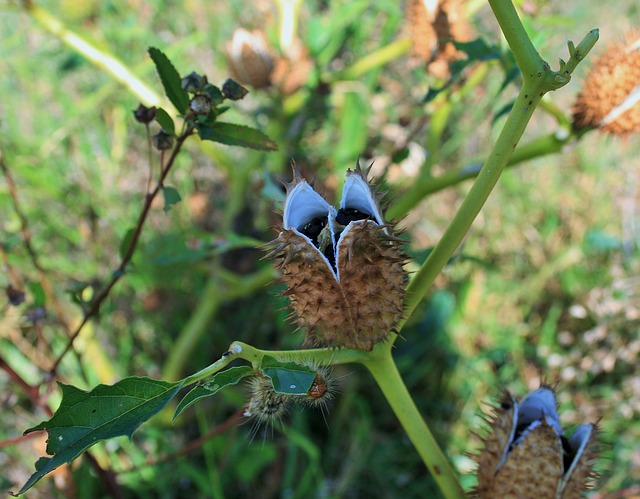
Image by Lynn Greyling from Pixabay
Location: North America
Of all the plants on this list, this one is probably the scariest. Also known as the Angel’s Trumpet, the Devil’s Snare has some really strange effects. It makes some people docile and completely unable to make new memories for a period.
It also brings on delirium, which is why some (not very smart) people brew it up as a tea. Because it renders you unable to tell fantasy from reality, hundreds of people are hospitalised in the US each year. The scariest case was of a teenager who, after drinking some tea, amputated his own limb.
#14. Autumn Crocus (Colchicum autumnale)
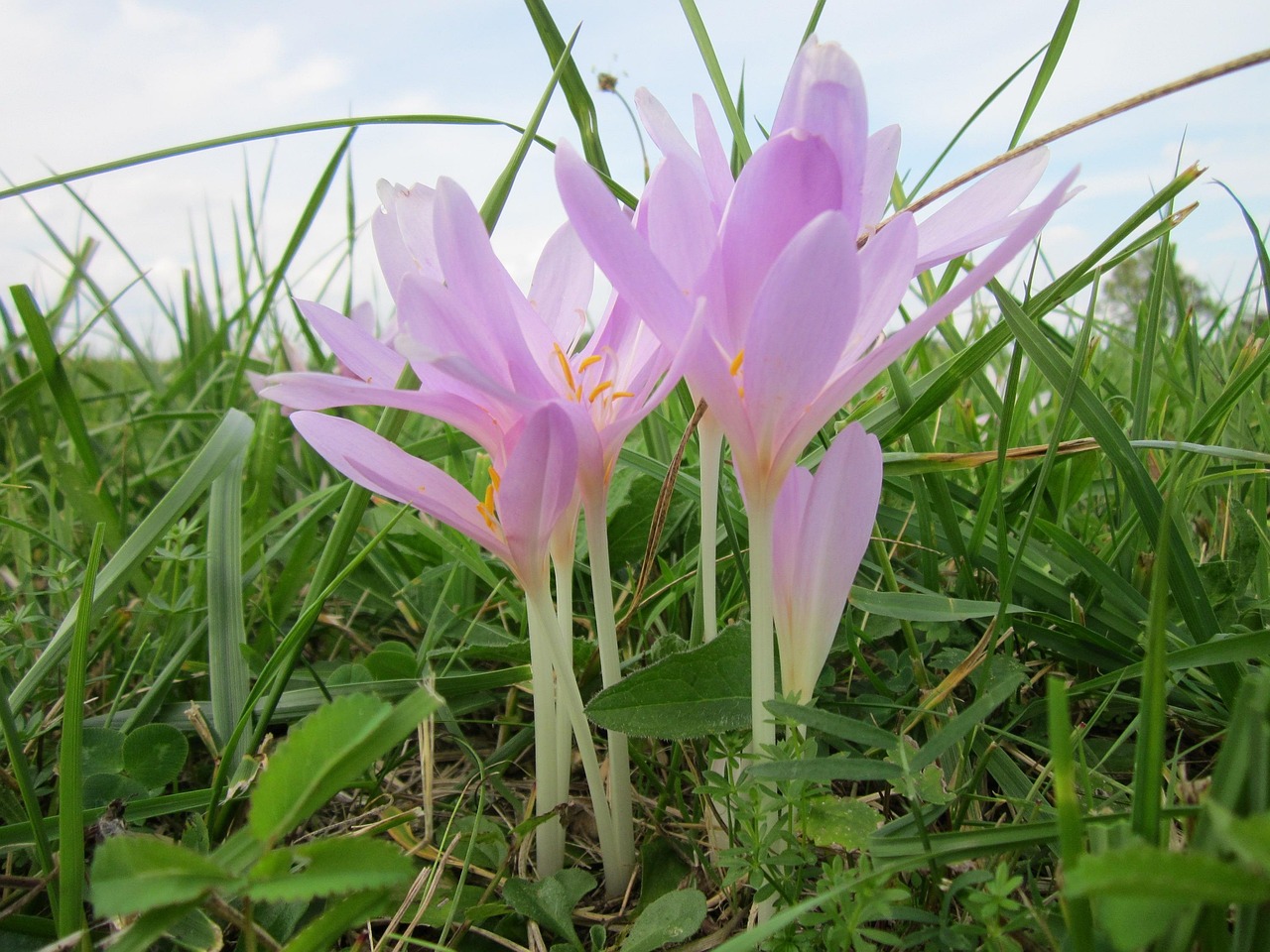
Image Source: Pixabay
Location: UK & Ireland
The Autumn Crocus might be very pretty, which explains why it’s cultivated so widely, but they are also very poisonous. The type of poisoning resembles arsenic poisoning and there’s no known antidote, so it’s something you have to be very careful with.
#15. Mountain Laurel (Kalmia latifolia)
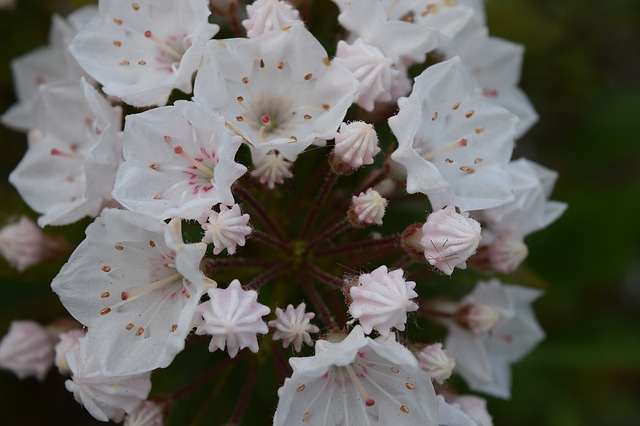
Image by Petra Zwaan from Pixabay
Location: United States
Due to the presence of grayanotoxin and arbutin, the green parts of this plant are all poisonous and can cause death if you eat enough. And because mountain laurel has quite a lot of pollen, bees frequently make honey from it, which can make you sick if you eat it. While this isn’t a problem with commercially produced honey, it’s something to consider if you eat locally produced honey. The Cherokee people have used it as an analgesic in the past.
#16. White Hellebore (Veratrum album)
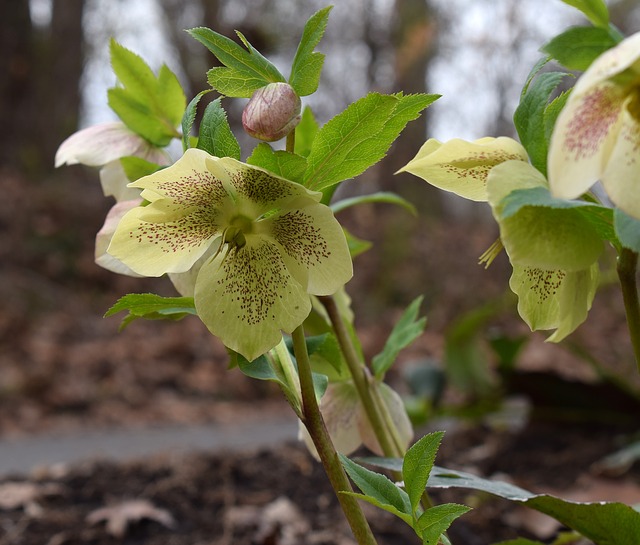
Image by Jan Haerer from Pixabay
Location: Europe & Western Asia
White Hellebore has roots that are very poisonous and people have also died from eating the seeds. A 2014 study by toxicologists suggested it may have been the poison that killed Alexander the Great.
#17. The Suicide Tree (Cerbera odollam)
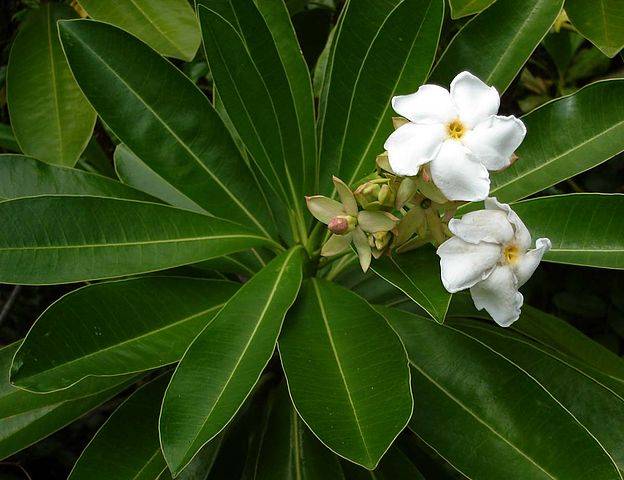
Photo by Tauʻolunga on Wikimedia Commons, CC BY-SA 3.0

Location: India
There’s no mystery as to why cerbera odollam is called the Suicide Tree. For a long time in India, this was the tree to use if you wanted to kill yourself or others. It contains the toxin cerberin which is hard to detect in autopsies and has a taste that can easily be masked with spices, which makes it perfect if you are an assassin and want to get away with murder. In one state of India (Kerala), there were 500 cases of poisoning over a short period of time. One kernel is enough to kill an adult human, which typically leads to death in 24-48 hours.
#18. Bloodroot (Sanguinaria)
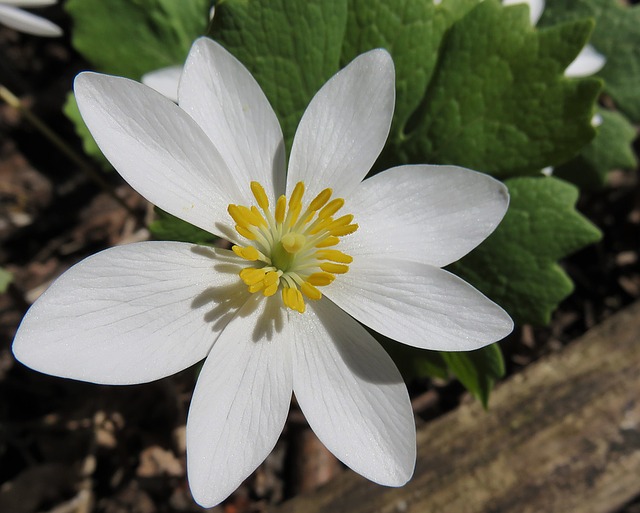
Image by Natasha G from Pixabay
Location: North America
Bloodroot has a juice that is blood red (hence the name) and also very poisonous. Applying it to your skin doesn’t just cause irritation like some plants, but actually destroys the tissue. In the past it has been used as a home remedy for skin cancer, but it’s disfiguring and fails to remove the tumour entirely, which is why your doctor will not recommend using it.
#19. Desert Rose (Adenium obesum)
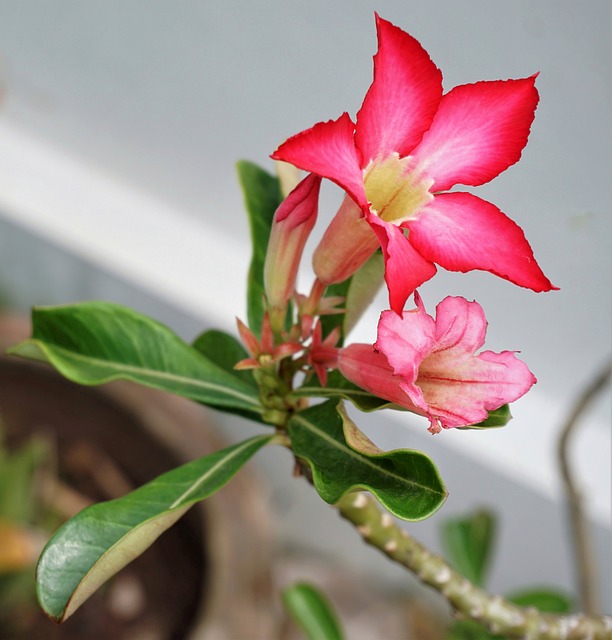
Location: Eastern Africa & Arabia
The sap of the Desert Rose is highly poisonous and is the go-to option for tribespeople in Africa who hunt animals with arrows. Luckily it is only found in Africa and the Middle East, so you’re not likely to run into it on a bush walk somewhere.
#20. Deadly Nightshade (Atropa belladonna)
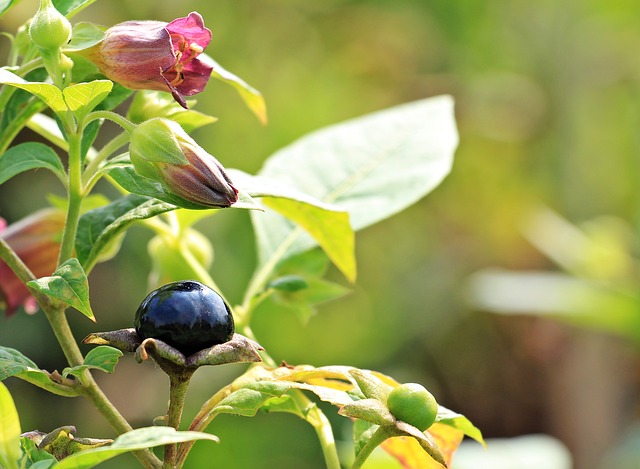
Image by NoName_13 from Pixabay
Location: Europe, North Africa & West Asia
Deadly Nightshade has been used by people in various ways for a long time. It was used in the middle ages as an anaesthetic and some Roman Emperors used it as a tool of murder. Even in low doses, it can cause problems with pregnancy, heart function, gastrointestinal tract and even psychological issues. All parts of the plant are poisonous, especially to children who might be tempted to eat the berries.
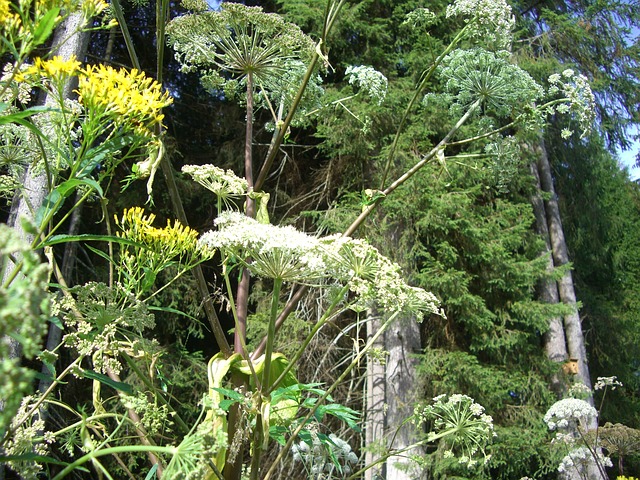
#21. Giant Hogweed (Heracleum mantegazzianum)
Location: Northern Hemisphere
Growing up to around 5 metres tall, the Giant Hogweed is hard to miss, which is a good thing since it’s not a plant you want to run into. The sap is highly toxic and even a small amount of exposure can cause blisters and long lasting scars. Some media reports suggest that exposure can cause blindness, but all the research suggests that this may be an exaggeration.
#22. White Baneberry (Actaea pachypoda)
Photo by aliivibrio (benet2006) on Flickr, CC BY 2.0
Location: North America
Also called Doll’s Eyes, the berries and plant are considered toxic. While they may not look the most enticing of the plants shown here, if ingested they can stop your heart and kill you, so this is another plant to avoid at all costs.
#23. Birthwort (Aristolochia)

Photo by Dinesh Valke on Flickr, CC BY-SA 2.0
Location: Widespread
Because they can cause kidney failure, the FDA has released a warning about Birthwort. Years ago, a weight loss clinic in Belgium was treating people with a compound that contained Birthwort and over 100 people were hospitalised with kidney disease. In addition to causing kidney problems, it is thought to be a potent carcinogen as well.
#24. Apple Seeds

Photo by André Karwath aka Aka on Wikimedia Commons, CC BY-SA 2.5

Location: Widespread
Just about everyone eats apples from time to time and when you were a child you may have been told not to eat the seeds. Many children are told that if they eat the seeds they will end up with an apple tree in their stomach, but what most don’t know is that apple seeds can actually be deadly.
Apple seeds contain a chemical that turns into cyanide when digested. Thankfully, the amount contained in each seed is quite low and you would probably need to eat several cupfuls of seeds before you suffered the effects of cyanide poisoning.
#25. False Hellebore (Adonis vernalis)
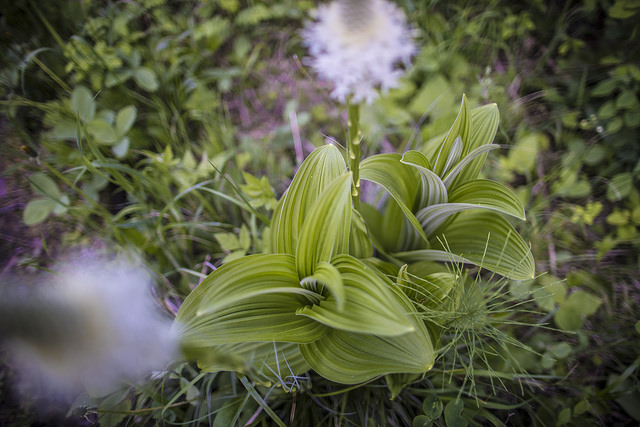
Photo by GlacierNPS on Flickr, Public Domain Mark 1.0
Location: Europe & Western Asia
Another poisonous plant to avoid, the False Hellebore contains chemicals that can over stimulate your heart, which, depending on the dose, can either leave you feeling very unwell or kill you.
#26. Corn Cockle (Agrostemma githago)

Photo by Peter O’Connor aka anemoneprojectors on Flickr, CC BY-SA 2.0
Location: Widespread
Another plant where all the parts of it are poisonous, the Corn Cockle has been long used in folk medicine despite this. That said, unless you really know what you’re doing, you want to stay well clear of this plant.
#27. Mother of Millions (Bryophyllum delagoense)
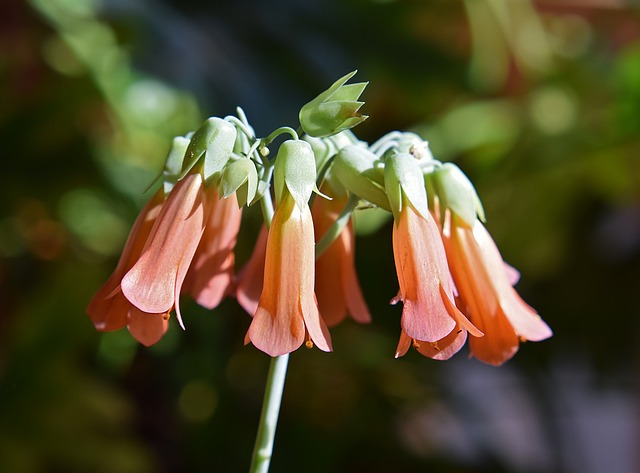
Image by Jan Haerer from Pixabay
Location: Madagascar & Australia
Originally brought to Australia from Madagascar, as with many other species that were introduced here, it hasn’t really been a great addition to the environment. Also known as Devil’s Backbone because of the rate at which it can take over a field, it is deadly to cows.
Eating 5kg of this can be fatal to a cow and since that only equates to a square metre, fatalities aren’t unheard of. In 1997, 125 head of cattle were killed near Moree due to this plant.
#28. Chinaberry Tree (Melia azedarach)

Photo by Zeynel Cebeci on Wikimedia Commons, CC BY-SA 4.0

Location: Indonesia, Malaysia & Australia
The ripe flesh of the Chinaberry Tree is non-toxic, but the seeds are, so you have to be careful when eating these. You’ll often find birds eating the fruit of this tree because they get essentially drunk.
#29. Moonseed (Menispermum canadense)

Photo by Nadiatalent on Wikimedia Commons, CC BY-SA 4.0

Location: North America
All parts are poisonous and because of their similarity to grapes, you must take extra care. The way to tell them apart for sure is to check the seeds. The moonseed has, funnily enough, a single crescent shaped seed. Cherokee Indians have used them in the past as laxatives.
#30. Azalea (Rhododendron)
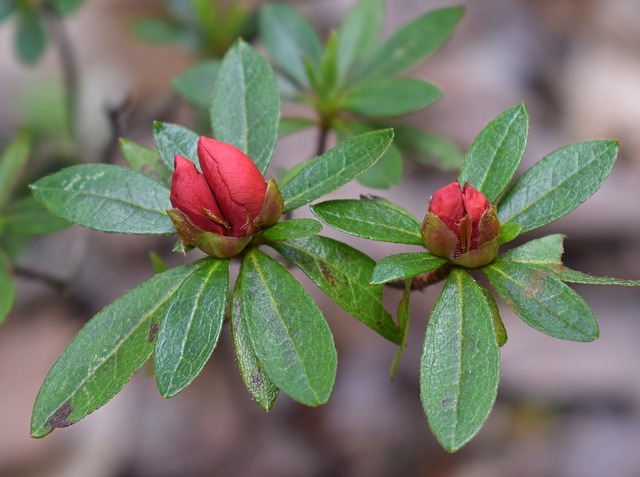
Image by Jan Haerer from Pixabay
Location: Widespread
Azaleas have been bred by humans for their beauty for a long time. As such, they’re commonly found in modern gardens, but they also happen to be quite toxic. Their leaves and nectar (and therefore honey made from their nectar) can be dangerous and mind altering.
According to Pliny the Elder, an army invading a part of modern day Turkey was poisoned with the honey. After the troops were affected by the honey, they were attacked by the enemy and soundly defeated.
#31. English Yew (Taxus baccata)
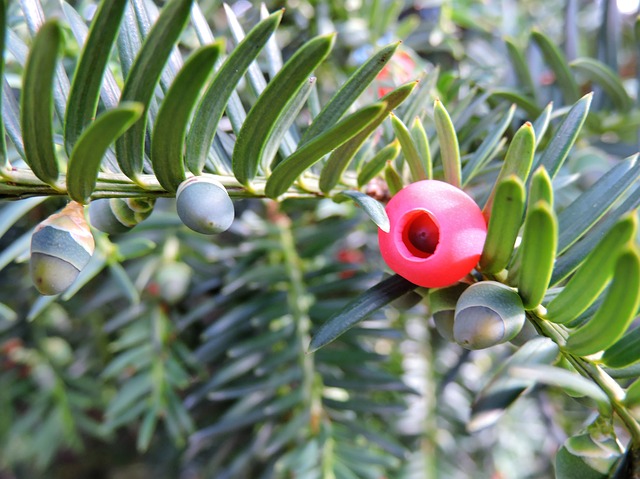
Image by Roman Hörtner from Pixabay
Location: Europe, North Africa & Western Asia
The English Yew is a very allergenic plant, with a 10/10 rating on the OPALS scale. Even if you don’t normally suffer from allergies, you’ll want to stay away from the pollen. All parts of the tree are toxic to humans except the fleshy red aril around the seed, and the seed inside it is highly toxic.
Unlike many other flowers here, sometimes you’ll get no poisoning symptoms and death can occur within hours. Luckily though, deaths are rare because in order to get poisoned you’d need to eat quite a lot of the foliage.
How to Stay Safe Around Dangerous Plants
In the Garden and Bush
Teach children never to eat berries, seeds or leaves from garden or bush plants.
Wear gloves and long sleeves when pruning plants with irritating sap, such as oleander, castor oil plant and giant hogweed, and wash your skin straight away after contact.
Check before you plant: many popular garden plants on this list are toxic to pets as well as people.
Stay on marked tracks when bushwalking in northern Australia, where stinging and irritating plants grow.
If Someone Eats a Poisonous Plant
If you think someone has eaten a poisonous plant, call the Poisons Information Centre on 13 11 26 (24 hours, Australia-wide), or 000 in an emergency. For pets, call your vet straight away.
Learn More About Poisonous Plants
For more on toxic plants closer to home, read our guide to poisonous plants and flowers in Australia and around the world and our list of 10 flowers you should handle with care. Sustainable Gardening Australia also has a helpful list of common poisonous plants.
Prefer flowers that are safe to have around the house? Browse our pet-friendly flowers or plants, delivered by our Sydney florist team and across Australia.