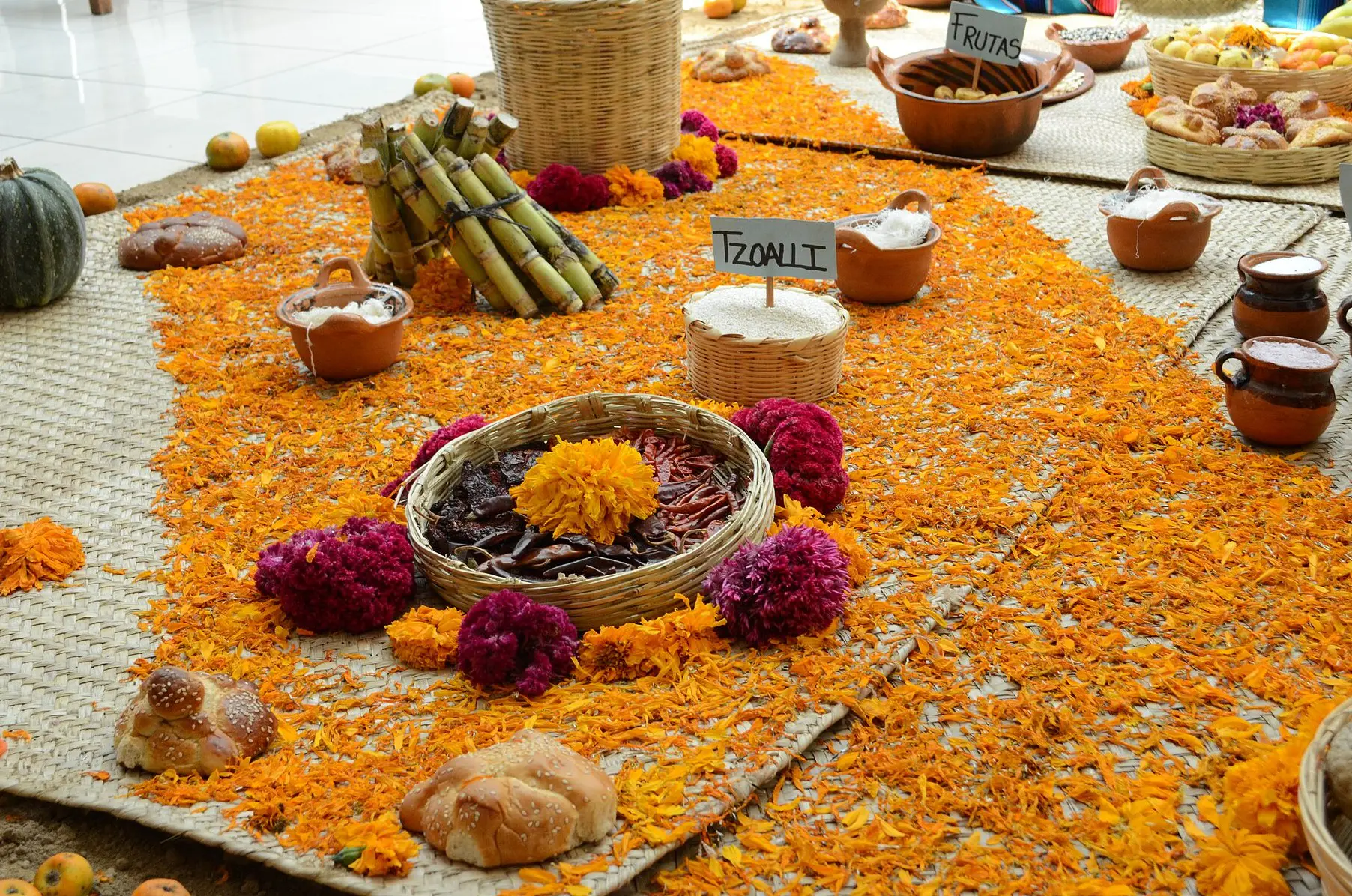
Photo by Karla Andrew on Wikimedia Commons, CC BY-SA 3.0, cropped

Bright orange and gold marigolds are one of the most recognisable flowers in the world. They are the signature bloom of Mexico’s Day of the Dead (el Día de los Muertos), a long-standing symbol of remembrance, and one of the easiest flowers to grow in an Australian garden.
In this guide we cover what marigolds mean, why they are used on Day of the Dead altars, the most common varieties, and how to grow and care for them in Australia.
Photo by Thirty two on Wikimedia Commons, CC BY-SA 4.0, cropped

What Is the Day of the Dead Festival?
Every year, from October 31 to November 2, Hispanic families celebrate el Dia de los Muertos or the Day of the Dead festival. A blend of Spanish culture, Mesoamerican ritual, and European religion, this tradition is believed to welcome back the souls of deceased loved ones. The Day of the Dead gives families a brief reunion that includes drinks, food, and celebration.
In Mexico, las offrendas or offerings are set up on altars in homes to welcome the souls of dead relatives. These altars are decorated with marigold flowers; incense; traditional dishes like tortillas, tamales, mole, and pumpkins; toys; and personal effects. In some cases, families create a path of marigold petals to guide the souls of their loved ones to their home altars.
What Is the Meaning Behind the Marigold Flower?
Now, you might wonder why marigold flowers are widely used in the Day of the Dead festival. Well, its origin can be traced back to indigenous Aztecs—long before European colonialists arrived on the American continent. Spanish conquistadores created an account about Mexican herbal medicines in the 1552 book, “De la Cruz-Badiano Aztec Herbal.”
They learned that natives in Mexico used marigold flowers as a remedy for hiccups and the effects of a lightning strike. Early Aztecs also used the flowers to help individuals cross a body of water safely. They believed that there were healing and magical properties in marigolds. This is probably the reason why the flower is part of the rituals and traditions on the Day of the Dead festival.
Photo by Thirty two on Wikimedia Commons, CC BY-SA 4.0, cropped

Offerings on Dia de los Muertos Altars and Marigold Flowers
The offerings on the altars during the Day of the Dead festival primarily serve to remember the departed. They also symbolise eternal life and the belief that the presence of a loved one is everlasting. In a way, the offerings express the family’s affection toward their departed relatives. Below are some of the common items you’ll see on a Dia de los Muertos altar:
Dia de los Muertos altar items:
Crop – This represents the earth and how the aroma of the harvest feeds the visiting souls.
Papel Picado – This paper cut-out represents the wind. They are made by cutting elaborate designs into sheets of tissue paper.
Water – The altar also has a container of water to quench the thirst of the souls after their long journey home.
Wax Candles – These symbolise fire. Every lit candle represents a departed loved one. An extra one is added to the altar for the forgotten soul.
Salt – Salt is also placed on the altar to represent purification.
Incense or Copal – The aroma guides the souls through their journey and leads them back to their loved ones.
Marigold flowers – Of course, the Day of the Dead festival won’t be complete with petals of marigolds creating a path towards the altar.
Rug or Mat – These are placed at the base of the altar to provide a place to rest for the souls after their long journey.
Butterflies – The sheets of tissue paper can also be cut into butterflies to represent the belief that their loved ones can visit them any time. Some areas in Mexico believe that souls return to earth as a butterfly to check on their relatives.
As we’ve mentioned, the Day of the Dead festival is believed to welcome the spirits of departed loved ones. With the flower’s overpowering musky smell and vibrant colour, the souls easily find the altars that their relatives prepared for them. In a way, this celebration allows people to stay “in touch” with their departed loved ones. It can also be helpful in the process of grieving.
Tradition
By tradition, the altars are put together on the 30th and 31st of October. Then, they are taken down by the 2nd of November. People believe that the souls of deceased children return first. So, families lay the departed’s favourite toys and foods on the altar on the 31st of October.
By November 1, the spirits of the departed adults come. In anticipation of their visit, families set out spicy foods along with other delights like chocolates, nuts, fruits, and liquor. It is believed that the souls can only enjoy the aroma of the offerings. So, most of the time, the flowers, foods, and incense on the altar are incredibly aromatic.
What Are the Most Common Varieties of Marigold Flowers?
Beyond their role in the Day of the Dead, marigolds are rewarding garden plants. Most garden marigolds are grown as annuals, flowering for months before they are replaced.
You’d be surprised to discover that marigolds are available in at least 50 species. However, only four varieties are commonly found in gardens:
African or Mexican Marigold
Scientific name: Tagetes erecta
Tagetes erecta is native to the Americas and it is the tallest variety of marigold flowers. It is usually planted in gardens and people expect it to grow 50 to 100 cm tall. Mexican or African marigold flower thrives in dry, hot conditions.
French Marigold Flower
Scientific name: Tagetes patula
Even though Tagetes patula is widely referred to as French marigold, it is native to Guatemala and Mexico. Compared to Tagetes erecta, French marigold flowers are more compact and smaller. Usually, this variant grows around 15 to 60 cm in height.
Golden Marigold or Signet
Scientific name: Tagetes tenuifolia
Golden marigold flowers have a different bloom than French and African marigolds. Growing 30 to 50 cm in height, tagetes tenuifolia has a compact and small floral head. This variant is popularly added to culinary dishes due to its lemony flavour. Its leaves also give off a citrus scent.
Poet’s or English Marigold
Scientific name: Calendula officinalis
This marigold species has vivid yellow and orange flowers. What’s more, it is known to tolerate cold temperatures. Its petals also have a citrus taste, making it one of the popular choices for edible flowers. It is commonly added to sandwiches, salads, and seafood dishes. English marigold flower usually grows 30 to 60 cm tall.
Photo by Joydeep on Wikimedia Commons, CC BY-SA 3.0, cropped

When Is the Best Time to Plant Marigold Flowers?
Marigolds can be planted for much of the year. Depending on the species of flowers, you can grow these blooms throughout the year. For instance, you can plant young signet and French marigolds from spring through the middle of the summer season. Meanwhile, if you want tall African marigold flowers, plant them at the beginning of spring. They tend to mature and produce flowers more slowly.
Once you think that the soil is warmer and the danger of frost has passed, you can sow the seeds directly into your garden. You also have the option to let the seeds grow indoors. However, marigolds germinate so easily outdoors. So, there’s not much of a difference between the two options.
If you want tall Mexican marigolds in flower quickly, your best bet is to buy them as young plants. Otherwise, you should plant indoors about four to six weeks before the last frost date. Usually, in warm weather, you can expect marigolds to sprout within a week. Within eight weeks, the plants will begin producing blooms.
How Do You Plant Marigold Seeds Indoors?
If you want an early start for the growing season, you can plant your marigold seeds indoors. It’s usually more affordable to sow seeds than to purchase marigolds as young plants from a nursery. Besides, it’s more satisfying to see your marigold flowers mature from humble beginnings into garden beauties.
What You’ll Need:
A soil-free potting mix that contains perlite, vermiculite, perlite, bark or coconut coir
A growing tray or small plastic containers
Small pots
Plastic wrap
Water
Six to eight weeks before the last frost date, you should begin planting your marigold seeds. Follow these steps to get started indoors:
Take your growing trays or containers then fill them halfway with damp, soil-free potting mix.
Use the plastic wrap to cover the trays or containers, then place them in a warm place. You don’t have to install special lighting.
After three days, check if the seeds have begun germinating. Once you see the seedlings, move the trays to an indoor area where the sunlight can get to them for at least five hours a day.
Once you see two sets of leaves on the seedlings, you can move the plants to their own pots. They need to stay indoors until you’re certain that the last frost has passed. Make sure that they still get at least five hours of sunlight a day.
When the soil outside is warm enough, you can move the plants outdoors. Plant each of them 30 to 90 cm away from each other. The area should get sunlight throughout the day.

Photo by Drsssuresh1961 on Wikimedia Commons, CC BY-SA 4.0, cropped

How Do You Plant Marigold Seeds Outdoors?
As long as the ground is warm enough, it is easy to germinate marigold seeds outdoors. Here’s what you need to prepare:
Garden trowel
Well-draining soil that is exposed to the sun all day long
Water
Optional – fertiliser that is ideal for the conditions of your soil
Here are the instructions:
Dig a hole that’s at least 15 cm deep in the soil using your trowel. Make sure you remove any stone you see.
If you’re planning to use fertiliser, put a bit of it into the hole. Fill the hole by about 2–3 cm.
Pour the water into the soil—just enough to dampen it.
Sow the marigold seeds and make sure that they are at least 2–3 cm apart.
Cover the seeds with a thin layer of soil.
How to Care for Your Marigolds
If you notice the top of the soil getting dry, you should give your marigolds a gentle watering. Keep in mind that these flowers hate soggy and overly wet soil. So, avoid overwatering, especially when your plants are in pots. Otherwise, your plants may develop root rot.
Once a month, you should feed your marigolds with liquid fertiliser according to the packaging directions. However, you should be careful because if you overfeed rich soil, it can weaken the marigolds. Also, if there are spent blooms, make sure to pinch them out. Doing so will keep the plants bushy and encourage them to keep flowering for as long as possible.
Usually, less is more when it comes to caring for marigolds. If you want to keep your marigold flowers healthy and happy, here are some simple care procedures you can do:
In between waterings, you should let the soil dry out.
Pour the water at the base of the marigold plant.
It’s not necessary to deadhead, but if you choose to do so, the marigolds will keep producing flowers throughout the season.
Lay down a layer of mulch between the plants to prevent weeds from growing.

Photo by Acabashi on Wikimedia Commons, CC BY-SA 4.0, cropped

Growing Marigolds in Australia
Marigolds suit most of Australia, but timing depends on where you live:
Temperate areas (Melbourne, Sydney, Adelaide, Perth): sow or plant from early spring, once frosts have passed, through to early summer. Expect flowers from late spring into autumn.
Cool and frost-prone areas (Canberra, Hobart, the tablelands): wait until mid to late spring and soil has warmed before planting out.
Subtropical and tropical areas (Brisbane, Darwin, north Queensland): marigolds grow almost year-round, but they do best in the drier months. Heavy wet-season humidity can cause mildew and rot.
Give them full sun and free-draining soil, and avoid overwatering. For more ideas on what to plant, see our guide to organic and sustainable gardening.
Are Marigolds Safe for Pets?
Garden marigolds (Tagetes species) are considered mildly toxic to cats and dogs. Eating them can cause an upset stomach, and the sap can irritate skin. Pot marigold (Calendula officinalis), the edible “English marigold”, is generally regarded as non-toxic. If you think your pet has eaten a toxic plant, call your vet or the Animal Poisons Helpline (1300 869 738) straight away.
Why Should You Grow Marigold Flowers?
Marigolds aren’t only grown for festivals. You can have these bold, bright, and stunning blooms throughout the summer months and well into autumn. What’s more, they bring a host of advantages, including the following:
It increases aesthetic appeal
The vibrant colours will add life to your garden. Even when marigolds die after the first frost, their dried form can be great for those rustic floral arrangements that influencers love.
It’s easy to maintain
As you can see from our planting instructions, growing marigolds from seeds can be easy. Besides, they require simple care. Some species of this flower can survive even when you neglect them.
It repels mosquitoes
Because of the distinctive, pungent, and bitter scent of marigold flowers, they can drive mosquitoes away from your property. Marigold contains pyrethrin, which is also a common ingredient in plant-based insect repellents. A study published in the Iranian Journal of Arthropod-Borne Diseasesreported that essential oil from the flower is as effective as DEET in repelling mosquitoes.
It supports the health of garden plants
Marigold flowers are not only great to look at on altars during the Day of the Dead festival. They also serve a practical purpose for your garden, especially since they can be great companion plants. These flowers can repel pests like roundworms and beetles. So, they also protect the health of other plants in your garden.
It saves the bees
As we’ve mentioned, marigolds naturally repel certain insects. Because you won’t need insecticide in your garden, the honeybees won’t be exposed to harmful pesticides. By planting marigold flowers, you are also protecting the bee population in the country.
It is edible
Wouldn’t it be fun to step into your garden and just pluck out flowers that you can add to your salads? Your sandwiches can get a unique, spicy tang from marigold petals. However, make sure you’re not using pesticides if you’re planning to eat the flowers. Also, it’s best that you sample the flowers to check for allergic reactions.
Photo by Pedro Alonso Benítez on Wikimedia Commons, CC BY-SA 4.0, cropped

Other Flowers for the Day of the Dead Festival
Orange and yellow marigolds are among the most popular flowers used in the Day of the Dead festival. However, there are also other blooms tied to the celebration. Here are some of the flowers that bring other levels of meanings to this beautiful tradition:
Cockscomb
Cockscomb is usually used with marigolds in decorating altars for el Dia de los Muertos. The Mexican Folk Art Guide shares that the deep red colour of the flower represents the blood of Jesus. People also like to keep their altars bright with marigolds and cockscomb. Unlike in other cultures, the Day of the Dead festival is a happy and cheerful event.
Chrysanthemum
White chrysanthemums are common funeral flowers around the world, and they’re also used in the Day of the Dead altars. Similarly, white baby’s breath looks like clusters of clouds that provide an ethereal look in arrangements for this celebration.
Gladiolus
In many cultures, long-stalked gladioli represent faithfulness and remembrance. This is also the reason why these flowers are commonly found on tombstones and gravesites during the Day of the Dead festival. Usually, gladioli are used as part of a bouquet. They are often arranged with baby’s breath or other flowers associated with the celebration.
White Hoary Stock
Departed children are remembered during the festival through white hoary stock. The Mexican Folk Art Guide shares that this flower represents simplicity and beauty. While the hoary stock comes in various colours, white is used to memorialise children. In Mexican culture, white hoary stock also symbolises innocence.
Baby’s Breath
Baby’s breath signifies innocence, love and purity. During the celebration, these flowers are used as accents in crowns and floral arrangements for altars and gravesites.
Image from Pixabay
Flowers for Remembrance, Any Time of Year
Marigolds are a symbol of remembering the people we love. If you’d like to honour someone special, our remembrance flowers are designed to celebrate a life with warmth and colour. For bright orange and yellow blooms with a similar spirit to marigolds, browse our flowers by price or gerberas. We deliver across Australia.