In short: pick hydrangeas late in the season, when the petals start to feel papery. Then hang them upside down, stand them in a little water and let it evaporate, or bury them in silica gel.
You know summer’s here when garden borders light up in masses of deep purples, blues, pinks and whites. It’s hydrangea season in Australia! Hydrangeas look great in a mass planting or a pot, they hold their own as a cut flower, and they can lift a bouquet from ordinary to extraordinary.
So what if you could keep them going past summer and well into the colder months? Dried hydrangeas are the answer, and drying them yourself is easy. Here’s when to pick them, three ways to dry them, and how to keep them looking good.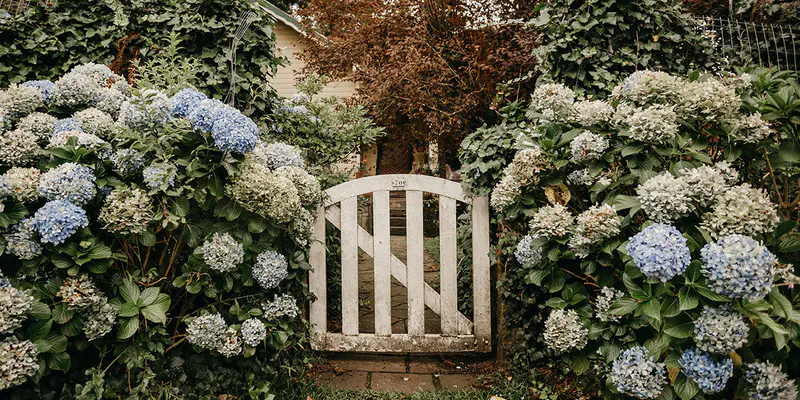
Photo by Jonathan Borba on Unsplash
When to Pick Hydrangeas for Drying
Timing is the most important part. It’s tempting to cut hydrangeas at their fresh, full-bloom best, but they rarely dry well then: the petals are still full of water and tend to wilt or brown. Cut them too late and they’ll have lost most of their colour.
In Australia, the best time is late summer to autumn, about February to April, once the flower heads have started to age. Look for petals that have begun to change colour and feel slightly papery or leathery to the touch, while some colour remains.
In cooler areas the season can run a little later, so go by the feel of the petals rather than the calendar. Many bigleaf hydrangeas turn from bright blue or pink to softer greens, dusky pinks and burgundies as they age, and these “antique” heads dry beautifully.
Cut on a dry morning, once any dew has gone.
Use clean, sharp secateurs and cut at an angle, leaving a long stem.
Strip off most of the leaves so the stem is clean.

Photo by Priscilla Du Preez on Unsplash
How to Dry Hydrangeas
There are three easy methods. Hanging is the simplest, the water method is the most forgiving, and silica gel keeps the most colour. Whichever you choose, keep drying hydrangeas out of reach of little hands and paws.
Method 1: Air-dry (hang them upside down)
Strip the leaves and tie one or two stems together with string or a rubber band.
Hang them upside down in a dark, dry spot with some airflow but no draught, such as a wardrobe or spare room.
Leave them for about 1–2 weeks, until the petals feel crisp and papery.
This is our most common way to dry flowers, but hanging fresh blooms can fade or crinkle the petals, so it works best on heads that have already started to age on the plant.
Method 2: Water-dry (let the water evaporate)
Stand the stems in a vase with a few centimetres of water. Make sure no leaves sit in the water.
Place the vase somewhere cool, out of direct sunlight.
Don’t top up the water. Let it evaporate and the flowers dry slowly over about 2–3 weeks.
The slow change helps the heads hold their shape and colour, and it’s the best method for florist hydrangeas.
Method 3: Silica gel (best for colour)
Pour a layer of silica gel crystals (from craft shops) into an airtight container.
Cut the stem short, place the flower head on the gel, and gently spoon more gel over and between the petals until it’s covered.
Seal the container and leave it for about a week.
Pour off the gel carefully, brush off any crystals with a soft paintbrush, and add a wire or dried stem if you need one.
Silica gel can be reused once you dry it out. Avoid breathing in the dust, and keep it away from children and pets.
Our tip: if you plan to use dried hydrangeas in a wreath or arrangement, work with them before they are completely dry. They’ll be less brittle and much easier to handle.
Which method should you choose?
If your hydrangeas have already aged on the bush and feel papery, hanging them is quick and free. If you’re drying fresh-cut or florist stems, or you’re not sure they’re ready, the water method is more forgiving because the heads dry slowly while still drinking. If colour matters most, for example for a wedding keepsake or a bright wreath, use silica gel.
Whatever the method, a few things help: dry one or two stems per bunch so air can reach the petals, keep them out of the kitchen and bathroom, and check them every few days. Expect the colours to soften to vintage tones of dusty blue, antique pink, green and burgundy. That’s part of their charm.
How to Keep Dried Hydrangeas Looking Good
Keep them out of direct sun to stop the colour fading.
Avoid humidity. Bathrooms and laundries can make them droop or go mouldy.
Dust them gently with a hairdryer on the cool setting.
Hairspray is optional: a light mist can help hold fragile petals.
Home-dried hydrangeas usually last about a year; professionally preserved ones can last longer. For more tips, read how to care for your new dried flowers and the difference between dried and preserved flowers.
No time to dry your own? Shop dried and preserved flowers, including preserved hydrangeas in shades from champagne to pink.
Popular Hydrangeas in Australia
Hydrangeas come from Asia and the Americas, and some of the best-known garden types come from Japan. Today there are many varieties in different shapes, sizes and shades, from shade-loving shrubs to compact types for pots and small gardens.
The most popular is Hydrangea macrophylla, the bigleaf or ‘florist’s hydrangea’, with large pompom heads that are perfect fresh and dried. See Yates’ guide to growing hydrangeas. For colour into autumn, the oakleaf hydrangea (H. quercifolia) flowers in shade and handles frost.
Gardeners can find plant combinations, garden designs and newer varieties to try. For more, read the wonderful world of hydrangeas.
Hydrangea colours and meanings
Except for white varieties, bigleaf hydrangeas can change colour with your soil: more acidic soil gives blue blooms, while alkaline soil gives pink. Traditionally the hydrangea stood for gratitude or an apology. Today, meanings follow colour:
Blue: regret, but also forgiveness.
Pink: sincere emotion and love.
Purple: wealth, royalty and abundance.
White: purity and grace.

Photo by Connor Moyle on Unsplash
Design and DIY Ideas With Dried Hydrangeas
Long seen as old-fashioned, the hydrangea is right back on trend with florists, event designers and home stylists. It can look rustic, romantic or modern, depending on what it’s paired with.
Bouquets and arrangements
Mix dried hydrangeas with grasses, palm and gum for a boho look, or celebrate a single stem in a slim vase. Test-tube vases, woven baskets, tins and terracotta all change the feel. Mixing fresh and dried flowers gives you the best of both worlds, as in these wedding bouquets. For more ideas around the house, see our room-by-room guide to decorating with dried flowers.
Garlands and wreaths
Try these hydrangea garlands if you have some patience, or a hydrangea wreath with a natural look that isn’t completely covered in flowers.
Photo by Vitor Piedade on Unsplash
Where to See Hydrangeas
The George Tindale Memorial Gardens in Sherbrooke, in Victoria’s Dandenong Ranges, have one of the best hydrangea displays in Australia.
Further afield, Japan has some beautiful hydrangea spots in the rainy season.
Are hydrangeas safe around pets? No. Hydrangeas are toxic to cats, dogs and horses (ASPCA), and all parts are poisonous if eaten; the sap can also irritate skin. If you think your pet has eaten a toxic plant, call your vet or the Animal Poisons Helpline (1300 869 738) straight away.