Updated Nov 2026
To become a florist in Australia, most people complete a Certificate III in Floristry (SFL30115) through TAFE, a registered training organisation or an apprenticeship, then build hands-on experience in a working flower shop. There’s no licence required, but employers look for formal training plus a strong portfolio. Below, our head florist Nadina shares how she got started, followed by a practical guide to qualifications, skills, pay and first steps.
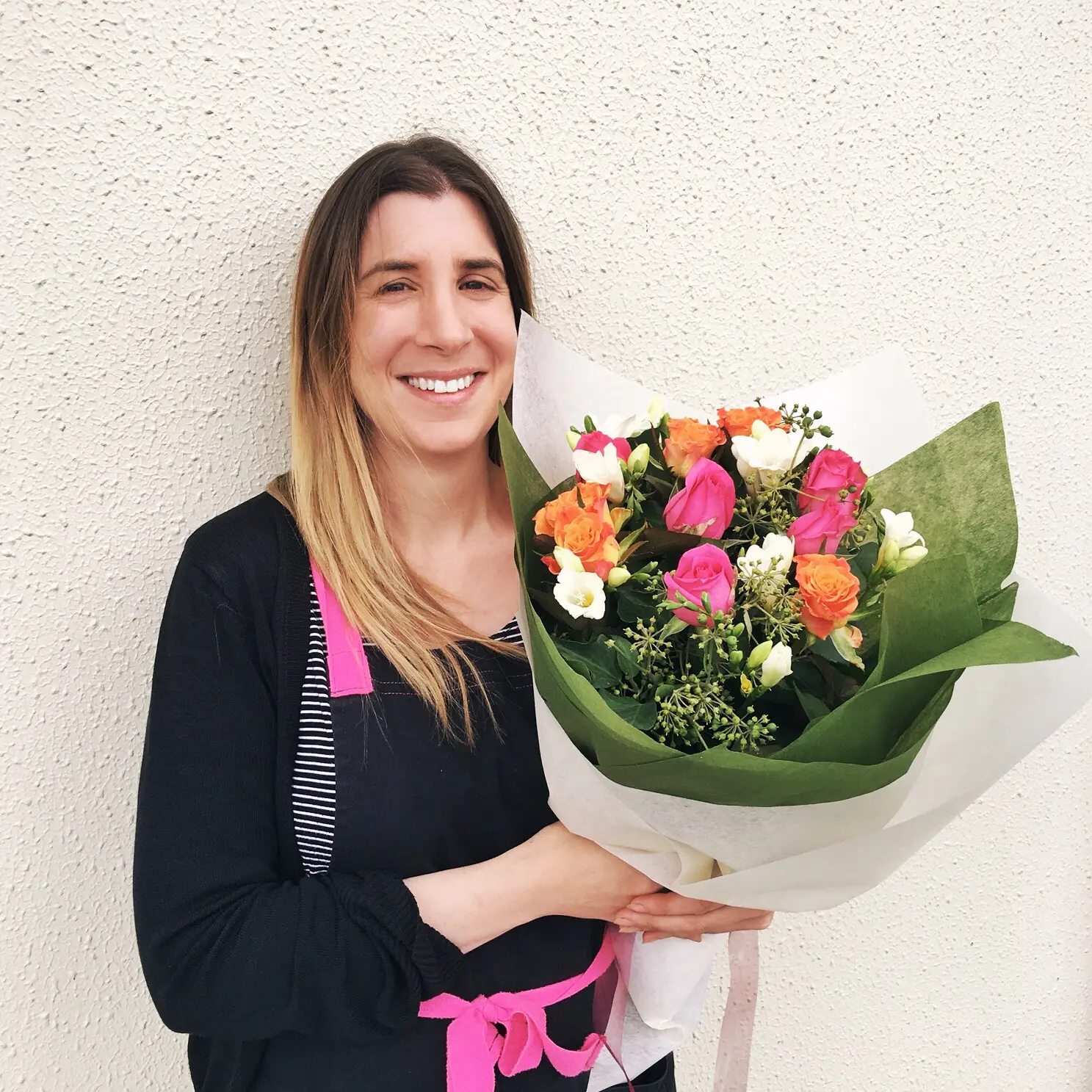
Advice from Our Head Florist, Nadina
We asked our co-founder, head florist and cat fanatic Nadina how she first fell in love with floristry and for her tips for anyone wanting to explore this beautiful career path.
FA: When did you first fall in love with flowers?
Nadina: I think I have always loved flowers as growing up Mum had a really magnificent garden full of flowers.
FA: What is your earliest memory of flowers?
Nadina: Making daisy chains, I always loved making them.
FA: What steps are involved in becoming a florist? Is this how you went about it or did you fall into it in a non-traditional way?
Nadina: A lot of florists start with floral courses as it is difficult to gain employment without qualifications. The next step is to then try and gain experience through a traineeship or work experience. Although floral courses are a great start, it’s experience that matters. I was lucky enough to be taught on the job so I gained a lot of knowledge and experience at the same time.
FA: What are the highlights of your job?
Nadina: Making people happy and being surrounded by flowers all the time -what more could I ask for?
FA: What are the challenges you’ve faced as part of being a florist?
Nadina: For weddings/special events, it can be tricky getting in the exact flowers and colours needed at the exact right time.
FA: What are some aspects of the job that no one warned you about?
Nadina: Long hours and often very early starts, but it’s definitely worth it!
FA: What advice would you give someone who wants to become a florist?
Nadina: Gain as much experience as you can and keep a positive attitude.
FA: Is Flowers Across Melbourne your first floristry business?
Nadina: I had a floral retail shop in Hawthorn for 7 years but our online Flowers Across Melbourne became too busy so I sold the retail shop to concentrate on it.
FA: If you weren’t a florist, would career path would you have taken?
Nadina: I would have worked as an archaeologist as I have a degree in archaeology, but I could never leave floristry as I absolutely love it!
FA: What are your favourite flowers?
Nadina: Almost all of them!
Florist Qualifications in Australia
The nationally recognised entry qualification is the Certificate III in Floristry (SFL30115). It covers flower and plant care, design principles, bouquet and arrangement construction, customer service and workplace safety. Full-time study usually takes six to twelve months; part-time or apprenticeship pathways take longer.
TAFE and RTOs: classroom and studio-based courses, often with a work placement. See our guide to floristry training in Victoria.
Apprenticeship or traineeship: you work in a florist and study at the same time, earning while you learn. Read more about floristry apprenticeships.
Certificate II in Floristry (Assistant) (SFL20125): an entry-level option if you want to start as a florist’s assistant.
Certificate IV in Floristry (SFL40125) and Diploma of Floristry Design (SFL50125): optional next steps for senior, design or management roles.
Short courses: good for testing your interest, but not a substitute for a recognised qualification when applying for jobs.
Skills You Need to Be a Florist
A good eye for colour, shape and proportion.
Practical knowledge of flower varieties, seasonality and conditioning.
Speed and stamina: early starts, cold rooms and long days on your feet, especially around Valentine’s Day and Mother’s Day.
Customer service, from listening to a brief to handling sympathy orders with care.
Basic business skills: pricing, ordering, waste control and social media.
Florist Pay and Career Paths
Florists in Australia are generally paid under the relevant retail award, with apprentices on a percentage of the adult rate while they train. Pay rises with experience, design skill and responsibility. For current figures and job outlook, check Jobs and Skills Australia and the Fair Work Ombudsman.
Career paths include retail and online florists, wedding and event floristry, hotel and corporate styling, wholesale and buying, teaching, and running your own studio. Many florists build a niche over time, such as weddings, dried flowers or native Australian designs.
Starting Out: Your First Steps
Do a short course or volunteer at a florist to make sure you enjoy the work.
Enrol in a Certificate III, or look for an apprenticeship with a local florist.
Build a portfolio: photograph every arrangement you make.
Learn from working florists. Our interviews with 17 florists and flower designers share their career advice.
Apply for junior or casual roles, especially ahead of busy seasons when florists need extra hands.
Want to see what our florists create every day? Browse our flowers or get in touch with the team.