Updated Nov 2026
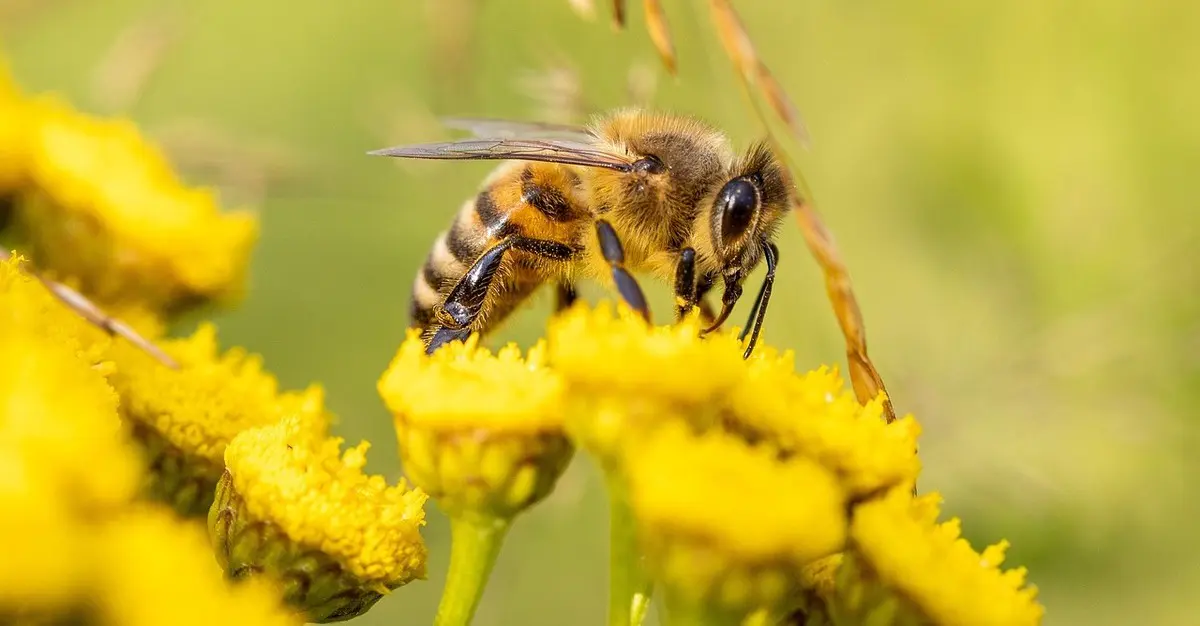
Flowers attract bees with three kinds of signals: visual cues (colour, ultraviolet patterns and shape), olfactory cues (scent) and chemical cues (nectar and pollen rewards, plus scent marks left by other bees). Bees see blue, violet and ultraviolet best, so many bee-pollinated flowers carry UV “nectar guides” we can’t see.
Bees are small but extremely important. We like to think of them as the unsung heroes of the flora and fauna. Without their hard labour, we would collapse our ecosystems and severely affect food production. But while we often think of bees as industrious foragers flying from flower to flower, we rarely consider why bees choose specific blooms over others. The answer lies in a fascinating interplay of visual, olfactory, and chemical cues. It is truly fascinating to think that the flora sends tiny messages to the fauna, saying, “Hey! I’ve got what you’re looking for!”

Image by Photorama from Pixabay
Throughout this article, we will explore together the various ways flowers signal bees and how Australian gardeners can use this knowledge to create pollinator-friendly spaces. From ultraviolet nectar maps to sweet minty aromas and trustworthy chemical cues, this is your complete guide to flowers that attract bees and the native pollinators they serve.
Visual Cues: How Bees Spot Their Favourite Blooms
Colour

Image by Leszek Stępień from Pixabay
One of the most effective ways flowers attract bees is by standing out and making an impact visually. But bees don’t see the same colours we do. While it is very true that they are trichromatic like humans, their spectrum is shifted. Humans’ eyes detect red, green, and blue, but bees’ eyes detect blue, green, and ultraviolet (UV). This means that red flowers often appear black and dull to them, while blue, purple, and yellow pop brilliantly. Many flowers have evolved to take advantage of this by displaying vibrant hues that appear as glowing neon signs to bees.
Bees are particularly sensitive to colours in the blue and violet range. This sensitivity makes flowers like lavender, borage, and Hardenbergia violacea (False Sarsaparilla) especially attractive to them. These plants exhibit colours that bees can easily detect and often have UV patterns that guide bees to their nectar sources. Such UV patterns, invisible to the human eye, serve as landing guides, directing bees precisely where to go, much like runway lights guiding an aeroplane.
It’s also worth noting that while bees cannot see red, some red flowers have adapted by reflecting UV light, making them visible to bees. This adaptation ensures that even flowers with colours outside a bee’s visible spectrum can still attract these vital pollinators.
Shape

Image by Leopictures from Pixabay
Another key feature is the flower’s shape and structure. Bees prefer open-faced or tubular flowers that are easy to land on and explore. Blooms that are too complex or tightly closed may be inaccessible, especially to smaller or short-tongued species. Larger flowers or those in dense clusters also help bees conserve energy by allowing them to collect more nectar or pollen in a single visit. Plants like lavender, borage, and the Australian native Hardenbergia violacea (False Sarsaparilla) tick all these boxes, offering accessible flowers in bee-attractive shades of violet and blue.
In addition to these preferences, researchers know that bees favour flowers with symmetrical shapes and distinct patterns.
Such features make it easier for bees to identify and remember flowers that provide ample nectar and pollen. For instance, the radial symmetry of daisies and sunflowers provides a clear visual cue, guiding bees directly to the centre where nectar and pollen are located.
Moreover, the structural design of flowers can influence a bee’s efficiency in foraging. Flowers that allow easy access to nectar reduce the time and energy bees expend during each visit, enabling them to forage more effectively and pollinate more plants. This mutual benefit underscores the co-evolution of bees and flowering plants, where both have adapted traits that support each other’s survival and success.
Nectar Guides
Imagine you’re a bee on a mission, buzzing through a meadow in search of nectar. Suddenly, a flower catches your eye, not just because of its colour, but because of special patterns on its petals. These are nectar guides, nature’s way of saying, “This way to the sweet stuff!”
Nectar guides are visual cues found on the petals of many flowers. While some are visible to humans as contrasting colours or patterns, others are only visible in the ultraviolet (UV) spectrum. As mentioned above, UV is a range of light that bees can see but humans cannot. These UV patterns often appear as bullseyes or lines directing towards the centre of the flower, effectively guiding bees to the nectar and pollen.
These guides are more than just pretty patterns; they play a crucial role in pollination. By directing bees efficiently to their rewards, nectar guides help ensure that bees collect nectar and, in the process, transfer pollen from one flower to another. This mutualistic relationship benefits both the bees, who get food, and the plants, which achieve pollination.
Interestingly, nectar guides can also influence bee behaviour. Studies have shown that bees spend less time on flowers with nectar guides after feeding, suggesting that these patterns help regulate foraging efficiency.
Olfactory Cues: Following the Fragrance Trail
If colour catches a bee’s eye, then scent captures its attention from a distance. Bees are equipped with a highly sensitive olfactory system that allows them to detect floral scents even while flying. Flowers use this to their advantage by producing aromatic compounds that signal nectar and pollen availability. These olfactory cues are crucial, especially in windy environments where visual markers might not be as effective.

Image by Rebekka D from Pixabay
Bees are generally drawn to sweet, herbal, or spicy scents, fragrances that indicate a flower is likely to offer a high-energy nectar reward. A great example of plants that bees absolutely adore is the fragrant mint family (Lamiaceae) that includes plants such as basil, oregano, thyme, and lavender. Their strong, pleasant aroma isn’t just for humans; it’s a direct message to bees that food is nearby. In Australia, native plants like Prostanthera rotundifolia (Round-leaved Mint Bush) and Westringia fruticosa (Coastal Rosemary) also produce fragrant oils that are incredibly appealing to native bees.
Interestingly, a bee visiting a flower enhances the flower’s scent. When a bee lands, its tiny body imparts a positive electrical charge onto the flower. This stimulates the release of more scent molecules, essentially turning the volume up on the flower’s fragrance. This process not only benefits the next pollinator but also reinforces the success of the plant in attracting multiple visitors throughout the day.
Chemical Cues: Taste and Trust in the Floral World
Once a bee lands on a flower, it doesn’t commit to harvesting unless the reward meets its expectations. This is where chemical cues come into play. Flowers not only offer nectar and pollen—they offer chemical feedback that informs the bee about the quality and nutritional value of those rewards. Some flowers may even have unique flavours or chemical compositions that enhance the bees’ memory, making it more likely to return.
Pollen, for instance, isn’t just a protein-packed meal for bee larvae; foraging bees also taste it. If the pollen is high in protein and essential amino acids, bees are more likely to return to that flower species. In this way, bees learn to associate taste with trust. Plants that produce honest chemical signals, where fragrance or colour accurately reflects reward, are far more likely to receive repeat visits than deceptive ones.

Image by Beverly Buckley from Pixabay
Many native Australian flowers are rich in these “honest signals.” Plants like Leptospermum (tea trees) and Callistemon (bottlebrush) offer abundant nectar and pollen, and their reliability encourages loyalty among bee populations. Over time, this builds a mutually beneficial relationship where both the flower and the pollinator thrive. Bees even share this chemical information with their hives, directing their sisters to the most rewarding blooms.
Putting the Science Into Practice
You can use these cues in your own garden:
Choose blue, purple, white and yellow blooms, which bees see most clearly.
Mix open, shallow flowers for short-tongued native bees with tubular ones for long-tongued bees.
Plant fragrant herbs and natives in clumps so the scent signal is stronger.
Grow something in flower in every season so bees learn your garden is reliable.
For a full Australian planting list, see our flowers for bees guide and the best honeybee flowers. To learn more about the bees themselves, read native bees vs introduced bees or build a bee hotel.
Common Australian Bees: Who’s Visiting Your Flowers?
When we think of bees, we usually picture the European honeybee (Apis mellifera), but Australia is home to over 1,700 native bee species, many of which are just as important for pollination. These native bees are incredibly diverse in size, colour, and behaviour, and many of them are highly efficient pollinators of Australian flora.
Top Native Bees You Might See in Your Garden
Blue-banded Bee (Amegilla cingulata)

The Blue-banded Bee (Amegilla cingulata) is easily recognised by its striking blue and black stripes, making it a standout in any garden. These bees are “buzz-pollinators,” meaning they vibrate flowers to release pollen, a technique that makes them especially effective at pollinating certain plants. Blue-banded Bees are particularly drawn to blue and purple flowers, such as lavender and salvia. Their unique method of pollination allows them to access nectar and pollen from flowers that other bees may have difficulty visiting. As they move from flower to flower, they play a crucial role in pollinating many plants, contributing to the health and vitality of your garden.
Teddy Bear Bee (Amegilla bombiformis)

Photo by Stoyko Sabotanov on Wikimedia Commons, CC BY 4.0

The Teddy Bear Bee (Amegilla bombiformis) is another fascinating Australian native bee, easily identified by its fuzzy, golden appearance that resembles a tiny teddy bear. This solitary bee is most active during the spring and summer months. Though gentle, it is a highly efficient pollinator. Teddy Bear Bees are particularly attracted to a wide range of native Australian flowers, often visiting those that have a more tubular shape. Their fluffy bodies help collect and transfer pollen as they forage for nectar. These bees are important contributors to the reproduction of many native plants, including various species of wattles and other spring-blooming flowers.
Leafcutter Bees (Megachile spp.)

Photo by Gideon Pisanty (Gidip) גדעון פיזנטי on Wikimedia Commons, CC BY 3.0

Leafcutter Bees (Megachile spp.) are known for their distinctive behaviour of cutting leaves to build nest chambers. These bees are not only fascinating to watch but also highly effective pollinators. They tend to favour plants like legumes and daisies, as they are particularly efficient in transferring pollen between these types of flowers. Leafcutter Bees play an important role in ensuring the health of leguminous plants, which are essential for enriching soil with nitrogen and providing food for many animals. By visiting daisies and legumes, they contribute to both the biodiversity and the agricultural health of the environment.
Resin Bees (Hylaeus spp. and others)

Photo by Mike Duchstein on Wikimedia Commons, CC BY-SA 4.0

Resin Bees (Hylaeus spp. and others) are another group of native bees that gather plant resins to construct their nests. These bees are commonly seen on the flowers of grevilleas and bottlebrushes, where they forage for nectar. The resin they collect is used to line their nests, providing a safe and durable environment for their young. As they move from flower to flower, Resin Bees also perform vital pollination services, helping to ensure the continued reproduction of plants like grevilleas, which are important not only for pollination but also for providing habitat and food for a variety of wildlife.
Carpenter Bees (Xylocopa spp.)

Carpenter Bees (Xylocopa spp.) are large, black bees that are often seen drilling into wood to create their nests. Despite their size and sometimes intimidating appearance, they are powerful pollinators. Carpenter Bees prefer larger flowers, such as those from the native banksia or the vibrant blossoms of the eucalyptus tree. Their strong, robust bodies enable them to access nectar and pollen from flowers with tougher structures, which are often challenging for other bees to pollinate. As they pollinate these larger flowers, Carpenter Bees play a significant role in supporting the biodiversity of Australian plants and ecosystems.
While not all native bees produce honey, they play a vital role in maintaining healthy ecosystems and ensuring the pollination of native and agricultural plants. Encouraging their presence with bee-friendly planting is an easy and rewarding way to contribute to biodiversity.
In Conclusion
Flowers have evolved a fascinating array of strategies to attract bees, using a combination of visual, olfactory, and chemical cues to ensure their pollination. By offering vibrant colours, sweet fragrances, and distinct chemical signals, they create a complex but effective communication system that invites bees to visit, forage, and help spread pollen from one bloom to the next. For bees, these cues are essential not only for finding their next meal but also for the survival of their species, as they depend on flowers for nectar, pollen, and nesting materials.
In Australia, native flowers play a crucial role in supporting the country’s diverse bee populations. From the Blue-banded Bee’s affinity for blue and purple blooms to the Teddy Bear Bee’s attraction to springtime flowers, each bee species has its preferences and unique relationship with plants.
By cultivating native Australian flowers, we can help sustain local bee populations, promoting biodiversity and ensuring the long-term health of both plant and pollinator communities. The partnership between bees and flowers is not just a beautiful interaction, but a vital one, supporting the balance of ecosystems and the growth of our natural world. As we continue to explore and understand the ways flowers attract bees, we gain a deeper appreciation for the delicate yet powerful connections that sustain life on Earth.