Updated Nov 2026
The easiest way to help save the honeybee is to plant pesticide-free, bee-friendly flowers that bloom across the seasons, leave out a shallow dish of water, and support local beekeepers. Here’s why honey bees matter, what threatens them in Australia today, and what you can do at home.
Help Save the Honeybee Campaign is about helping support our bee population by growing bee-friendly plants and flowers around our homes and in our gardens. Most flowers exist solely to attract pollinators such as the bee, the flowers themselves often rewarding the creatures by feeding them energy-packed nectar.
As we continue to flatten bees’ foraging areas around the world, building our concrete habitats and soaking the earth in pesticides to attempt control of what we perceive as pests, the humble bee is suffering. It’s high time that we gave a little back. That doesn’t mean building a hive or two in your yard; there are plenty of small ways that we can make a big difference in the lives of the honey bee.
To help guide your efforts, we have put together the list, “Ten of the best flowers for bees.”
All of the plants and flowers that we selected for the piece are low-allergy, low-maintenance and will grow happily in pots, on balconies, or on a sunny windowsill if you don’t have much room to spare. If you’re feeling a little more hardcore about wanting to help honey bees, then you’ll want to check out our definitive guide to beekeeping for beginners.
What Do Bees Do for Us?
It can be easy to take the little guys for granted, especially if bees aren’t your cup of tea or if you (or your child) has been stung, but honey bees bring much more to the table than most of us realise.
Around the house:
Honey bees are useful for a few different reasons domestically speaking, but they do the best job at pollinating fruits and veggies. Without bees, our home vegetable gardens would fail, producing paltry harvests at most. Not to mention the abundance of flowering plants that rely on bees for pollination and will only produce their beautiful blooms when the bees are visiting.
Behind the scenes:
Honey bees also support a valuable Australian industry. Thousands of registered beekeepers produce honey and beeswax, and many move their hives to farms each season to pollinate crops. Australian beeswax has a wide range of cosmetic, holistic and industrial uses, like making candles and premium furniture polish. Bee Aware has more on the industry and bee biosecurity.
Image by villalonga from Pixabay
Research for Australia’s rural industries has found that dozens of Australian industries rely on honey bees to pollinate their crops, and the value of that pollination to agriculture runs into billions of dollars a year. Honey bees are the most efficient pollinator for many economically important crops, including:
Almonds,
Apples,
Avocados,
Blueberries,
Cucumber,
Cherries,
Pumpkin,
Rockmelon,
Macadamia and Mangos.
While most of our other fruit and vegetables also depend on bees as the primary pollinator, they are also pollinated by wasps, butterflies, ants, insects, and other animals like birds. Without the bees, our economy would suffer and the effects would trickledown to everyone. Without help from the honey bee, our crops won’t produce as much, and in the end, the cost of fruits, vegetables and any by-products will rise.
How to Tell a Bee from a Wasp
There are one species of honey bee and one species of wasp that we all know, so let’s focus on them. They are the European honeybee (Apis mellifera) and the European Wasp (Vespula germanica).
European honeybee (Apis mellifera)
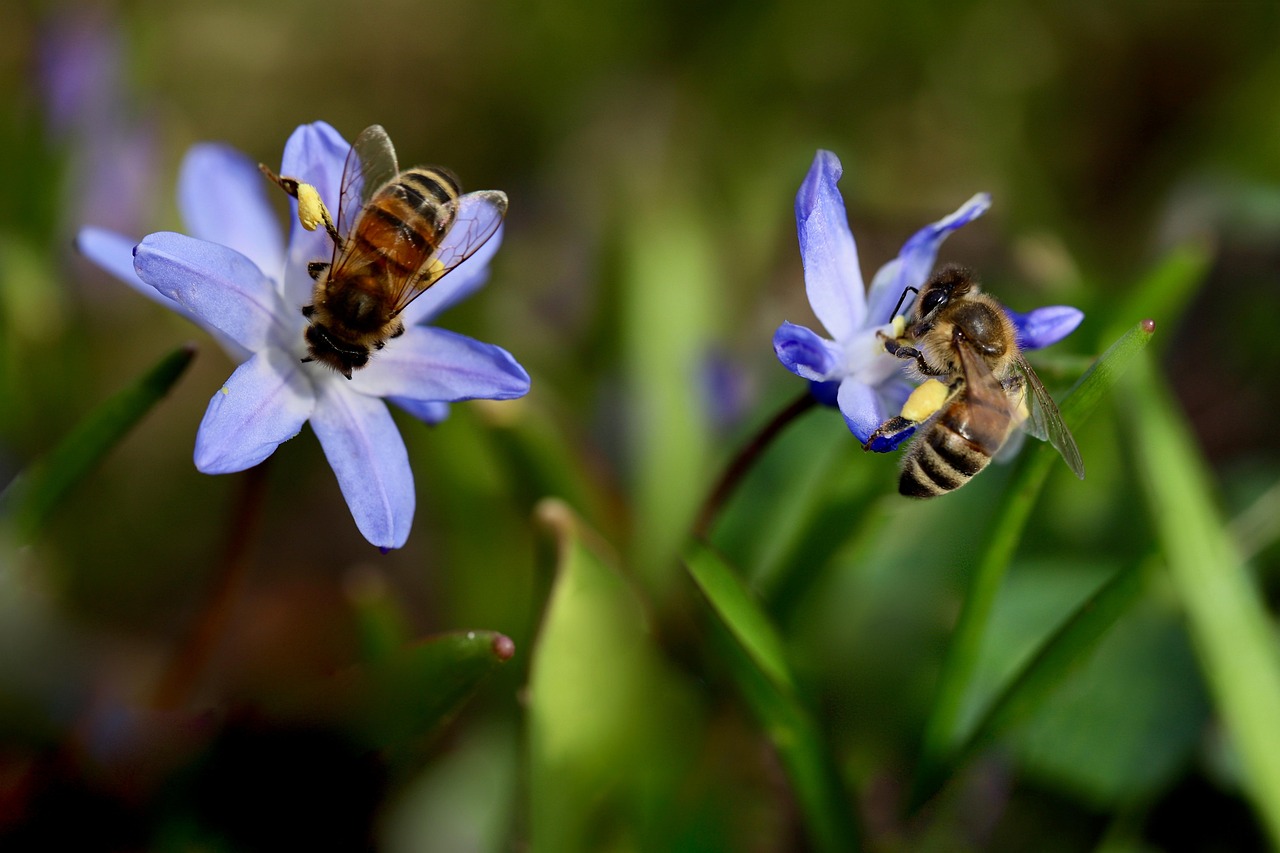
Image by Annette Meyer from Pixabay
The European honeybee is considered an invasive species and was introduced to Australia around 190 years ago by early settlers for honey production. Feral European honey bees have dramatically increased in abundance over the last 80 years, though the actual number of feral colonies is unknown. The European honey bee is a colony-forming species and is still used today for its honey production qualities.
There is an excellent chance that a bee or wasp stung you when you were a child and that the memory is still etched into your brain. It’s important to get past any remaining fear and realise that bees very rarely sting unless they feel threatened.
Bees foraging in your garden are very unlikely to sting if you pose them no threat. However, if you were to accidentally stand on one with bare feet (any childhood memories flooding back?) or spray one with a hose, then you will be stung. Bees generally will only attack you if you are a threat to them, their hive, or their swarm. Once they have stung you and the stinger has pulled away from the bee’s body, it dies.
Did you know?
We actually have over 1,600 species of native bees in Australia! Eleven of them are of the stingless variety— the rest are either too small to effectively harm us— and the rest are your typical Aussie, very laid back and easy going.
The majority of bees are in fact solitary bees, meaning they live their lives in a solitary nest, sometimes near other species and sometimes even living communally with other bee species, and almost always being mistaken for wasps, honey bees or hoverflies. They may not produce honey or beeswax, but they are outstanding pollinators.
European Wasp (Vespula germanica)
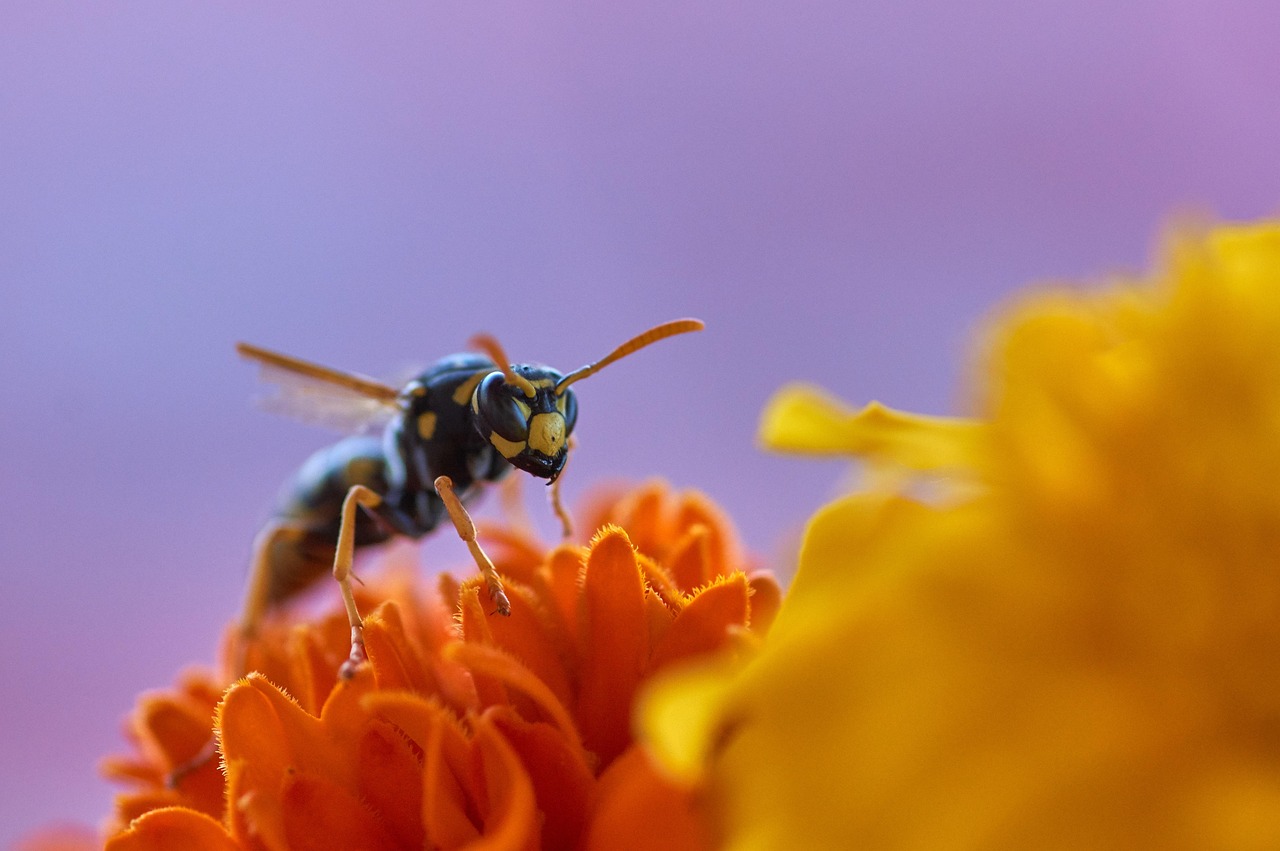
Image by Wolfgang_Hasselmann from Pixabay
Let’s make this clear, not all wasps are bad! The main type of wasp that we’re all familiar with is the European wasp, which was first discovered in Tasmania in 1959. The European wasp wasn’t officially recorded on the mainland until 1977 when it was discovered in Melbourne. These little black and yellow guys are quite common in and around our homes and are much more aggressive compared to our native Aussie wasps.
The European wasp has a short, stout body that makes it easily mistaken for a honey bee, whereas the native flower and paper wasps have a longer and thinner body with a narrow waist. The European wasp is also nearly half the size of native wasps and has a furrier-looking thorax.
European wasps enjoy dining on fruit, meat, sweet stuff and the occasional flower and are often found feasting on any cat or dog food that’s left out. European wasps can also feed on spiders and insects, which would be a great thing, except they compete with our chill native wasps for food, causing a strain on their population. Unlike the European honeybee, European wasps can and will sting multiple times, and they will do so if they feel their nest is threatened.
Did you know?
Our native wasps play a vital part in pollinating flowers and crops, too!
What’s Wrong with Our Bees?
Beekeepers in North America and Europe have reported heavy honey bee colony losses for years. Australia was long one of the last major beekeeping countries free of the varroa mite, but that changed in 2022, and our bees now face many of the same pressures as bees overseas.
The Commonwealth Scientific and Industrial Research Organisation (CSIRO) is one such organisation that’s leading the Global Initiative for Honeybee Health (GIHH), which has tagged honeybees with tiny, smart sensor technology (called “backpacks”) that will analyse the health of our bees. The idea is to unite the efforts of scientists, researchers, farmers and beekeepers by providing a wealth of information to advance our knowledge of bees’ health and ability to pollinate.
Colony Collapse Disorder:
Image by PollyDot from Pixabay
Way back in 2006, the world’s honeybee population (Apis mellifera) was stricken by what is often referred to as Colony Collapse Disorder (CCD). CCD is a mysterious phenomenon that occurs when nearly every worker bee in a colony disappears, leaving behind the queen, plenty of food, and just a few nurse bees. Such mass disappearances have been recorded throughout history, referred to as disappearing disease, spring dwindle, autumn collapse, and May disease.
The great collapse in 2006 saw a drastic rise in the number of disappearances of honey bee colonies in North America, while European beekeepers observed similar decimation, with some bee populations declining by more than half. While Aussie bees may seem safe for now, the entire bee population is still in great danger from a variety of threats.
There is no single cause that has been discovered for CCD yet, but attributing factors suggest that the use of pesticides (particularly the neonicotinoids), Varroa mites, loss of habitat, genetic factors, immunodeficiency, malnutrition, and changing beekeeping practices could all be to blame.
Varroa mite:
Varroa Mite attached to its host, weakening the bee.
Image by 12019 from Pixabay
The varroa mite (Varroa destructor) is a tiny external parasite that needs a honey bee host to reproduce and survive. Varroa mites attach themselves to honey bees, weakening the bee while spreading viruses and feeding on larvae in the hive. For decades Australia was lucky enough to avoid it while it put a massive strain on honey bee populations overseas.
That changed in June 2022, when varroa mite was detected in sentinel hives at the Port of Newcastle in New South Wales. After a 14-month emergency response, authorities decided in September 2023 that eradication was no longer achievable, and the focus shifted to slowing the spread and helping beekeepers manage the mite. Varroa has since been detected in Queensland, Victoria, South Australia and the ACT, and some mites now resist common treatments. Feral honey bee colonies are hit hardest, which makes flowers and water in home gardens more important than ever. For the latest, see the national varroa mite outbreak page and Bee Aware’s varroa guide.
What You Can Do to Help

Photo by Pixabay: https://www.pexels.com/photo/bees-on-purple-flower-164470/
Grab some seeds and start planting today! One of the best ways that we can help support honey bees is by giving them more plants and flowers to pollinate. The best types of flowers to keep around your house are the ones that are not wind pollinated, which can cause hay fever and upset asthma. Most large, bright flowers have evolved that way to attract pollinators, and their pollen is not easily blown about by the wind.
If you don’t want to plant the seeds and nurture the flowers, then why not buy plants? Check out your local garden centre or order potted plants online from Flowers Across. Honey bees are a lot like us; if they are healthy and stress-free, they will be more resistant to pests and diseases. So if we plant pollinator-friendly flowers in our gardens and yards, then we can help keep our bees’ stress levels down and provide them with new areas to forage.
Another way to learn more about honey bees is by jumping right in. If you’d like to take a more active role, why not learn how to become a beekeeper and add a hive to your garden? For amateurs, hobbyists, and honey bee enthusiasts there are plenty of workshops, beekeeping courses and industry resources available to educate about things like bee stings, colony health, and disease identification. The Australian Honey Bee Industry Council (AHBIC) is a great place to start learning all about beekeeping and the industry here in Australia.
Keep Your Bees Happy

Image by Clker-Free-Vector-Images from Pixabay
Other things you can do to help the bees:
Our bees get thirsty flying around all day and doing all that hard work, so we should provide them with a safe source of water to drink. Containers like bird baths are a great option, or you can place a shallow container of water around your flowers with some rocks in it for the bees to use as a perch.
Plant a variety of species that flower around the same time, including flowers of different shapes, colours and sizes.
Let your herbs bolt and flower for the bees to pollinate. Make sure to plant new seeds every few weeks so that you maintain a good supply of herbs.
Don’t use pesticides around your house as they can kill off all of your beneficial insects and bugs, including the bees that we are trying to help. Opt instead for all-natural, holistic solutions whenever possible.
Attract native pollinators and honeybees by planting different flowers in large blocks of colour.
Plan enough different types of flowers so that there are always flowering blooms for bees to visit regardless of the season.
Instead of pesticides, you can use plants and flowers in the same way that nature intended. Once you’ve cultivated a decent garden, let it continue to grow into a little ecosystem, complete with its own food chain.
Learn how to use Mother Nature instead of pesticides in our guide, Flowers Instead of Pesticides.
Want to go further? Find out why insects are vital for colourful flowers, browse our full guide to flowers that attract bees, and discover which native bees live in your area. Then pick up a bee-friendly potted plant to get started.