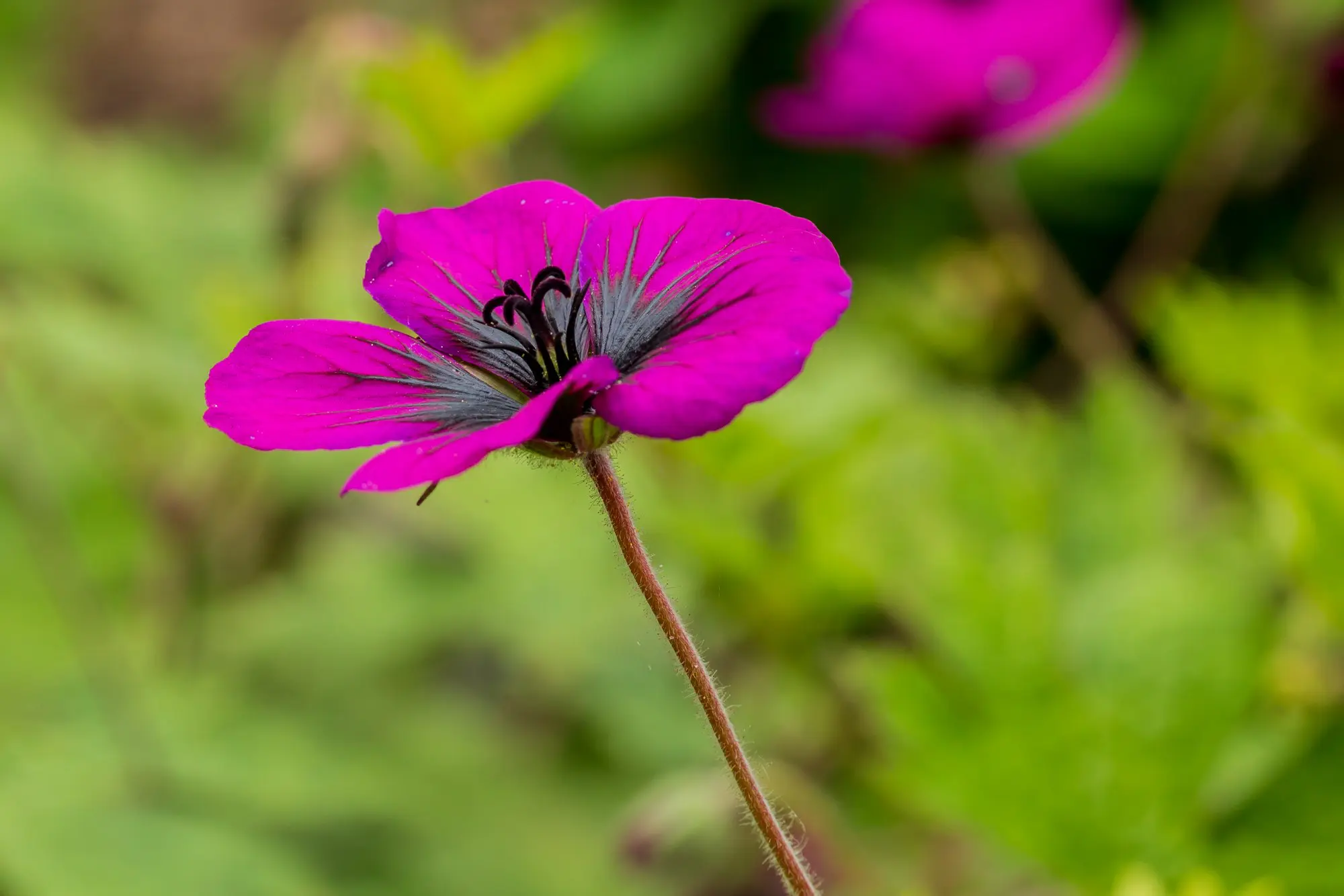
Photo by Dominicus Johannes Bergsma on Wikimedia Commons, CC BY-SA 4.0, cropped

In short: the “geraniums” in most Australian gardens are pelargoniums. Plant them in spring in full sun and free-draining soil, water when the top few centimetres are dry, and take cuttings in spring or autumn.
Vibrant pop of colour? Tick. Easy to grow? Tick. Attractive blossoms and foliage? Tick. Super easy to propagate and multiply? Tick. The humble geranium ticks all the boxes. Some varieties have a beautiful scent, and others are even edible. They’ll add bright colour to a space when in bloom and are easy to grow in pots, baskets or directly in the garden, which makes them the perfect, rewarding starter plant for any budding gardener.
Geranium vs Pelargonium
‘A rose is a rose is a rose’, the famous saying goes. Not quite so when it comes to geraniums. Many of the plants sold as geraniums are actually classified as Pelargonium.
Most pelargoniums come from southern Africa, while true geraniums (cranesbills, like the pink one at the top of this page) grow wild across temperate regions. In 1789 French botanist Charles L’Héritier split Pelargonium from Geranium, but the old common name stuck.
As a rule of thumb, pelargoniums are not frost hardy, whereas most true geraniums are. You’ll also see small differences in the flowers: pelargonium flowers have two upper petals that differ from the three lower ones, while geranium flowers are evenly shaped. To keep things simple, in this article we use ‘geranium’ for both.
Photo by Ken Abel, used with permission
Did you know that Pelargoniums last for quite some time as a fresh cut flower? The image you see here is of some stems that were cut 5 weeks ago of a mini stellar Kitbridge, taken by our favourite Pelargonium enthusiast, Ken Abel.
Types of Geraniums
Geranium flowers range from white to vivid pink and red, with rarer shades of orange and purple. The foliage also comes in an array of shapes and patterns, in shades of green, white and maroon. Plants can be anything from groundcover to over a metre tall, and some varieties look stunning cascading out of hanging baskets.
Potted Favourites
Geraniums give you maximum effect for very little effort, spilling out of window boxes, hanging baskets and pots. Some of our favourites are:
Ivy-leaf geranium, for its cascade of flowers pouring out of hanging baskets, window boxes and containers.
Pelargonium ‘Allure White’, because a crisp, bright white gives a modern green-and-white look or contrasts beautifully with other plants.
‘Australian Mystery’, whose dark purple flowers edged in white make a real showstopper in a bed or container.

Photo by David J. Stang on Wikimedia Commons, CC BY-SA 4.0, cropped

Scented and Edible Geraniums
Brush your hands against the foliage of a scented-leaf pelargonium and you might smell rose, citrus, mint or even chocolate. The leaves are used to flavour cakes, jellies and teas, and the flowers can decorate a cake or be frozen in ice cubes. Only eat plants you have identified and that have not been sprayed. Some of our favourites are:
Citronella pelargonium, with dainty pink flowers and lemon-scented leaves.
‘Attar of Roses’, a rose-scented pelargonium with clusters of pale pink flowers, whose leaves are used in aromatherapy.
To find out more about scented varieties, the Mudbrick Herb Cottage site is an excellent resource. For other flowers you can eat, see our guide to edible spring flowers.
Australian Natives
Pelargonium australe (native storksbill), a pretty pink-flowered plant found on coastal sand dunes and cliffs.
Magenta storksbill (Pelargonium rodneyanum), a low, spreading plant with deep pink flowers from the forests and woodlands of NSW, Victoria and South Australia. It looks great in a rockery.
Planting Geraniums
Spring is the best time to plant. Always check the label, as each variety is a bit different, but here are some general guidelines.
Choosing a Healthy Plant
Pick a plant with healthy leaves and sturdy, unbroken stems, no dead leaves, and no signs of pests.
Soil and Position
Choose a free-draining, good-quality potting mix for pots and baskets, as geraniums don’t like wet feet. In the garden, dig in plenty of compost, especially if you have clay soil, and plant on a slight mound to improve drainage. Geraniums are happiest in full sun, with some shelter from hot afternoon sun in summer. They look their best as the focal point of a container, or grouped with other potted plants.
Photo by Dominicus Johannes Bergsma on Wikimedia Commons, CC BY-SA 3.0, cropped

Caring for Geraniums
Geraniums are one of the easiest flowering plants to grow and keep flowering.
Sun
Give them 5 to 6 hours of direct sun a day. Too much shade means lots of leaves and few flowers.
Watering
Water when the top few centimetres of soil are dry, then water thoroughly. Too much water can rot the roots, while plants in pots can suffer if they dry out completely in summer.
Feeding
While they’re in active growth, use a slow-release flower fertiliser every couple of months, or a liquid fertiliser roughly every two weeks. Don’t overdo it: too much nitrogen gives you a large green plant with few flowers.
Photo by Aleksandr Osipov from Ukraine on Wikimedia Commons, CC BY-SA 2.0, cropped

Pruning Geraniums
Remove old leaves and spent flowers regularly to keep plants tidy and flowering. Pinching out the growing tips encourages a fuller, bushier plant. To keep plants compact, cut them back by up to half in autumn, or in early spring in frost-prone areas.
Propagating Geraniums from Cuttings
Geraniums are one of the easiest plants to multiply. Take cuttings in spring or autumn: choose a firm, mature stem and cut a piece about 10–15 cm long, just below a leaf node. Remove the lower leaves and any flower buds, leave the cutting to dry in the shade for a couple of hours, then pot it into propagating mix. A dip in rooting hormone gel can help, although most cuttings root without it.
Good to know: geraniums are known as the friendship plant, and a plant grown from your own cutting makes a thoughtful gift. In the language of flowers, different geraniums had different meanings; read more in our guide to floriography.
Photo by YvoBentele on Wikimedia Commons, CC BY-SA 4.0, cropped

Pests and Problems
Geraniums are quite hardy, but aphids, spider mites, whiteflies and fungus gnats will try to make themselves at home every now and then. Check leaves regularly, especially in autumn. Our guide on how to get rid of aphids covers safe ways to deal with them.
Also look out for rust and grey mould, which are worse in humid, crowded conditions. Remove affected leaves and improve air flow around the plants. For a detailed troubleshooting list, see this Thompson & Morgan guide to geranium problems.
Pets: geraniums (pelargoniums) are toxic to cats and dogs according to the ASPCA, causing vomiting, loss of appetite and skin irritation. If you have pets, see our list of pet-safe flowers for cats and dogs. If you think your pet has eaten geranium, call your vet or the Animal Poisons Helpline (1300 869 738).
Winter Care
Most coastal Australian gardens need no winter protection at all. In frost-prone areas, such as Canberra, inland regions and Tasmania, pelargoniums need help to get through winter:
Give plants a light prune and check for pests and diseases first.
Move pots under cover, such as a verandah or a sunny, unheated spot indoors.
Keep the soil barely moist, as plants grow slowly in the cold.
Cover garden plants with frost cloth on cold nights.
Feed lightly in spring once the risk of frost has passed.
Grow Your Own Colour
Whether it’s adorning an indoor pot, providing a stunning focal point at your front door or adding a heady scent to a summer evening, the geranium is always a rewarding plant. For more colour indoors, browse our plants, with same-day delivery when you order before the daily cut-off.
Further Reading
Bunnings Australia has a thorough how-to guide. For books, Geraniums: The Complete Encyclopedia (2003) by Faye Brawner may sound like a dictionary, but it is a beautifully presented book aimed at hobby growers, and Scented Geraniums by Jim Becker covers more than 100 scented varieties. Pelargonium enthusiast Ken Abel shares his prize-winning plants on Facebook, and the Australian Geranium Society is a good source of local information and workshops.
Photo by Lucia Condac on Wikimedia Commons, CC BY 3.0, cropped
