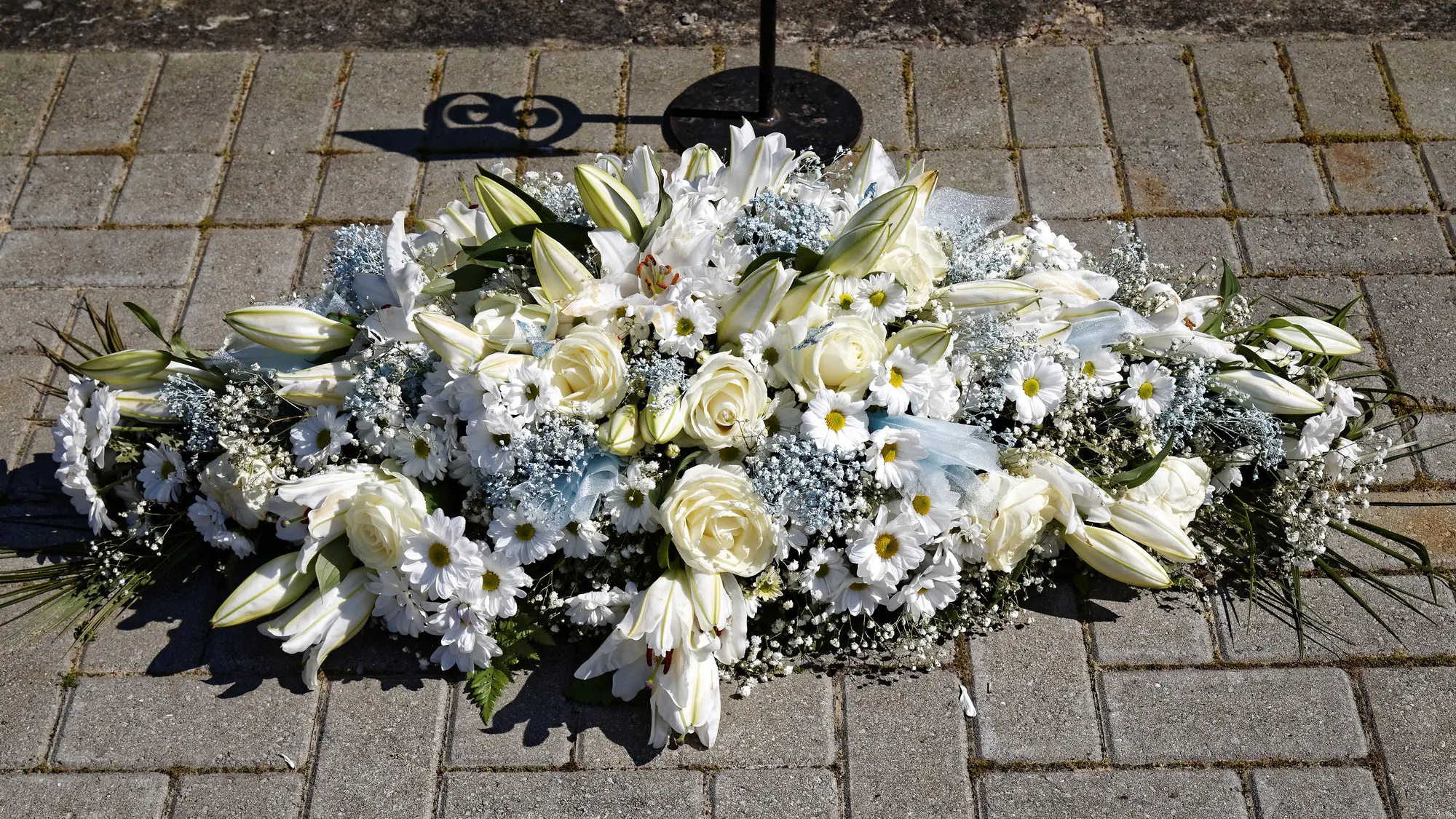
Photo by Acabashi on Wikimedia Commons, CC BY-SA 4.0, cropped

While the 21st century has done away with much of the formal etiquette of the past, funerals are one time when strict etiquette is still expected to be maintained. It’s a difficult time for all involved and thus a breach of etiquette can easily result in upset and offence.
The aim of this guide is to take you by the hand and cover all the main points of a modern funeral so you don’t end up causing any inadvertent hurt. There are quite a few areas that we’ll need to cover, so let’s jump right in.
Who Should Attend a Funeral
The first thing you might ask yourself is whether or not you’re even wanted or expected at the funeral. And while this won’t be the case often, it is something that warrants attention.
As a general rule, it’s fine for anyone to attend a funeral. If the deceased was someone that you knew, then your attendance will likely be appreciated by the family. After all, many people see a larger turnout as a testament to the deceased’s virtue, whether or not this has any actual bearing on their life.
There are really only a couple of reasons why you shouldn’t attend a funeral. First, if the funeral is private and you haven’t been specifically invited then gatecrashing will not be appreciated. Whether or not you believe you should be there is immaterial; the family gets to decide who comes to their private service, not you.
Second, if your presence might upset people at the funeral or if you’ve been asked not to attend by family, then you shouldn’t go; even if you feel that you have a good reason to. At this time the family trumps any right that you feel you have. This can be hard to deal with but it’s important to remember that the funeral is for the people closest to the deceased, so you have to put your feelings aside.
A person’s wishes about who attends usually aren’t legally binding, but a private venue can refuse entry. The respectful choice is to follow the family’s wishes.
What about the funeral of an ex-partner? Generally, it’s fine to go, especially if they were part of your life for a long time and things ended amicably. If your being there would cause unease or more pain, it’s kinder to stay away and send a card instead.
What if you don’t want to go to a funeral? The first thing to know is that you’re quite normal; there aren’t many people who are overjoyed to go to a funeral and often they feel like obligations. You have every right to not attend, but remember that this will be the last thing you’re able to do for the deceased. Your attendance will be noted and appreciated. You need to weigh up your own feelings versus the feelings of the family and figure out which ones matter more to you.
What to Wear to a Funeral
What to wear is probably the most anxiety provoking aspect of a funeral. In days gone by, funeral attire was a simple affair; wear black. However, things have changed a little and restrictions eased somewhat, which actually creates a paradox of choice where the more choice we have, the greater our anxiety of making the wrong choice.
If you say something inappropriate at the funeral, at least not everyone will hear it and you can immediately apologise, but if you wear the wrong thing, everyone will see. So it’s important to avoid this scenario by wearing the right stuff which, fortunately, isn’t too tricky at all.
There are a few guidelines you can follow that will make faux pas a rarity; keep your clothing conservative, don’t wear bright colours and make sure that it’s comfortable. After all, you’ll be wearing the clothes for several hours.
For Men
For men, funeral attire is pretty simple; wear a dark suit. Black is the traditional colour worn, but charcoal and navy are more than acceptable as well. A dark tie should also be worn with your suit unless stated otherwise.
Sometimes less formal wear will also be fine but it depends on the funeral and the crowd. Use your best judgement for cases like these and when in doubt err on the side of caution. 
Photo by Ziko van Dijk on Wikimedia Commons, CC BY-SA 4.0, cropped

While funerals vary a little in their level of formality, there are a few things that are definite no-nos;
Baseball caps
T-shirts & shorts
Runners
Even if you’re not in a full suit you should still look like you’ve made an effort.
For Women
Funeral attire for women can be a little trickier. A business suit can still work, but so does a simple dress. For colder weather, a simple cardigan can also work over the top of a dress. 
Photo by M.N.A. van den Bogaart on Wikimedia Commons, CC BY-SA 3.0 nl, cropped

Avoid anything with bright colours, mini skirts (or anything else that is quite revealing) or loud jewellery. The funeral isn’t about you looking your best, it’s about paying respect to the dead.
This advice is fine for most Christian and secular funerals in Australia, but what may be fine here might be inappropriate for other faith based funerals. So let’s have a look at what to wear if you’re going to a funeral of someone from another community.
Jewish Funeral Attire
At Jewish funerals it’s important that the head is covered. Spares are often provided if you don’t have a yarmulke yourself, but if you don’t have one it might not hurt to check beforehand.
Hindu Funeral Attire
At Hindu funerals, the family wears white while guests wear subdued colours. As part of the rituals, family members may shave their heads, but this isn’t expected of guests. If you don’t know about this then you won’t be expected to do the same.
Islamic Funeral Attire
At Islamic funerals, both men and women are expected to dress modestly. Men should wear a shirt and pants. Women are usually expected to wear a headscarf, plus an ankle length skirt and a shirt that covers the arms. Unsurprisingly, revealing clothes are not appropriate here either.
Shoes are taken off inside a mosque, so it’s important to wear clean socks as well. You don’t want to let yourself down by turning up with holey socks.
Buddhist Funeral Attire
While Buddhist funerals vary a little depending on the tradition involved, they all share a few fundamentals. Displays of wealth aren’t compatible with Buddhism and so mourners at funerals are expected to dress in simple clothing.
Which colour is best differs a little depending on the tradition; what’s right in Zen might not be the same for a Tibetan funeral. Japanese Buddhists tend to wear black clothing to a funeral, while others prefer white.
At Buddhist funerals in Sydney and across Australia, you’ll often see mourners in white or simple, muted clothing, simple white or yellow flowers, and an atmosphere of quiet respect.
If there’s any doubt, it’s best to check with the family or the funeral director before the service. Bright colours such as red are likely to be inappropriate.
What to Say at a Funeral
After attire, the aspect of a funeral that triggers the most anxiety is what to say. The last thing you want to do to people at a funeral is upset or offend them. So here are some guidelines to keep in everyone’s good books.
Express sympathy before the funeral if you’re close to the family, otherwise doing so at the funeral is acceptable. Sending flowers is almost always welcome and when you do so it’s important that you convey sympathy, that you let them know you are thinking of them. We’ve written a guide to writing sympathy messages on our blog.
When it comes to saying the right things at a funeral, you’re probably more worried about what not to say, so let’s take a look at that as well.
What NOT to Say at a Funeral
While saying the right thing at a funeral is good, most people are more worried about what not to say. It’s important to not upset people by saying the wrong thing, so here we’ve compiled a few of the most common, yet inappropriate, things to say at a funeral.
First, don’t tell people that everything happens for a reason. Even if by some chance this event did happen for a reason, you can’t be sure and it still doesn’t help the grieving party.
Nor should you mention medical interventions that you think might have helped the deceased. Even if they could have helped, it’s too late now so there’s no real point in discussing them.
No one at a funeral wants to hear that their loved one is now in a better place. This is another example of not really knowing for sure and it doesn’t help either.
Another common mistake is to assume that you know their grief. You might have suffered a loss in your life and want to empathise with the family, but no two people grieve the same. Saying that you know what they’re going through might sound harmless but it can make you appear to be turning the attention to yourself rather than to the grieving.
Finally, avoid telling people how to get over their grief. Again, you may have suffered a loss yourself and think that you found a way that helped you grieve, but the other person isn’t you and the funeral isn’t the best time for this.
Sending Flowers to a Funeral
Flowers are one of the most common ways to show you care, whether or not you can attend. Our funeral flowers guide goes into more detail, but here are the basics.
What flowers to send
White lilies, roses and chrysanthemums are traditional, along with soft, muted colours. For the service itself, funeral flowers such as wreaths, sprays and casket flowers are usual; a classic choice is the Deepest Sympathy wreath. For the family’s home, a bouquet like our white lily bunch or a plant they can keep is more personal.
Where and when to send them
Send wreaths and sprays to the funeral home, ideally the day before the service or early on the morning of it, so the funeral director can place them. Bouquets and plants go to the family’s home, and they’re just as welcome in the weeks after the funeral, when the visitors have gone quiet. If time is short, sympathy flowers are available for same-day delivery when you order before the daily cut-off. Our guide to sending sympathy flowers online covers the details.
What to write on the card
Keep it short and sincere: “With deepest sympathy”, “Thinking of you all” or “Forever in our hearts” are all fine. For more ideas, see what to write on a sympathy card and our sympathy messages guide. If the loss is a beloved pet, read how to support someone after the loss of a pet.
Flowers and faith
Christian: wreaths, sprays and casket flowers are common and welcome.
Jewish: flowers usually aren’t sent. A donation to a charity the family chooses, or food for the family, is the custom.
Muslim: practice varies, so keep it simple and check with the family first.
Hindu and Buddhist: white flowers are usual. Check with the family before sending.
If you’re unsure, a quiet word with the funeral director is the easiest way to find out what the family would like.
Bringing Children to a Funeral
A lot of people wonder if they should bring children to a funeral. There’s nothing wrong with bringing children to a funeral per se, but the key factor to consider is whether they’re mature enough to handle a funeral and are prepared for what to expect.
If they’re too young to sit still and behave for the entire funeral then it’s best to keep them at home. The last thing you want is your child to disturb the proceedings. If your kids are too young then you’re best to find a babysitter.
Funeral Seating Arrangements
Funeral seating arrangements are pretty straight forward but if you haven’t been to a funeral before then you may not know about it.
The immediate family will usually sit in the front row, followed by extended family and then friends and acquaintances.
Pallbearer Etiquette
If you’ve been asked to be a pallbearer then you might be a little nervous about it. While it’s considered an honour to take part, it’s pretty normal to be worried; after all you’ll be carrying the body of the deceased on their final journey in front of all their friends and family.
If you are asked to be a pallbearer, there’s nothing to worry about. You won’t be carrying the coffin on your own and generally they’re not carried out on their shoulders these days; they’re usually carried at hand height.
Just make sure you know when you’re needed and that you’re nearby when called upon. This shouldn’t be too tricky as pallbearers are usually close family.
Zoom or Virtual Funeral Etiquette
Virtual funerals are now common when people can’t travel. If you find yourself needing to attend one of these funerals, you might have some questions and hopefully we can answer them here for you.
There’s no one accepted type of virtual funeral, but in one version, a wall of attendants (via webcam) will appear on the screen. If you’re going to be taking part in one of these ceremonies, it’s best to dress well. You might not need to put on a black tie, but tracksuit pants and moccasins aren’t really appropriate either.
If your microphones aren’t muted, ensure you don’t talk over the celebrant during the service. If you’re unsure of whether or not you’ll be heard, it might be best to just turn the microphone off unless you’re required to say a few words about the deceased.
Mistakes are easily forgiven, but it’s best to not make them in the first place if it can be avoided.
To attend a Zoom funeral, all you need is a device like your computer, tablet or phone and the Zoom app. If you want to speak as well, then you’ll need a microphone that’s turned on and if you’re unsure of how it works, it’s best to test it beforehand.
If you are speaking to people, be aware of talking over people; with lag it can be hard for conversations to happen, so if someone is talking, let them finish before starting to talk yourself.
Finally, arrive a few minutes early just in case there are any technical difficulties from your end. There aren’t likely to be replays if you miss the start.
Other Funeral Do’s & Don’ts
The above sections should cover most of the major areas where funeral faux pas are bound to occur. That said, there are a few other little tips that might help some people out.
Mobile Phone Usage at a Funeral
It should go without saying, but usage of your mobile phone at a funeral is not the highest priority. Unless you’re waiting on news that is extremely important, turn your phone off for the duration of the service.
There are generally few reasons to be snapping photos as well. Snapping a selfie with the deceased or of the mourners is not appropriate.
Social Media Etiquette & Funerals
When considering social media etiquette and funerals, consider the primary function of a funeral; to help the family grieve and come to terms with the death. It’s not about you and impressing your social media followers.
Don’t take selfies and post them to your feed. Don’t livestream the proceedings unless you’ve been asked to by the family.
Funeral Procession Etiquette
Funeral processions were originally done on foot, but since the invention of the car the tradition has changed. What was once a way for people to pay their final respects as the body went from the church to the cemetery has now mostly become solely about transport.
That said, guests at a funeral will generally drive in a procession and if you’re in one, turn your headlights on so other drivers know you’re part of it, stay with the procession, don’t let other cars cut in, and drive at its pace. Don’t take a shortcut; this is not about who can get to the cemetery first.
If you’re on foot when a procession passes, it’s a kind gesture to pause and stand quietly, though it’s no longer expected.
Punctuality at a Funeral
Another issue that should go without saying is punctuality. Ensure that you’re there a little bit early; the last thing you want to happen is to open a creaky church door halfway through a service and become the focus of everyone’s attention.
Final Thoughts
Funeral etiquette really comes down to one thing: putting the grieving family first. Dress simply, arrive early, say little but kindly, and follow the family’s wishes.
If you can’t be there in person, a thoughtful card or funeral flowers will always be appreciated.