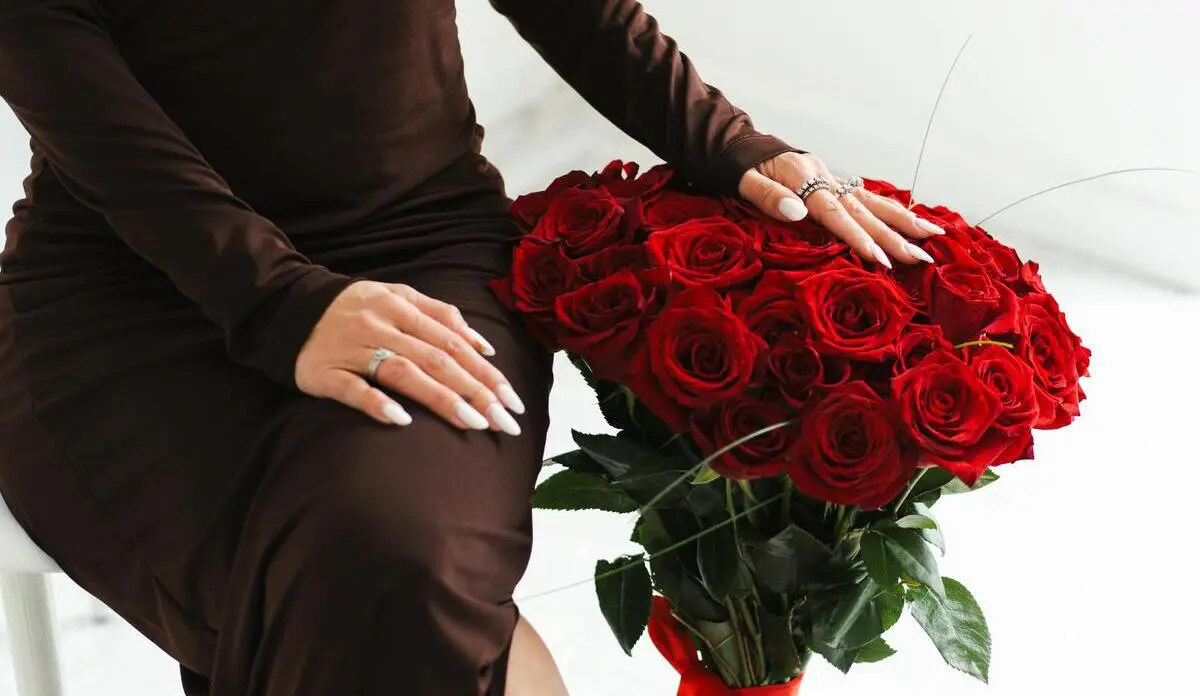
There is a reason we turn to flowers at weddings, at births, and in moments of heartbreak. Long before cinema existed, flowers carried a secret language. A red rose spoke of passion too deep for words. A white lily announced grief. A dahlia, with its complex, layered petals, hinted at something darker beneath a beautiful surface. When filmmakers choose to put a flower in a movie’s title, they are rarely doing it for decorative purposes. It typically reflects the film’s emotional direction and underlying themes.
Movies with flowers in the title form one of cinema’s most quietly fascinating subgenres. From Hollywood golden-age noirs to Cannes-celebrated dramas, from bittersweet comedies to searing portraits of survival, these films consistently use their floral titles as shorthand, signalling themes of love and loss, innocence and corruption, beauty and violence. The flower becomes a lens through which the whole story is refracted.
This guide explores the most memorable movies with flowers in the title, digging into what each bloom actually means within the narrative and why these films continue to resonate. Here are all 19 at a glance; the first 11 are covered in depth below, and the other 8 are in the “More Movies” section.
Quick List: 19 Movies With Flowers in the Title
American Beauty (1999)
White Oleander (2002)
The Name of the Rose (1986)
The War of the Roses (1989)
The Purple Rose of Cairo (1985)
The Blue Dahlia (1946)
Cactus Flower (1969)
Steel Magnolias (1989)
Desert Flower (2009)
Blue Jasmine (2013)
Wild Rose (2018)
Killers of the Flower Moon (2023)
Broken Flowers (2005)
Magnolia (1999)
Lilies of the Field (1963)
Flowers in the Attic (1987)
Daisies (1966)
Sunflower (1970)
Iris (2001)
The Language of Flowers in Cinema: A Quick Symbolism Guide
Before diving into specific films, it helps to understand that flowers carry long-established symbolic meanings, many of which filmmakers draw on, consciously or not.
- Roses often represent love, but the type matters. Red roses suggest passion, while cultivated varieties can point to artificial perfection or control.
- Liliesare traditionally linked to mourning, purity, and transition, which is why they appear so often in funerary settings.
- Dahlias carry more complex meanings, associated with elegance, instability, and sometimes betrayal or hidden tension.
- Magnolias suggest grace and femininity, but also resilience beneath softness.
- Jasmine evokes beauty and refinement, but its overpowering scent can hint at excess or emotional instability.
- Wild flowers and natives often represent freedom, unpredictability, and life outside structured systems.
- Desert blooms point to survival, adaptation, and beauty that emerge under pressure.
Filmmakers rarely invent these meanings from scratch. Instead, they build on this shared symbolic language, using flowers as a kind of emotional shorthand. Once you recognise the pattern, a title is no longer just a title. It becomes a clue.
American Beauty (1999)


Few films announced themselves as boldly as Sam Mendes’s debut feature, which opens with a home video of Jane Burnham saying her father deserves to die. The American Beauty rose, a famous deep pink to crimson garden cultivar prized for its lush, symmetrical bloom, runs through the film as both a visual motif and a moral question. Lester Burnham, played by Kevin Spacey in his Oscar-winning performance, fantasises about neighbour Angela Hayes surrounded by cascading rose petals. It is an image of desire so idealised that it tips into delusion.
The American Beauty rose is, in real horticultural terms, often considered high-maintenance and susceptible to disease beneath its picture-perfect exterior. Mendes and screenwriter Alan Ball clearly lean into that symbolism. The film is a sustained argument that American suburban life is exactly like that rose: gorgeous on the surface, quietly rotting underneath.
Not just a symbol of surface perfection, the American Beauty rose is also a cultivated ideal. It represents a kind of beauty that is controlled, selective, and ultimately artificial. In this sense, the flower mirrors the world Lester inhabits, one where appearances are carefully maintained and imperfections are hidden rather than confronted. The rose’s lush, almost excessive presence throughout the film reinforces this idea: beauty, when pursued as an ideal rather than experienced as something real, can become suffocating, even destructive.
Roses carry some of the most layered meanings in the language of flowers, and the colour makes all the difference. You can explore this further in our guides to what every colour of rose means and Rose Colour Meanings and Types.
White Oleander (2002)


The oleander is a plant of stunning contradictions. Its flowers are gorgeous, appearing in clusters of white, pink, or red. Every part of the plant is toxic, and ingesting it can cause severe, potentially fatal poisoning. The 2002 adaptation of Janet Fitch’s novel, directed by Peter Kosminsky, understands this duality completely.
Annette Bening plays Ingrid, a coldly magnificent poet who poisons her lover with oleander extract and is subsequently imprisoned, leaving her teenage daughter, Astrid, played by Alison Lohman, to navigate a series of foster homes. The white oleander of the title is Ingrid herself: beautiful, charismatic, magnetic, and profoundly dangerous to everyone who gets close to her. As Astrid bounces between households, she meets women at every stage of the damage that a person like Ingrid leaves behind.
Unlike cultivated flowers bred for perfection, the oleander thrives in harsh conditions. It is resilient, invasive, and difficult to eradicate. That quality echoes throughout the film. Ingrid’s influence lingers long after her physical absence, shaping Astrid’s experiences and the lives of the women she encounters. The flower becomes a symbol not just of toxic beauty, but of damage that endures, subtle, persistent, and impossible to ignore.
Some flowers are not just symbolic, but genuinely dangerous. If you are curious about the darker side of these blooms, take a look at Deadly Beauties: 10 Flowers You Should Handle with Care.
The Name of the Rose (1986)


Jean-Jacques Annaud’s adaptation of Umberto Eco’s labyrinthine medieval mystery novel takes its title from the book’s final, haunting line: “Stat rosa pristina nomine, nomina nuda tenemus.” The original rose exists only in its name; we are left holding nothing but words. It is one of literature’s most beautiful statements about impermanence.
Set in a fourteenth-century Italian monastery where monks are dying under mysterious circumstances, the film stars Sean Connery as Brother William of Baskerville, a Franciscan monk and proto-detective whose investigative methods are centuries ahead of his time. F. Murray Abraham plays the terrifying inquisitor Bernardo Gui. The rose of the title never physically appears. Instead, it comes to represent dangerous knowledge, especially the forbidden ideas contained in the monastery’s hidden copy of a supposedly lost second volume of Aristotle’s Poetics, devoted to comedy and laughter.
Unlike the roses in other stories, this one is not tied to beauty or desire. It represents knowledge itself, fragile, contested, and easily lost. The forbidden book hidden in the monastery’s labyrinth becomes its closest physical echo: a container of ideas so dangerous that they must be hidden, controlled, or destroyed.
In this sense, the rose is not something to be seen, but something to be remembered. It stands for all that disappears over time: knowledge erased, truths suppressed, meanings that survive only as fragments. What remains is not the thing itself, but the name we give it, and even that, the film suggests, is never entirely stable.
The War of the Roses (1989)


Danny DeVito’s jet-black comedy The War of the Roses follows Oliver and Barbara Rose, played by Michael Douglas and Kathleen Turner, a couple whose divorce spirals into total emotional and physical destruction within the walls of their once-perfect home. The roses of the title carry layered meaning. As a surname, they suggest something once cultivated, balanced, and even beautiful. But roses are never just their petals. They come with thorns, and the film is ultimately about what happens when tenderness gives way to something sharp, defensive, and destructive.
Unlike the controlled perfection of the American Beauty rose or the quiet toxicity of the oleander, the rose here becomes a symbol of decay within intimacy. What was once carefully built begins to turn against itself. The home, like the relationship, becomes overgrown with resentment, each gesture edged with hostility.
The film suggests that love and cruelty are not opposites, but neighbours. The same intensity that once sustained the relationship fuels its collapse. In that sense, the rose is not a symbol of lost beauty, but of transformation. Something that begins as softness can, under pressure, become something else entirely, something that wounds.
The Purple Rose of Cairo (1985)


Woody Allen’s The Purple Rose of Cairo blends romance with a quiet sense of melancholy. Set during the Great Depression, it follows Cecilia, played by Mia Farrow, a woman who escapes her difficult life by returning again and again to the cinema. One day, the impossible happens: a character from the film, Tom Baxter, steps off the screen and into her world.
The purple rose at the centre of the story functions less like a natural flower and more like an invented emblem of beauty, fantasy, and spectacle. Unlike real flowers, which carry meaning grounded in the physical world, it exists purely as an idea, shaped by desire rather than reality. That distinction matters because it allows the film to treat the flower not as something rooted, but as something imagined.
In that sense, the flower becomes a symbol of illusion. It offers everything Cecilia longs for: romance, escape, possibility. But like all illusions, it cannot hold. The moment it crosses into the real world, it begins to unravel. What once felt magical becomes fragile, and then unsustainable.
The film suggests that some forms of beauty are only possible at a distance. The purple rose does not fail because it is false, but because it belongs to a different world. It is a reminder that imagination can comfort us, but it cannot fully replace the life we are trying to escape.
The Blue Dahlia (1946)


Film noir has always had a complicated relationship with flowers. They are too beautiful to be entirely trusted. In The Blue Dahlia, starring Alan Ladd and written by Raymond Chandler, the flower in the title is less an object and more a lingering question, something that hovers over the story without ever being fully explained.
The dahlia itself carries layered meanings. In the traditional language of flowers, it is associated with both commitment and betrayal, elegance and warning. A blue or black dahlia, in particular, suggests something unnatural, beauty that feels slightly off, as though it is hiding something beneath the surface.
That ambiguity is central to the film. The phrase “Blue Dahlia” appears as the name of a nightclub, but it quickly takes on a wider significance. It becomes a symbol of uncertainty, of truths that remain just out of reach. In a world shaped by suspicion and fractured trust, nothing is entirely what it seems, and the flower reflects that instability.
Unlike other floral symbols that point clearly toward love, illusion, or decay, the blue dahlia resists definition. It does not resolve into a single meaning. Instead, it lingers as a sign of unease, a reminder that some mysteries are not meant to be solved, only felt.
Cactus Flower (1969)


Cactus Flower uses its title to explore a different kind of emotional transformation, one rooted not in illusion or danger, but in honesty that emerges from deception. At the centre of the film is a carefully constructed lie that begins as a convenience and gradually unravels into something more revealing.
Julian Winston, played by Walter Matthau, is a dentist who pretends to be married to avoid commitment. When his young girlfriend, Toni, played by Goldie Hawn, insists on meeting his wife, he persuades his loyal assistant, Stephanie Dickinson, played by Ingrid Bergman, to step into the role. What begins as a performance slowly exposes the emotional realities each character has been avoiding.
The cactus flower itself offers a fitting parallel. Cacti are built for endurance, protecting themselves with spines and thriving in environments where vulnerability is a liability. Their flowers, when they appear, are often unexpected, brief, and strikingly delicate in contrast to the plant’s hardened exterior.
That contrast runs through the film. Stephanie, composed and self-contained, has long kept her emotional life carefully guarded, while Julian hides behind charm and avoidance. As the deception unfolds, both are forced into a kind of emotional exposure that neither had planned for. What emerges is not a sudden transformation, but a gradual softening, a shift from protection to openness.
The cactus flower, then, becomes a symbol not of fragility, but of guarded vulnerability. It suggests that emotional honesty does not always come easily, and that some forms of connection only appear after long periods of self-protection. Like the bloom itself, that openness is rare, but once it appears, it changes the landscape around it.
Steel Magnolias (1989)


Steel Magnolias centres on a group of women, anchored by a mother-daughter relationship, whose lives unfold within the intimate space of a small-town beauty salon. The title itself holds the key to the film’s meaning, rooted in the nature of the magnolia.
The magnolia is one of the most recognisable flowers of the American South, known for its large, creamy-white petals and unmistakable fragrance. It is often associated with grace, femininity, and a kind of effortless beauty. But the flower is not as delicate as it appears. Magnolia petals are thick, almost waxy to the touch, resistant to bruising and built to endure heat and humidity.
That duality shapes the film. The women at its centre carry themselves with warmth, humour, and outward softness, but beneath that lies something far more resilient. Like the magnolia, they are able to withstand pressure, loss, and emotional strain without losing their sense of self.
The “steel” in the title does not replace the flower; it completes it. The magnolia is not a fragile symbol of beauty, but one of strength disguised as gentleness. The film suggests that resilience does not always look hard or unyielding. Sometimes, it looks like softness that refuses to break.
Desert Flower (2009)


Desert Flower tells the story of Waris Dirie, a woman who escapes an arranged marriage in Somalia and builds a life far beyond the limits set for her. The title is not metaphorical in a vague sense; it is rooted in a very specific kind of natural reality.
Desert flowers are not simply rare; they are highly adapted. They survive through specialised strategies, often lying dormant for long periods and then sprouting, flowering, and setting seed quickly when rain finally arrives, producing sudden bursts of colour across otherwise barren landscapes.
That pattern shapes the meaning of the film. Waris’s life is not defined by fragility, but by adaptation. Like a desert flower, she endures conditions that would destroy most forms of life, not by resisting them directly, but by learning how to survive within them. Her transformation is not sudden or effortless; it is the result of timing, persistence, and the ability to seize the rare moments when change becomes possible.
The desert flower, then, is not just a symbol of resilience, but of emergence. It represents beauty that is not constant, but hard-won, appearing against expectation and shaped by everything that came before it. It is precise, resilient, and impossible to overlook once it blooms.
Blue Jasmine (2013)


Blue Jasmine follows Jasmine, played by Cate Blanchett, a woman whose carefully constructed life collapses, leaving her suspended between who she was and who she can no longer pretend to be. The meaning of the title lies in the nature of the jasmine flower itself.
Jasmine is known for its delicate white blooms and intensely sweet fragrance, often associated with elegance, refinement, and allure. But its scent is also unusually powerful. In enclosed spaces, it can become overwhelming, almost cloying, shifting from pleasant to suffocating with surprising speed.
That tension defines the character. Jasmine presents herself as composed, graceful, and elevated above the world around her. But the longer she remains in any space, the more that performance begins to strain. What first appears refined gradually becomes excessive, then unstable, until it can no longer be sustained.
The flower’s name is not incidental. Jasmine, born Jeanette, is a name she chose, a cultivated identity rather than an inherent one. Like the flower’s fragrance, that identity depends on distance to remain appealing. Up close, under pressure, it reveals its limits. The beauty is real, but it is not durable.
Wild Rose (2018)


Wild Rose follows Rose-Lynn, played by Jessie Buckley, a woman determined to build a life on her own terms, even when those terms clash with reality. The meaning of the title is rooted in the nature of the wild rose itself.
Wild roses are not cultivated for perfection. They grow in hedgerows, along roadsides, and in disturbed ground, places shaped by exposure rather than care. Their blooms are simpler than those of garden roses, often smaller and less controlled, but they are hardy, adaptable, and persistent. They do not depend on ideal conditions to exist.
That distinction defines the character. Rose-Lynn is not polished or contained. She resists structure, rejects expectations, and often makes choices that complicate her own path. But like the wild rose, she carries a kind of vitality that cannot be manufactured. What she lacks in refinement, she replaces with intensity and presence.
The flower, then, becomes a symbol of unfiltered expression. It suggests a form of beauty that is not shaped to fit its surroundings, but insists on existing anyway. Unlike cultivated roses, which are pruned and managed into ideal forms, the wild rose grows outward, uneven, sometimes difficult, but undeniably real.
If you are interested in exploring the symbolism of flowers beyond film, Books About Flowers offers a deeper look into their meanings and cultural significance.
More Movies With Flowers in the Title
These films didn’t make the in-depth list, but their floral titles are just as telling.
Killers of the Flower Moon (2023)
Martin Scorsese’s film takes its title from the Osage name for the May moon, when taller plants crowd out the small prairie flowers. It’s a quiet image for the murders of Osage people in the 1920s.
Broken Flowers (2005)
In Jim Jarmusch’s comedy-drama, Bill Murray visits old girlfriends, bunch of pink flowers in hand, looking for a son he may not have. The flowers are hopeful gestures that rarely land.
Magnolia (1999)
Paul Thomas Anderson’s ensemble drama is named after Magnolia Boulevard in Los Angeles’ San Fernando Valley, where its interlocking stories of regret and chance unfold.
Lilies of the Field (1963)
The title comes from the Sermon on the Mount (“Consider the lilies of the field”), a line about faith and providence. Sidney Poitier won the Best Actor Oscar as a drifter who helps a group of nuns build a chapel.
Flowers in the Attic (1987)
Based on V. C. Andrews’ novel, the “flowers” are four children hidden away in an attic, fading without sunlight.
Daisies (1966)
Věra Chytilová’s Czech New Wave film follows two young women who turn the daisy’s innocence into playful, anarchic rebellion.
Sunflower (1970)
In Vittorio De Sica’s drama, Sophia Loren searches the Soviet Union for her husband, missing after the Second World War. The sunflower fields stand over the graves of fallen soldiers.
Iris (2001)
Judi Dench and Kate Winslet play the novelist Iris Murdoch. Her name shares the flower’s, and the film charts her brilliant mind and her decline with Alzheimer’s disease.
Flowers and Film: A Lasting Love Story
What connects all of these movies with flowers in the title is a shared understanding that flowers are never simple. They bloom, and they die. Flowers grow in wastelands. They are offered in love and laid on graves. They can be tools of seduction or symbols of mourning, gestures of celebration or acknowledgements of loss. A rose means something different in a bridal bouquet and on a coffin, and cinema has always known this.
When you next receive or arrange flowers, you are participating in a tradition of symbolic communication that these films understand deeply. The language of flowers is ancient, and cinema has contributed to keeping it alive, giving new generations a reason to look at a dahlia or a magnolia or a wild rose and feel the full weight of what it means.
At Flowers Across, we know that the right flower can say everything a script could only hope to capture. Whether you are marking a milestone, expressing something words cannot reach, or simply bringing beauty into an ordinary day, the flowers you choose carry a story all their own.
Looking for the perfect arrangement to tell your story? Flowers Across delivers across Melbourne, Sydney and Brisbane, with same-day delivery when you order before the daily cut-off. Browse our roses or our lilies.