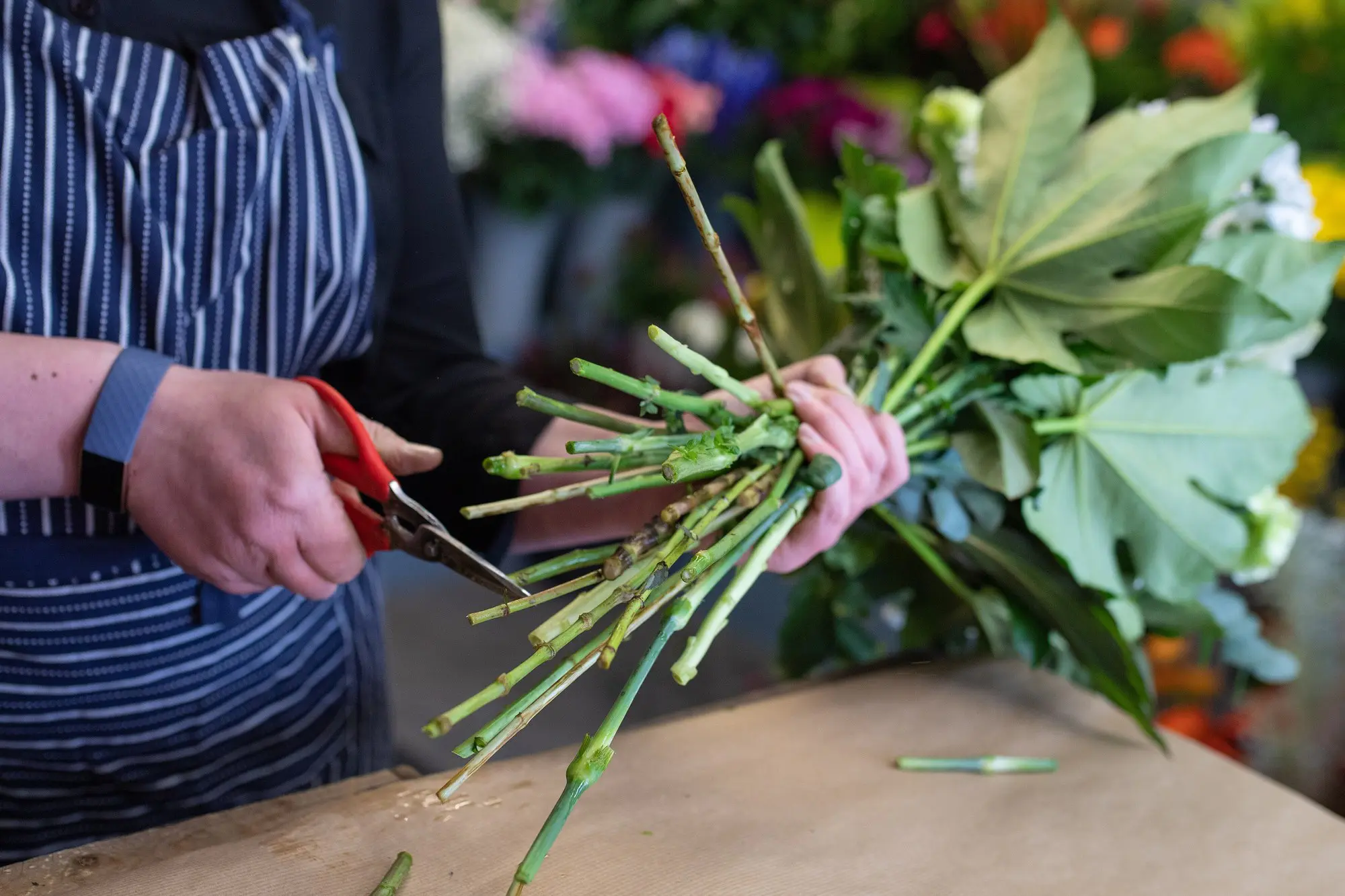
Photo by direct2Florist on Wikimedia Commons, CC BY 2.0, cropped

In short: most florists in Australia qualify through the Certificate III in Floristry (SFL30115), usually as a paid apprenticeship that takes about 3 years full time. You don’t legally need a qualification to work as a florist, but it is the industry standard.
Are you looking at becoming a florist? Do you even need to do a floristry apprenticeship any more? We often get asked how to become a florist by people who can’t find the right information online. So put on your comfy pants and grab a drink of your choice, because we’ve put it all in one place.
A career in floristry can take you through a wide range of experiences, from training on the job to studying a certificate or diploma. A strong foundation of practical experience plus formal training is recommended.
Try It First
Floristry is a fun and rewarding career, but like most jobs it has its ups and downs. The first thing to do is get some work experience or complete a short course to see if you enjoy the work.
Work experience is one of the best ways to find out. Visit your local florist and ask if you can help out for a few hours to learn the ropes. You may not be paid and you may get the boring jobs, but it’s the experience and the feel for the workplace you’re after.
A Certificate II in Floristry or a short floristry course is another good way to test your skills. Short courses are plentiful, and most providers offer an introduction to floristry that should help you decide.
If you’re in Victoria, see our guide to floristry training in Victoria. If you’re in NSW, see floristry training in NSW.
No time for a course or work experience? The internet is your friend. There are thousands of free how-to tutorials. Buy some basic floristry tools, grab some flowers, such as one of our daily bouquets, and start practising.
Floristry Training Pathway
These are the current national floristry qualifications, from entry level to design leadership:
| Qualification | Current code | Typical role |
|---|---|---|
| Certificate II in Floristry (Assistant) | SFL20125 | Floristry assistant working under supervision |
| Certificate III in Floristry | SFL30115 | Florist (the apprenticeship qualification) |
| Certificate IV in Floristry | SFL40125 | Senior florist |
| Diploma of Floristry Design | SFL50125 | Senior floral designer, often with a business or team lead role |
The Certificate II, IV and Diploma codes were updated in August 2025 (they replaced SFL20115, SFL40115 and SFL50115). The Certificate III is still SFL30115.
Floristry Apprenticeship
The traditional way to become a florist is to find work in a florist shop, perhaps through work experience first, and then have your employer sign you up as an apprentice. A floristry apprenticeship is still an excellent way to go if you can find a florist to take you on.
As an apprentice, you enter a training contract with your employer and a registered training organisation. An Apprenticeship Connect Australia provider can help you find an employer, sign the contract and explain the support available.
Here are a few advantages of a floristry apprenticeship:
You earn while you learn, on the job and in training
You don’t need to have finished high school
Apprenticeships are competency based, so you can finish earlier if you master the skills
You can start a school-based apprenticeship while still at high school
Government support and incentives may be available
The Certificate III training is usually low-cost or subsidised for apprentices, depending on your state
The Australian Apprenticeships website has the latest information on everything to do with Australian apprenticeships.
Without a Floristry Apprenticeship
Perhaps you already work in the floristry industry, or somewhere else entirely. You can complete the Certificate III in Floristry through a registered training organisation in around one to two years, and then work as a qualified florist.
Find providers near you in our guides to floristry training in Victoria and floristry training in NSW.
A few advantages of not doing a traditional apprenticeship:
It may be easier to get a job in floristry than an apprenticeship
You can keep working full time in your existing job and study part time
The pay rate is usually higher than an apprentice’s
You can become qualified in around a year, depending on your course
Is Floristry a Good Career?
It can be, if it suits you. The upsides: it’s creative, hands-on and makes people happy, and with experience you can move into wedding and event work, design, or your own studio. The downsides: early starts at the flower market, a lot of time on your feet, cold rooms and wet hands, and very long days around Valentine’s Day and Mother’s Day.
Pay starts modestly and grows with skill and responsibility. Florists are generally covered by the General Retail Industry Award. Check the Fair Work Ombudsman’s apprentice and trainee pay rates for current figures.
Do You Really Need a Qualification?
To become qualified or not? That depends on where you want to take your floristry career. Training is the best way to learn new skills, so a certificate in floristry can only help. Studying a certificate as well as working in a florist shop will give you the best preparation for a future as a florist, or even running your own business.
Floral Designer Path
If you have the skills and want to become a floral designer, look at the Diploma of Floristry Design, although you may need the Certificate III and IV first.
Qualified but No Experience?
A certificate doesn’t guarantee you a job in a florist shop. Most florists hire the person with the best skills, attitude and experience. If you can whip up a stunning arrangement and show you know your way around a shop, you have a good chance.
Starting Your Own Floristry Business
This is another way to become a florist without a formal qualification. Our co-founder Nadina, for example, has a degree in archaeology but learned everything about floristry on the job, 7 days a week. Find out how she became a florist.
Personal Experience From Other Florists
These florists share their experiences of getting into floristry, which will help you know what to expect:
Storm Emin, article by The Guardian
Simeon Pollak, article by The Sydney Morning Herald
For inspiration from the top of the industry, see today’s most influential floral designers.
The Bottom Line
If you want to become a florist but aren’t sure it’s for you, try a couple of short courses or practise your own arrangements with online tutorials before you commit.
A certificate in floristry is an advantage, but you should also get experience working in a florist shop or through an apprenticeship to give you the best skills for the future. Flowers Across delivers flowers across Australia, and we love seeing new florists come into the industry.
Love flowers but not sure floristry is the job? There are many other careers in the flower industry, from growing flowers and foliage to breeding, propagation and wholesaling.