In short: floriography is the language of flowers: the Victorian custom of sending coded messages through the choice, colour and arrangement of flowers.
Photo by Alexander Bassano on Wikimedia Commons (Public domain)

What Is Floriography?
Floriography (from the Latin florus, flower, and the Greek graphein, to write) is the art of communicating with flowers. Each flower, and sometimes each colour, stood for a feeling or a message, from love and friendship to disdain and even a declaration of war. A carefully chosen posy, or “tussie-mussie”, could say things that polite society wouldn’t allow you to say out loud.
A Short History of Floriography
Jump back in time to when Queen Victoria reigned over the British Empire. The world was changing faster than ever before, Australia was a young colony on the other side of the world, and etiquette dictated what you could and could not say in polite company.
This was the age of the stiff upper lip, so sharing your feelings openly wasn’t the done thing. With more “new-rich” families eager to climb the social ladder, following etiquette was more important than ever. Serving three vegetables with an entrée, for example, would immediately reveal how unworthy you were, since anyone who was anyone knew an entrée was never served with more than two.
So when Victorians wanted to express their true feelings, they encoded them, so that casual eavesdroppers would be none the wiser. Their code was floriography.
Where the language of flowers came from
No one knows exactly when floriography began. It is usually traced to the Ottoman court, and it’s thought to have reached England early in the 18th century, through writers such as Lady Mary Wortley Montagu, who described Turkish “love letters” made of objects and flowers. But it wasn’t until the Victorian era that it really came into its own.
Some flowers had meanings long before then. Shakespeare wrote of the romance of the rose, and the red and white roses of the Houses of Lancaster and York gave their name to the Wars of the Roses.
A handful of flowers didn’t give you much vocabulary, though, especially if you wanted to say something other than “I love you”. So Victorians turned to floral dictionaries: books listing hundreds of flowers and their meanings.
Kate Greenaway’s Language of Flowers
One of the best-loved of these dictionaries is The Language of Flowers by Kate Greenaway, first published in 1884 with her own illustrations. It’s now in the public domain, so you can read it for free.
Photo by Kate Greenaway on Wikimedia Commons (Public domain), cropped

Download the Language of Flowers by Kate Greenaway
With 88 pages of definitions, you can be confident that whatever you want to say, there’s a flower for it. Different dictionaries sometimes gave the same flower different meanings, so the meanings below come from Greenaway’s book.
Flower Meanings Table
Here are the Victorian meanings of some popular flowers, and where to find them today.
For more on colour, see the meanings behind every colour of rose, or find your birth month flower.
Messages You Could Send
Here are some of the more surprising messages from Greenaway’s dictionary, to get your creative juices flowing.
Feeling romantic?
Don’t give someone a big head if it’s not warranted. If the person of your affections is a divine beauty, the flower you want is the American cowslip. If they are only a modest beauty, use Trillium pictum instead.
And if you want to express your love for someone, send them the ambassador of love: the cabbage rose.
Photo by APictche on Wikimedia Commons, CC BY-SA 4.0, cropped

If the target of your desires is the perfection of female loveliness, include a Justicia flower. If your mind is in the gutter and you hope the recipient feels the same way, send an African marigold, which means vulgar minds.
African marigold meant “vulgar minds” – Photo by David J. Stang on Wikimedia Commons, CC BY-SA 4.0, cropped

Finally, if you want to win someone’s heart through guilt, try the laurestina, which carries the message I die if neglected.
Feeling friendly?
Is there someone you care about in a platonic way? The acacia is a solid choice, since it means friendship. Add Iceland moss if you want to wish them continued health.
And to show a friend you hold them in high regard, send spiderwort and woodbine, which mean esteem, not love and fraternal love.
Spiderwort meant “esteem, not love” – Image by leoleobobeo from Pixabay
Want to reject someone?
Receiving coded flower messages from an unwanted suitor? Start by making your indifference clear with mustard seeds. (It’s unknown whether the number of seeds matched the size of your indifference.) If that isn’t clear enough, double up your refusal with a striped carnation.
If you feel some nastiness is warranted, express your disgust with a frog ophrys, then bid them farewell with a Michaelmas daisy.
When you want to bid someone farewell, the Michaelmas Daisy is the flower you want – Image by fudowakira0 from Pixabay
Feeling insulting?
Is a coded insult the only safe way to express your dislike for someone? If your feelings can be summed up as hatred, basil is the herb for you. If animosity is closer, get your hands on some St John’s wort.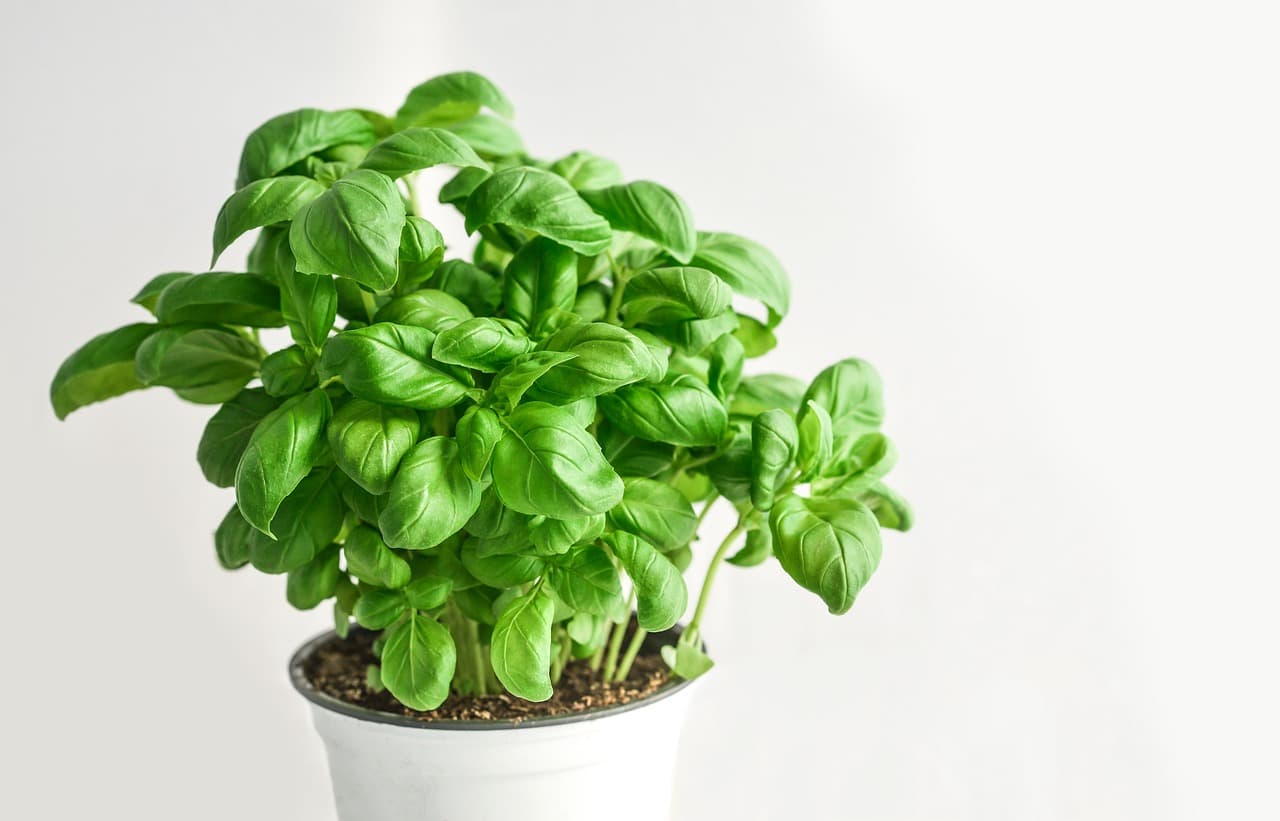
Image by monicore from Pixabay
If you’ve been rejected with mustard seeds, striped carnations and frog ophrys, you could retort that they’re the queen of coquettes anyway, by sending Queen’s rocket. Or send a Japan rose if you believe beauty is their only attraction.
Somewhat random feelings
Don’t fit any of the categories above? There are flowers for you, whatever you feel about someone or the world in general. Do you dislike people in general? Wolfsbane communicates misanthropy. Happy to admit you’re over the hill? Meadow saffron means my best days are past.
And if you happen to be a dictator tired of declaring war the old-fashioned way, send your enemies a wild tansy: I declare war against you. If the war doesn’t go your way, you can always extend an olive branch, a symbol of peace.
If you receive these then it’s time to mobilise the army – Image by Henryk Niestrój (Arcaion) from Pixabay
How Victorians Sent a Flower Message
It wasn’t only which flowers you chose. According to Victorian floral etiquette, how a flower was given could change its meaning too:
Hand: a flower offered with the right hand meant “yes”; with the left hand, “no”.
Upside down: a flower handed over upside down meant the opposite of its usual meaning.
Ribbon: a ribbon tied to the left referred to the giver, and to the right, the person receiving it.
Combinations: several flowers together could form a whole sentence, so a single posy might carry a detailed message.
It was a playful code as much as a secret one, and part of the fun was decoding a posy with your own floral dictionary in hand.
The Language of Flowers Today
Few of us send secret messages with mustard seeds any more, but the language of flowers lives on. It shapes wedding bouquets, where brides choose flowers for their meanings, and the gifts we give, usually through colour: red for love, yellow for friendship and white for sympathy. Many cultures have their own flower traditions too, such as the marigolds of Mexico’s Day of the Dead.
And some flowers have stories of their own, without any dictionary: see these flowers that don’t look like flowers.
Say It With Flowers
We’ve barely scratched the surface. With a floral dictionary and a good florist, the sky’s the limit. Send a romantic bouquet that says what you can’t, or choose birthday flowers with a meaning that suits the person you love.