When you want to add colour or charm to your garden, there are plenty of flowers that can do the job. However, when you’re considering the ideal plant for your space, remember that there are certain options that can be harmful, not only for your pets but also for your loved ones.
These top 10 poisonous flowers can cause dangerous effects, from skin irritation, allergies, and nausea to irregular heartbeats, kidney failure, and cardiac arrest. So, if you plan on cultivating or adding them to your floral arrangement, make sure you handle these blooms with care.
In short: some of the most poisonous garden flowers are oleander, monkshood, angel’s trumpet, foxglove and lily of the valley, and several of them are common in Australian gardens. If you suspect poisoning, call the Poisons Information Centre on 13 11 26.Warning:If you have children and/or pets around the house, it’s not advisable to plant any of the flowers in this list. While some of them may seem safe to grow in the garden and harmless, they can be highly toxic and can have fatal effects.
1. Oleander
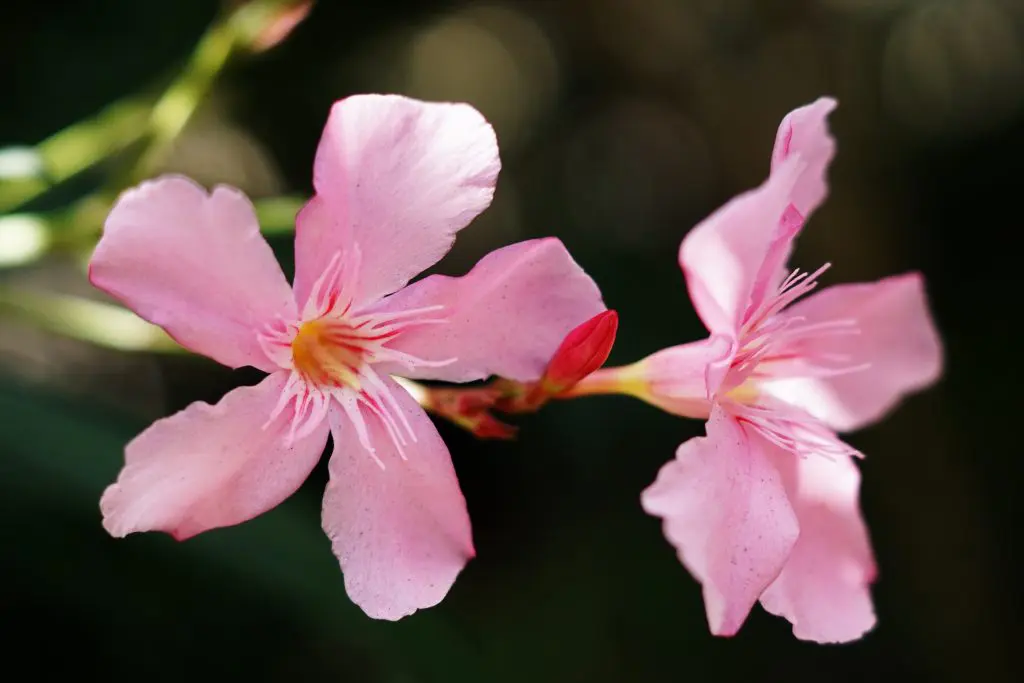
Image by wirestock on Magnific (formerly Freepik)
Naturally growing into the shape of a rounded shrub, oleander plants have dark green, dense foliage, making them ideal as borders for gardens. Additionally, they produce clusters of red, white, or pink flowers that emit a sweet, enticing scent.
While the beauty of oleanders is well-loved, it’s considered among the top 10 most poisonous flowers. They contain toxic cardiac glycosides such as oleandrin and neriine. When ingested, these flowers can affect the digestive, cardiovascular, and nervous systems simultaneously. Without proper intervention, a person or pet can experience seizures, tremors, dizziness, and eventually, death.
Planting, Care, and Handling Tips for Oleander
Since oleanders are ornamental shrubs, many gardeners still plant them despite their toxicity. Whether you’re growing them or simply adding them to a flower arrangement, make sure you wear gloves because the sap of oleanders can also cause skin and eye irritation.
Usually, it’s easier to purchase an oleander bush and start from there. However, if you’re taking this approach, make sure that the plant is already at least a year old and has a straight, robust central stem.
You can let your oleander grow into its naturally round, bushy shape, but you can also train it into becoming a single-stemmed or multi-stemmed tree that can be as tall as about 6 metres.
2. Belladonna or Deadly Nightshade

Image by NoName_13
Since the Roman era, belladonna has been known to be toxic and often used to poison enemies. While the reddish-purple and tubular flowers of belladonna are wonderful to behold, their berries are the deadliest part of the plant.
Because belladonnas contain tropane alkaloids (atropine and scopolamine), when ingested, they can affect the nervous system and paralyse gastrointestinal muscles. They can also cause a dry mouth, flushed skin and a racing heart. Initial symptoms of poisoning include pupil dilation and hallucinations. Eventually, it can cause respiratory failure that may lead to death.
Handling Tips for Belladonna
While you can buy belladonna seeds and cultivate them yourself, it’s not advisable to have the plant in your garden. Belladonna berries are quite shiny and appetising, inviting people to have a taste.
Moreover, if nightshade plants happen to grow randomly in your yard, the best course of action is to remove them. When doing so, make sure that most of your skin is covered by wearing gloves, long pants, long sleeves, and boots. It’s also advisable to wear a full-face respirator or goggles to ensure you have enough protection.
Additionally, make sure to remove the plant from its roots to prevent regrowth. Once you’re done, dispose of the belladonna in the bin and disinfect all the tools you used and the clothes you wore.
3. Monkshood

Image by Hans
Also referred to as queen of poisons, aconitum, and wolfsbane, monkshood also resembles another toxic plant, larkspur. All parts of this plant, notably its roots, contain aconitine, which is deadly poisonous.
However, in traditional Chinese medicine, processed monkshood roots are used in herbal remedies. Processing reduces the toxins, but poisonings from these remedies still happen, so never try it at home.
Planting, Care, and Handling Tips for Monkshood
It’s understandable for anyone to want to cultivate monkshood, especially since the larkspur-like appearance can add height and volume to any floral arrangement. However, before you handle monkshood, make sure to wear garden gloves to ensure you have adequate protection.
If you’re growing monkshood, make sure that you use well-draining soil. While it can survive under partial shade and full sunlight, the plant struggles in hot conditions. Also, make sure that the soil is always moist but not waterlogged. During the spring season, it needs even more frequent watering, but once it’s established, it can survive brief periods of drought.
4. Angel’s Trumpet

Image by ignartonosbg
While the name and appearance of angel’s trumpet are ethereal, its effects when ingested are definitely not heavenly. All parts of this shrub or small tree contain significant amounts of tropane alkaloids, including scopolamine and norhyoscine.
In certain Amazonian practices, this plant is used for rituals due to its hallucinogenic effects. However, when abused, angel’s trumpet can adversely affect the autonomic nervous system, including the eyes, digestive system, and heart. While blurred vision, dilated pupils, and delirium are the usual side effects of ingesting this plant, without proper intervention, it can put a person into a coma or even cause death.
Planting, Care, and Handling Tips for Angel’s Trumpet
As long as you are aware and wary of the fatal effects of angel’s trumpet, this plant can be a nice, decorative addition to your garden. Additionally, this perennial plant is relatively low-maintenance, requiring only occasional watering during its early stages.
Also, it’s best to plant angel’s trumpet during the spring season to give it time to become more established before summer. At the same time, remember to use a well-draining soil that’s rich in organic matter and place it in an area that receives direct sunlight for at least six hours.
5. Azaleas

Image by Tina Xinia
To humans, azaleas can be fairly harmless, especially when ingested in small amounts. However, for cats and dogs, eating a few leaves can be dangerous and even fatal.
Azaleas belong to the genus Rhododendron, and honey made from the nectar of some rhododendrons, known as “mad honey”, can cause dizziness and hallucinations. Ancient writers record that in 67 BC it was left for Roman soldiers near the Black Sea, in what is now Turkey, who were attacked while they were sick. It may not be as dangerous as other plants in this list, but you should still be careful if you want to have it around your garden.
Planting, Care, and Handling Tips for Azaleas
When planting azaleas, do so during the cooler seasons and choose an area that gets partial sun. Also, use well-draining soil mixed with organic matter and make sure that the top of the root ball remains exposed.
Because azaleas have shallow roots, they can be sensitive to waterlogging. If you overwater the plant, the root may end up rotting or developing certain diseases. However, to avoid leaf curl, wilting, or brown foliage, make sure to increase watering during dry or hot spells.
6. Water Hemlock

Photo by Williammehlhorn at English Wikipedia on Wikimedia Commons, (Public domain), cropped

Found along marshland and banks of rivers, pools, and streams, water hemlock is considered to be among the most poisonous plants in Europe and North America. Its toxin, cicutoxin, can cause seizures and convulsions. What’s more, the effects can manifest within 15 minutes of ingestion.
Don’t confuse it with poison hemlock (Conium maculatum), the plant famously linked to the death of Socrates. It is a different species, it is just as dangerous, and it grows as a weed in parts of Australia.
Most of the time, people accidentally ingest water hemlock because they misidentify the plant. Moreover, it looks a lot similar to Queen Anne’s Lace, which is why it’s important to know the difference between the two. For example, Queen Anne’s Lace has bristly, hairy stems. On the other hand, water hemlock’s stems are smooth and have purple splotches.
Handling Tips for Water Hemlock
While water hemlock may have the same appeal as Queen Anne’s Lace, it’s not advisable to cultivate it. Even if you don’t ingest it, brushing up against the plant can cause skin irritation.
So, if you encounter this plant, it’s best to avoid it. However, if for some reason, they grew in your garden, you should remove them. Before you do so, make sure to wear protective clothing, a mask, and gloves.
Instead of pulling the plant, dig it out from the taproot or use glyphosate treatment to kill it. Once you’ve discarded the water hemlock, make sure to wash your hands with soap. Also, continue to monitor the area to ensure that there’s no seedling growth.
7. Castor Oil Plant

Image by manfredrichter
Also known as castor bean, the castor oil plant features red, spiky flowers and star-shaped leaves with reddish, lobed segments. While touching its flowers, leaves, and sap can cause skin irritation, what makes this plant dangerous is the ricin found in its seeds.
Several studies have been conducted on ricin as a potential chemotherapeutic agent for treating various cancers. However, in popular culture, it’s widely recognised as a poisonous substance. Purified ricin is so toxic that a dose of just a few milligrams could be fatal to an adult.
Planting, Care, and Handling Tips for Castor Oil Plant
While castor bean is highly toxic, it is the very same seed from which you can get the oil that is primarily used as a laxative or skin moisturiser. Once cooked, dried, pressed, and refined, the oil is rid of the poisonous ricin. For this purpose, people continue to cultivate castor plants.
If you’re planning to grow castor oil plants, choose a windless, warm location that gets full sun. Since brushing against the plant can cause skin rashes, ensure that you’re wearing gardening gloves and that your skin is covered. Also, opt for well-draining soil that’s rich in nutrients and humus. Moreover, make sure to water the plant frequently while it’s still young. However, once it becomes established, it can survive with minimal care.
8. Autumn Crocus
Also referred to as meadow saffron and naked lady, autumn crocuses (Colchicum) are not true crocuses. The genus includes many species from Europe, western Asia and the Mediterranean, and many of them flower in autumn, hence the name “autumn crocus”. What’s more, this plant is quite lovely, with pink, purple, or white flowers singularly produced atop long, tubular stems.
While autumn crocuses are beautiful to admire, it’s worth noting that all of their parts are poisonous. Moreover, the highest concentrations of their toxic alkaloids can be found in their seeds and flowers. When ingested, the autumn crocus can cause multiple organ failure. What’s more, it only takes 40 mg of a concentrated dose of the plant’s toxins to cause fatal effects to a 50 kg person.
Planting, Care, and Handling Tips for Autumn Crocus
As long as you’re aware of the dangers of ingesting autumn crocuses, it’s generally safe to have them in your garden. When you decide to grow them, make sure you choose a moist, sunny, and wind-protected area. Also, use nutrient-rich, moist, and loamy soil to ensure they have the ideal growing environment.
If you want to see the blooms by autumn, plant the corms during the summer months. Additionally, make sure to place them around 10 cm deep in the ground to prevent dehydration.
What’s great about autumn crocuses is that, aside from reproducing via seeds, they also propagate via daughter corms. So, eventually, they will create a carpet of flowers in your garden bed.
9. Foxglove

Image by wirestock on Magnific (formerly Freepik)
Foxglove is a biennial herb that natively grows in Western Asia, Europe, and northwestern Africa. While its enchanting beauty easily adds a whimsical flair to any garden, it contains cardiac glycosides such as digitalin and digitoxin, which can have harmful effects. For example, your skin can absorb the toxins when you touch the plant, causing allergic reactions.
Moreover, ingesting the cardiac glycosides of a foxglove can cause heart disruptions such as muscle contractions and changes in heart rate. For the same reason, this plant is also used as medicine, specifically for correcting heart problems. However, it’s not advisable to self-medicate because outside the ideal dose, it can cause vomiting, hyperkalaemia, and cardiac arrhythmias.
Planting, Care, and Handling Tips for Foxglove
When you’re growing foxglove plants, it’s ideal to purchase them in nursery pots. However, if you want a bit of a challenge, you can also plant them from the seed and wait a full year before they bloom.
Make sure to grow your foxglove plants in a location that gets full sun to partial shade. Also, opt for slightly acidic, well-draining soil, especially since this plant is susceptible to crown rot. While you need to keep the soil moist, avoid overwatering it because doing so might cause fungal disease. At the same time, add about 2–3 cm of well-rotted mulch to provide adequate nutrients for your foxglove.
10. Lily of the Valley

The fresh, green fragrance of a lily of the valley is the perfect representation of spring’s arrival. What’s more, the delicate, bell-shaped flowers of this plant have long been associated with royalty, love, and purity.
Lily of the valley may have adorned the bridal bouquets of Kate Middleton, Grace Kelly and, in 2025, Selena Gomez, but this dainty flower is highly toxic. Like foxglove, the lily of the valley also contains cardiac glycosides. Ingesting its berries, flowers, and even foliage may cause headaches, vomiting, blurry vision, and irregular heartbeat.
Planting, Care, and Handling Tips for Lily of the Valley
If you have a shaded garden or you live near woodland areas, you may be able to successfully cultivate lily of the valley. While some direct sunlight will not bring harm to the plant, it will need protection from the harsh sun during the afternoons. So, if it gets particularly warm in your area, you need to grow your lily of the valley in a shaded area.
Lily of the valley can survive in various soil types, especially clay soil. However, it particularly likes acidic to neutral soil pH. Moreover, make sure to keep the soil moist but avoid overwatering to the point that it becomes soggy.
5 Safer Alternatives for Families
If you have kids or pets running around your garden, you should think twice before growing any of the top 10 most poisonous flowers we mentioned in this article. However, if you’re worried about sacrificing the beauty of your garden, you can opt for flowers that are safe to eat. The five below are safer choices for families with children. Not all of them are pet-safe, so check our list of 15 pet-safe flowers for cats and dogs too. Besides, aside from being a feast to the eyes, some of these blooms can be quite tasty too! You can use them as garnish, toss them into your salad, or even use them as decorations for cakes.
1. Sunflowers
When you’re growing sunflowers in your garden, you’re hitting two birds with one stone. Aside from brightening up your place, these flowers can also give you seeds that you and your kids can snack on. Even when not yet fully grown, you can cook the sunflower buds and treat them like artichokes. They taste great when you toss them in the pan with butter and garlic.
2. Pansies and Violas
Aside from being pretty symbols of love and remembrance, pansies and violas are also edible flowers that are typically used as garnish or dessert décor. If you’re planning to grow them in your garden, make sure you do so during cooler months, as these flowers do not thrive under hot weather. If you plant them directly in the ground, they can propagate by themselves, as these flowers have the ability to self-seed.
3. Nasturtiums
Nasturtiums are widely known for their bright red, orange, and yellow flowers that resemble trumpets. What’s more, these edible flowers have a touch of sweetness and are packed with vitamin C. Aside from its blooms, the stems and leaves of nasturtiums are edible, and if properly prepared, the seeds can be used as caper substitutes.
4. Marigolds
Many species of marigolds are edible, and their petals can add a subtle spicy or citrusy flavour to dishes. Besides, these colourful flowers are easy to grow and maintain, making them the ideal summer addition to your garden. While marigolds are the quintessential symbol of the Day of the Dead, their long-lasting blooms can easily brighten any space. If you have pets, keep them out of reach: Tagetes marigolds can cause mild stomach and skin irritation in cats and dogs (Pet Poison Helpline), while pot marigold (Calendula) is listed as non-toxic by the ASPCA.
5. Lavender
Aside from adding a woody, sweet scent to your garden, lavender flowers are also edible. You can infuse them in honey or use them to flavour cookies, muffins, and cakes. When you cultivate them, they can also attract pollinators such as butterflies and bees. At the same time, their purple colour can add a calming touch when used as border plants or ornamental shrubs. Lavender is not one for pet owners, though: the ASPCA lists it as toxic to cats and dogs, usually causing nausea and vomiting.
Get Non-Toxic Flowers Delivered
While it can be tempting to cultivate oleanders, angel’s trumpets, and other highly toxic flowers, they pose a serious risk for children and pets. However, you don’t have to sacrifice the beauty of fresh blooms for the safety of your loved ones.
At Flowers Across, you’ll find a wide range of pet-friendly flowers, including sunflowers, roses, gerberas, and snapdragons, among many others. What’s more, you don’t have to toil and sweat just to enjoy these captivating flowers. All you need to do is order from our website, and we’ll have the carefully arranged bouquet delivered right at your doorstep.
Browse the collections at Flowers Across today, with same-day delivery when you order before the daily cut-off. If you have cats, avoid lilies: read why lilies are deadly to cats. For a wider list of dangerous plants, see poisonous plants and flowers around the world and in Australia.
If you think your pet has eaten a toxic plant, call your vet or the Animal Poisons Helpline (1300 869 738) straight away. For people, call the Poisons Information Centre on 13 11 26 (24/7, Australia-wide).