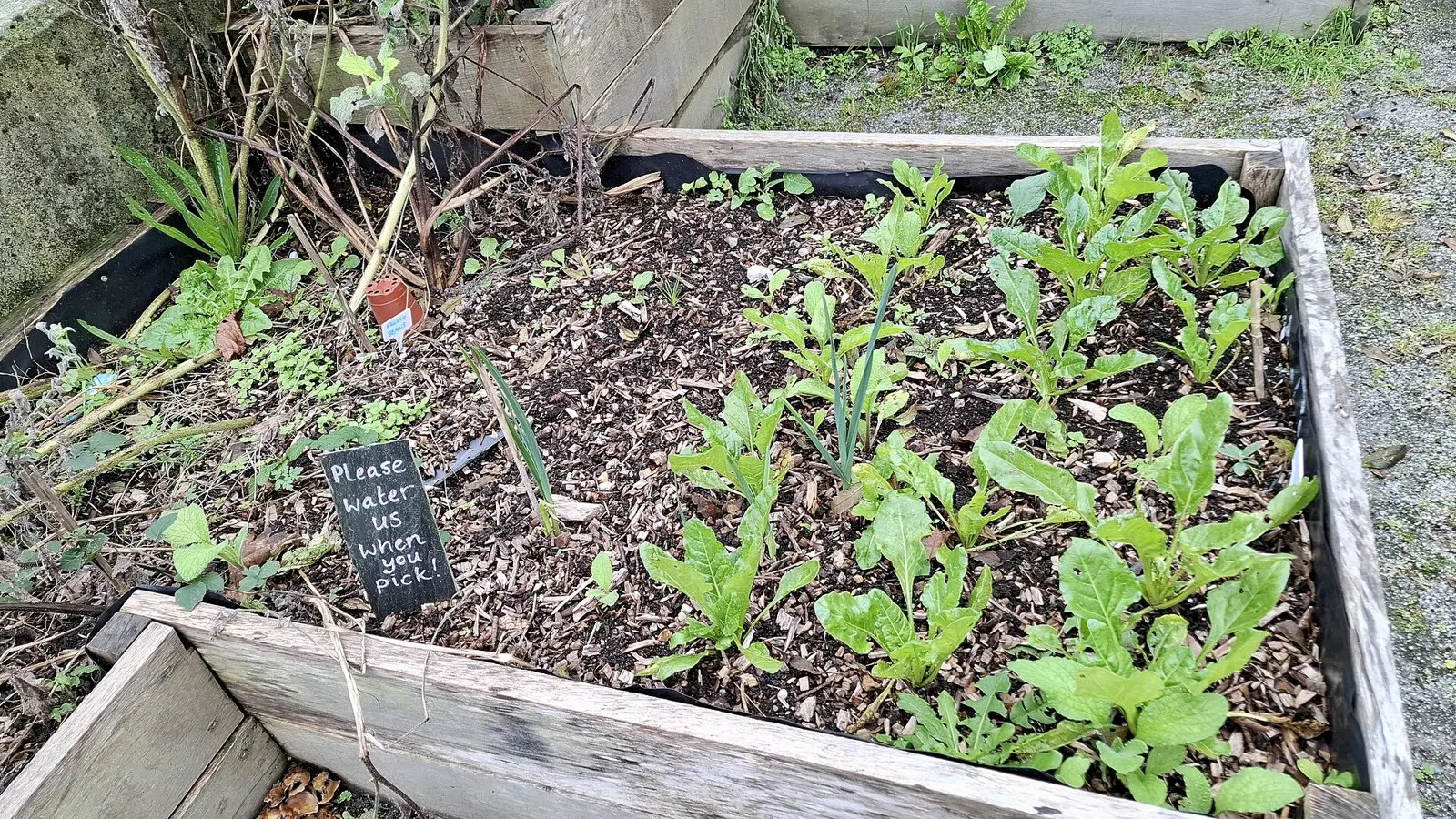
Photo by Ciara Ní Riain on Wikimedia Commons, CC BY-SA 4.0

Updated Nov 2026
Sydney’s community gardens include long-running favourites such as Glebe, Kings Cross, Paddington and Addison Road, where locals share plots, compost and harvests. Most welcome new members for a small annual fee, and many hold regular working bees you can join to get started. We checked every garden in this guide in October 2026 and updated their details.
There is no experience quite like gardening. Digging your hands in the earth, planting seeds, and seeing nature come to life. It’s a transformative experience for the body, mind, heart, and soul.
Gardens not only transform spaces but also rejuvenate communities. The first community gardens can be traced as far back as the late 1800s, and they really started to gather momentum in Australia in the 1970s. Today there are hundreds of community gardens around the country.
Benefits of A Community Garden
We reached out to Naomi Lacey who is the president of CGA (Community Gardens Australia). Naomi shared some of the incredible benefits to participating in a community garden:
Improved physical and mental health
Increased consumption of organic fruits and vegetables
Reduction of organic waste to landfill
Increasing community connectedness
Provision of green spaces
Reduction of food miles due to increased consumption of local food
Cooling the urban heat sink
Contributing to community cohesion and welfare
Food security is becoming more of an issue with the rising cost of living and depression and isolation within our cities is affecting more and more people each year. Community gardens are a way to alleviate these stresses, learn more about food, connect with the community and bring joy into your life. Get involved in your local garden today! They would love to have you join them!
Naomi Lacey, President CGA
Community gardens are a great place for people to get in touch with their food, serve the community, and socialise with like-minded people. They also help to reduce the distance from farm to table, reducing our carbon footprint. So let’s explore some of the community gardens thriving around Sydney.
Inner West
Glebe Community Garden
Established in 1990, the gardeners at this long-standing community garden use all-natural methods to grow their produce. Including composting their own fertiliser, harvesting rainwater to water their plants, and prohibiting the use of herbicides and pesticides.
Members of the Glebe Community Gardens are encouraged to grow seasonal crops. This is because seasonal growing is easier on the environment as it utilises less energy, allows for a more varied diet, and is more sustainable. You can also find out more about Australia’s wide variety of native plants here.
Address: 138 Glebe Point Road, Glebe
Gardening times: monthly working bee from 10am
Joining: the garden is currently at capacity, with a waitlist
More info:City of Sydney: Glebe Community Gardens
Newtown Station Kitchen Garden
Tucked away inside the historic Newtown railway station on King Street, the Newtown Station Kitchen Garden evokes a tiny sense of the Harry Potter books. Set up in 2019/2020, it has been run by the Alfalfa House Food Co-op since 2023, and its produce goes to the Asylum Seeker Centre.
Organic and sustainable gardening is at the core of the practices at the Newtown Station Kitchen Garden. Activities such as composting, mulching, companion planting, and worm farming are regularly undertaken. The garden also uses wicking beds to keep its plants well-hydrated while conserving water use.
Address: Newtown Railway Station, King Street, Newtown
Gardening times: volunteers meet Wednesdays and Sundays from 10am; open garden on the third Sunday of the month
More info:Alfalfa House Food Co-op
Addison Road Community Garden
Only 7 km to the southwest of the Sydney CBD is the Addison Road Community Garden, also known as ARCGarden, which has close ties to the wider community and regularly cooks lunch for financially and socially disadvantaged people in the neighbourhood from produce harvested from the garden. Welfare organisations and passersby also have free access to the un-gated garden.
The garden has two 400-litre compost bins that help to keep the soil healthy and nutritious. In addition to grapes, bananas, onions, carrots, and turmeric, members also grow some more unconventional plants, such as sugarcane, passion fruit, and sweet potato. Every year in May, the garden hosts an annual open day where members sell jams, preserves, and pickles made from the garden’s produce to the public.
Address: 142 Addison Road, Marrickville
More info:Addison Road Community Garden
Ashbury Community Garden
Featuring a flock of chickens, a hive of stingless bees, and a wide collection of organically-grown fruits and vegetables, the Ashbury Community Garden has been benefiting locals in the surrounding area since it was established in 2010, and recently marked its 15th anniversary. Sustainability is at the core of the garden’s activities, with a rainwater system, recycling programs, and composting.
Based on the grounds of the Ashbury Public School, the community garden has dedicated programs and activities for children that teach them about growing food, sustainability, and looking after chickens and native bees. Australia actually has over 1,700 native bees that contribute to the country’s amazing biodiversity. The garden also houses an outdoor classroom where children get to cook food with ingredients sourced from the garden.
Address: corner of Trevenar and Ettrick Streets, Ashbury (in the grounds of Ashbury Public School)
More info: contact City of Canterbury Bankstown about its community gardens
City and Eastern Suburbs
Kings Cross Community Garden
Covering 250 square metres of land, the Kings Cross Community Garden is an inspiring example of areas being repurposed and utilised for greater community benefit. Formerly an abandoned car park, this garden is now home to over 60 different types of plants. These plants include herbs, seasonal vegetables, fruit trees, and edible and ornamental plants. Edible flowers are delightful ingredients to include in your food. They can be used in a variety of ways as a garnish or key part of a dish. Check out this great article to learn more about ways that you can incorporate edible flowers into your dishes.
Organic gardening is at the centre of this community garden’s growing practices. The site is open to the public at all times, with everyone in the neighbourhood welcomed to use the herb bed. Members, though, have the extra advantage of sharing all of the garden produce. Members also have access to a number of special items that aren’t available in the shops.
Membership is $40 a year, and the garden committee can consider a reduction for people who are strapped for funds.
Address: Lawrence Hargrave Reserve, 9a Elizabeth Bay Road, Elizabeth Bay
Gardening times: Saturdays 8–10am and Sundays 4–6pm (3–5pm in winter)
Membership: $40 a year
More info:kingscrossgarden.org
Millers Point Community Garden
Flourishing and thriving since 2017, the Millers Point Community Garden is regularly bursting with bountiful herbs and vegetables that include cucumbers, capsicum, lettuce, broccoli, rocket, eggplants, and peas as well as mint, chives, parsley, and fennel.
The garden is run by an active and vibrant group of volunteers who grow everything organically and compost all kitchen and garden waste in a worm tower. They also use a water-wicking system for their garden beds to ensure sustainability. Socialising is also a key part of this gardening group’s goals and so they organise an annual Spring barbecue where produce from the garden is also enjoyed.
Address: 17 Argyle Place, Millers Point
Rose Bay Community Garden
The 1,200 square metre site of the Rose Bay Community Garden buzzes with all kinds of life from chickens and native bees, to frogs and butterflies in their own beautiful flower garden. A water tank installed to capture rainwater runoff takes care of all the animals’ watering needs as well as that of the seedling area.
A host of fruits, vegetables, herbs, and flowers, which are shared among members, are grown on the site and there’s a CarbonCycle composter that regularly provides nutrient-rich soil.
Address: end of Manion Avenue, Rose Bay
Gardening times: working bees on Sunday afternoons
More info:rosebaycommunitygarden.org
Paddington Community Garden
Formerly an empty quarry and rubbish tip, Paddington Community Garden currently has almost 40 thriving plots and 65 gardeners happily planting, harvesting, and maintaining the garden.
Committed to conservation and sustainability, the site has two large tanks for collecting rainwater and a pond to capture stormwater. In addition to installing a minimum of one compost bin at each plot, the garden also has in place a solar panel system for pumping water around the site.
Some of the wide range of vegetables, fruits, and herbs grown in the garden include beetroots, eggplants, lettuce, cherry tomatoes, broccoli, basil, rosemary, ginger, bananas, and pawpaw.
Address: Trumper Park, end of Quarry Street, Paddington
Membership: $50 a year; applications open 1–30 June
More info:paddingtoncommunitygarden.org.au
South Sydney
Discovery Point Communal Garden
If you live along Princes Highway in Wolli Creek and would like to try your hand at growing your own fruits, herbs, and vegetables, pay a visit to the Discovery Point Communal Garden. The garden utilises water-wicking beds to keep plants quenched and happy throughout the growing season. They are mindful of conserving water and maintaining healthy soil.
Officially opened in 2019, the Discovery Point Communal Garden is open to all residents living in the Discovery Point apartments and the surrounding area. But paying members are able to access a compost bin. The garden’s location next to the historic Tempe House also gives residents a chance to get out of the surrounding high-rise apartments. This is their time to connect with the soil and plant the seeds that will grow a new community network.
Address: 1 Princes Highway, near Tempe House, Wolli Creek
Gardening times and contact: via the Discovery Point Communal Garden Facebook group
North Shore and Northern Beaches
Henley Green Community Garden
Did you know that there was such a thing as purple cauliflower? That is one of the many delightful vegetables that you will come across at the dynamic Henley Green Community Garden.Occupying half of an unused bowling green, the members of this community garden have grown at least five different types of potatoes plus an abundant variety of vegetables, herbs, and fruits, including strawberries, basil, chives, zucchini, beetroots, okra, and artichokes.
Careful about the quality of inputs they put into their produce, the community garden members make their compost using the 18-day method recommended by the Head of the Permaculture Research Institute of Australia. Members share in the harvest and every three months they organise the Henley Green Growers and Artisans Market where produce from the garden, along with crafts, food, and other items, are sold.
Address: 2A Crown Street, Henley (Hunters Hill)
Gardening times: Tuesdays 9:30–11:30am, Fridays 9–11am and Sundays 3–5pm
More info:Henley Green Community Garden
Baringa Bush Community Garden
Designed to provide ample access to gardeners of all ages and mobility, the Baringa Bush Community Garden is a beacon of inclusion in the Northern Beaches suburb of Seaforth. It has over 26 member households who regularly pitch in to grow a wide variety of organic herbs, vegetables, and ornamental flowers and members regularly organise information-sharing sessions for the public about organic gardening.
Opened in 2013, the Baringa Bush Community Garden has at least 16 vegetable beds and holds an annual Spring Gala where produce, jams, seedlings, and plants from the garden are sold.
Address: Baranbali Avenue, Seaforth
Gardening times: monthly working bees
More info: contact Northern Beaches Council about its community gardens
Beyond Sydney: regional NSW
The East Albury Community Project Garden
Affectionately known as Teacup Garden, the East Albury Community Project Garden is a thriving green space filled with a large variety of vegetables. This garden has potatoes, parsnips, spring onions, baby carrots, pumpkin, and capsicums. You may also find a few pollinators buzzing around the purple rosemary and mint flowers.
Overseen by a warm and welcoming group of gardeners with a can-do attitude, Teacup Garden was initiated in 2016. It has continued to grow from strength to strength. Produce from the garden is typically shared among the gardeners. They occasionally choose to pickle them, prepare them in a lovely home-cooked meal, or sell them at the Albury Wodonga Farmers Market.
All residents of Old East Albury are invited to get involved, and suggestions on what to plant in the new season are always welcome.
Address: Broad Street, East Albury
More info:TEACUP Gardeners on Facebook
Lennox Community Garden
Founded in 2015, the Lennox Community Gardens officially broke ground on their half an acre plot in 2019 after finally securing a lease agreement. It is home to a variety of well-known fruit trees, including blue java bananas, sugarcane, passion fruit, and orange sherbet mangoes, and some not so well-known, such as rollinias, tromboncino, canistels, sapotes, and chempejack.
Community-centred in philosophy and practice, the garden is open to all community members at all times and gardeners usually leave any surplus produce on a table in front of the shed every Thursday and Sunday after the working bees. There is also a specific raised bed area just for children to encourage their interest and enjoyment in gardening.
Membership costs $30 a year for adults. Members share in the harvest and get access to the garden’s workshops and resources.
Address: Ocean Breeze Reserve, Lennox Head
Gardening times: working bees Thursdays 8:30–10:30am and Sundays 2–4pm
Membership: $30 a year for adults
More info:lennoxcommunitygardens.com.au
How to join a community garden
Start by visiting a garden during a working bee, when members are on site and happy to chat. Ask about membership fees, waitlists for individual plots and how much time members are expected to contribute. Many gardens also share communal beds, so you can get involved even if there is a waitlist for your own plot. Your local council’s website is a good place to find gardens near you.
Community gardens are excellent places to increase your access to fresh and organic foods, get some physical activity, and enhance your mental health. To learn more about growing your own food, check out our in-depth guide to organic and sustainable gardening, which covers everything from planning your garden and what to grow to making compost and controlling pests naturally.
Looking for flowers to brighten a Sydney garden party or say thanks to a fellow gardener? Check out Flowers Across Sydney and order early, before the daily cut-off, for delivery.