
In short: in Australia, Christmas falls in summer, so our festive flowers mix northern classics (poinsettia, amaryllis, holly) with natives that bloom in December, such as NSW Christmas bush and Christmas bells.
As soon as the calendar turns to the festive months, we’re instantly transported to the holidays, especially since classic Christmas flowers like poinsettias and hollies can be seen everywhere. While the symbolism and rich history of these traditional blooms endure, people have become more open to exploring modern floral designs for their holiday decorations.
From using native flora to adding non-conventional colours like metallics and nudes, contemporary flower arrangements can also add festive cheer to yuletide celebrations.
Christmas Flowers in Australia
Many classic Christmas flowers come from the northern hemisphere, where Christmas falls in winter. Here, December is the start of summer, and some of our best-loved natives flower right on cue. Here are the Aussie favourites to look out for.
NSW Christmas Bush
NSW Christmas bush (Ceratopetalum gummiferum) has small white flowers in spring. After flowering, the sepals swell and turn bright red in December, just in time for Christmas. It’s a much-loved cut flower in Sydney and lasts well in a vase.
Christmas Bells
Christmas bells (Blandfordia species) have red and yellow bell-shaped flowers that appear in early summer, mainly on the east coast. Wild plants are protected, so look for them from growers and florists.
Christmas Lily
In Australia, the “Christmas lily” is usually a white Lilium species, such as L. longiflorum or L. regale, which flowers in December. Its scent and big trumpet flowers make it a festive favourite, but lilies are highly toxic to cats. Even the pollen or vase water can cause kidney failure, so keep lilies out of homes with cats. If you think your pet has eaten a toxic plant, call your vet or the Animal Poisons Helpline (1300 869 738) straight away.
WA Christmas Tree
The Western Australian Christmas tree (Nuytsia floribunda) lights up the bush with masses of orange flowers from about November to January. It’s a root parasite that can’t be grown in a pot, so you’ll see it in the wild rather than at the florist.
Natives for the Christmas Table
Kangaroo paw, flannel flower, protea, banksia and gum leaves all make striking summer centrepieces. Browse our native flowers, or read about Australian state and territory flowers for more local inspiration.
Now, back to the classics. What are the traditional blooms that represent the holiday season around the world?
1. Poinsettias

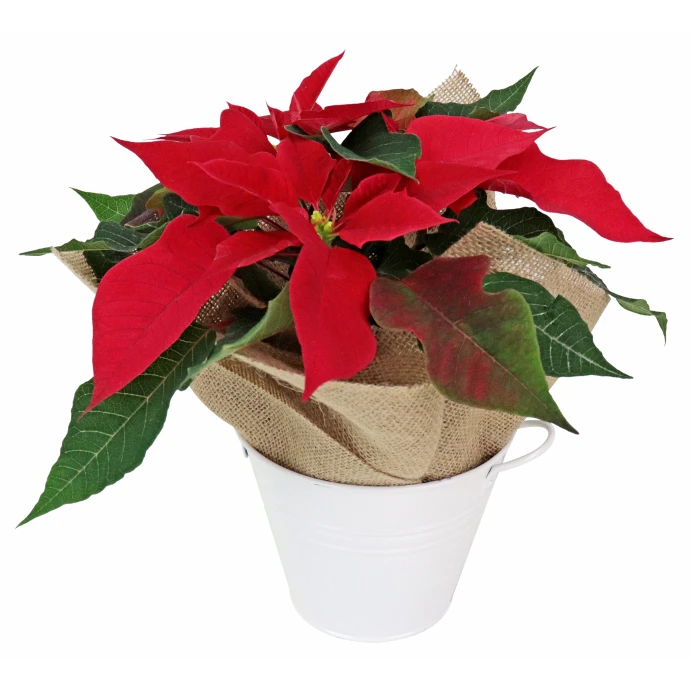
With its striking red and green leaves, poinsettias are probably the most popular flowering plant associated with the holidays. At a quick glance, the red leaves may appear like flowers, but they actually form a structure called a “bract.” The flower of this plant is the small yellow cluster that you see in the middle of the bract.
Poinsettias are among the few flowering plants with decorative foliage that natively bloom in Central America during winter seasons. Long before Christian settlers arrived in the region, the indigenous inhabitants were already using poinsettias as part of their religious practice.
When the Christians arrived, they adapted the symbolism of the plant to their own spiritual beliefs. This is in an effort to convert indigenous people to Christianity. In the 17th century, Franciscan friars started using poinsettias to decorate altars and nativity scenes, calling the plant the “Christmas Eve flower” since it blooms during the Christmas season.
For Christians, the striking red hue of the foliage represents the blood of Christ, and in some cultures, the plant symbolises the Star of Bethlehem. However, the early settlers were not the ones responsible for turning poinsettias into a plant that’s widely associated with the yule season.
In 1900, when Albert Ecke emigrated from Germany to the United States and started an orchard and dairy business, poinsettias caught his eye. Since there were not many winter-blooming plants in the area, his family marketed the poinsettias as Christmas plants. Later, his son Paul Ecke Sr. developed cultivation techniques that would allow poinsettias to grow as the compact, potted plants we see widely sold today.
These days, it’s not uncommon to display poinsettias as potted plants on a staircase or along doorways, corners, and even on tabletops. You can also use cut poinsettia stems as ornaments for your Christmas tree.
Pet safety: Poinsettias are mildly toxic to cats, dogs and horses. The milky sap can irritate the mouth and stomach (ASPCA).
2. Holly

Widely recognisable for its prickly green leaves and red berries, the holly plant was part of traditions among polytheistic and Pagan cultures in northern Europe during Roman times. Since its green colour persisted amidst the colourless winter dormancy, people believed that it had protective powers that could ward off ill-fortune and evil spirits. As such, people during this time would adorn their windows and doors with this plant.
In northern England, people also believed that holly leaves could bring prophetic dreams. Before going to bed, young women would place three holly leaves by their hearts to have dreams about their future husbands. Moreover, they would perform this ritual on special nights such as Halloween, Midsummer, and New Year’s Eve.
However, the uses of holly go beyond spiritual rituals for people across Ireland and Britain during ancient times. Since the wooden parts of this plant are pliable and strong, people would use them to make chariot axles and spear shafts. Additionally, holly wood was also used to make whips for controlling horses. Because of the material’s springiness and flexibility, it was ideal for guiding horses without hurting them.
Eventually, Christians adopted this plant to represent Jesus’ act of sacrifice on the cross. The red berries of the plant were widely regarded as a symbol of Christ’s blood. Meanwhile, the evergreen leaves signify life after death, and their sharp edges are also reminiscent of the crown of thorns that Jesus wore.
To this day, holly has become a quintessential symbol of Christmas. It’s not uncommon to see this plant used in centrepieces, wreaths, and other decorative arrangements. Because of its bright red and green colours, holly naturally evokes warmth and joy during the festive season.
Pet safety: Holly berries and leaves are toxic to cats, dogs and horses, and the berries can upset children’s stomachs too (ASPCA).
3. Ivy

In Christmas decorations, we commonly see arrangements featuring both holly and ivy plants. Because of its prickly and upright appearance, holly represented masculinity. Ivy plants, on the other hand, signified female qualities because of their clinging habit and graceful vines. Together, they bring a balanced, evergreen design that brings life to holiday décor.
As with hollies, the use of ivy in certain traditions dates back thousands of years. Because this plant could also stay green throughout the year (even during cold winter months), people believed that it had magical properties. At the same time, they associated it with the spring season, particularly representing rebirth and eternal life.
Because of ivy’s clinging habit, some cultures also used it as a representation of friendship and marriage. Perhaps that was also the reason why ancient Greeks associated it with everlasting love. Moreover, wedding officiants would present newlyweds with ivy wreaths while bestowing good fortune and fertility upon the union. While ivy was not as popular as holly, it was still used as decoration in festivals held during the winter season.
Eventually, Christians incorporated many pagan practices into their own religious holidays. However, for a time, authorities prohibited ivy for use as décor because of the plant’s ability to grow in the shade. During this period, Christians associated the plant with debauchery and secrecy. Despite that, more people came to accept using ivy in their Christmas decorations. As such, Christians attributed spiritual meanings to the plant, often associating it with Mary to complement holly (Christ).
People usually use ivy vines to create Christmas wreaths alongside holly leaves and berries. However, there are other ways to use it as a décor, including wrapping it along a stairway bannister or moulding it into the shape of a small tree as a table centrepiece.
4. Mistletoe

As soon as the holiday season kicks in, you’ll likely hear songs like “I Saw Mommy Kissing Santa Claus.” Originally sung and recorded by then 13-year-old Jimmy Boyd in 1952, this tune can easily make anyone feel giddy while picturing mistletoe.
Despite its association with kissing, the name ‘mistletoe’ has less than romantic origins. It’s actually a combination of the two Anglo-Saxon words ‘tan,’ which means stick, and ‘mistel,’ which means dung. With birds commonly spreading mistletoe seeds by eating berries and wiping their beaks on trees, people probably came up with this name for the plant.
A hemiparasite, the mistletoe grows on various trees, including oak, willow, and apple trees. It is also said that the practice of hanging a bunch of mistletoe goes back to the ancient Druids, with people believing that the plant has the mystical ability to ward off evil spirits while inviting in good luck. In Norse mythology, mistletoe was the plant that killed the invulnerable god Baldur.
Meanwhile, the earliest record of the tradition of kissing under the mistletoe was from the late 1700s, particularly from the musical comedy “Two to One.” However, the custom appears to have started during the Tudor period when people would use mistletoe to decorate Christmas boughs.
When they published the first book version of “A Christmas Carol” in 1843, it also contained illustrations of kissing under the mistletoe. Since readers well-loved the book, it probably helped popularise the tradition.
These days, mistletoes are part of Christmas decorations, with people commonly tying them with a red bow and hanging them in high-traffic areas like doorways or archways. However, there are other ways to use it in decorations, including draping it over a hallway mirror or arranging the sprigs as centrepieces for dining tables.
Pet safety: Mistletoe is toxic to cats, dogs and horses, so hang it well out of reach (ASPCA).
5. Amaryllis

While not as popular as other classic Christmas flowers, red amaryllis flowers are still loved as holiday gifts. Aside from their festive appeal, these blooms also have a rich history, deep symbolism, and intriguing lore.
The name of this plant stems from Greek mythology. Amaryllis was a young maiden who fell in love with a shepherd named Alteo, who had a passion for flowers. To win his affection and show her devotion, she used a golden arrow to pierce her heart. From her blood, the first amaryllis flower bloomed. This legend is also the reason why passion, beauty, and sacrifice have been associated with the plant.
Because of its perceived sturdiness and obvious height, people from the Victorian period also linked amaryllis with determination and strength. At the same time, this flower signified willpower, love, and ethereal beauty.
One of the reasons why amaryllis became a classic yule flower is that, in the northern hemisphere, it blooms in winter. Here in Australia, it flowers in early summer, just in time for Christmas. Usually, their bulbs start to bloom four to eight weeks after planting, making it easy for gardeners to time them for the holidays. Compared to other houseplants, amaryllis can survive indoors through northern winters, thriving on moderate warmth and indirect light.
Moreover, since the red colour of this flower is seen as a symbol of life and light during the darkness of winter, many cultures use it to brighten their homes. Because they can live beyond the holidays, they can also serve as a reminder of enduring hope and strength.
As mentioned, amaryllis has become part of modern Christmas tradition, particularly as a holiday gift. Anyone who receives this as a present will appreciate not only its festive elegance but also its reliability and ease of care.
Aside from being a well-loved Christmas gift, amaryllis can also serve as a joyful centrepiece for yuletide décor. With its trumpet-shaped flowers and tall stems, it can be an eye-catching piece on dining tables, adding grandeur and warmth to your holiday celebrations.
6. Christmas Roses

Despite their name, Christmas roses are not part of the genus Rosa. A plant species under the genus Helleborus, this clump-forming perennial has stunning white flowers that usually open to as much as 4cm in diameter. Often, the blooms turn green or pink as they age, but if you deadhead the plant, it will continue producing more flowers.
Perhaps one of the most popular historical pieces of information associated with Christmas roses is how they allegedly played a part in Alexander the Great’s death. The name Helleborus comes from the Greek words “hellein,” which means food, and “bora,” which means to kill. Therefore, the name also indicates that this plant can be toxic when ingested.
Legend has it that Alexander the Great unknowingly consumed them through the wine he drank. Because the alkaloids in Helleborus are slow-acting, the poisoning appeared like a prolonged illness.
However, there’s a more charming myth surrounding Christmas roses. According to Christian legend, a shepherdess named Madelon was watching her flock when she saw the wise men pass by, bringing gifts to Jesus. Sadness came over the young girl when she realised that she had no gift for the baby Jesus. However, when her tears fell to the ground, an angel appeared and touched that spot, revealing white hellebore flowers—the perfect Christmas present.
What’s great about Christmas roses is that they can keep on blooming amidst the cold weather when many plants become dormant. Unfortunately, since they’re primarily winter-flowering plants, it’s unlikely to have them around during the holidays in most parts of Australia. However, it’s still possible to grow them in the southern regions of the country during December.
When available, Christmas roses can be a classic addition to your holiday decorations as a reminder of the birth of Jesus. You can either create an elaborate arrangement and use it as a centrepiece, or you can keep it simple and place the flowers in a vase. Whether you have a conventional or modern interior décor, Christmas roses can blend seamlessly.
Pet safety: Hellebores (Christmas roses) are toxic to cats, dogs and horses. Amaryllis bulbs and leaves are toxic to pets as well (ASPCA). If you think your pet has eaten a toxic plant, call your vet or the Animal Poisons Helpline (1300 869 738) straight away.
Classic Elements in Christmas Floral Design
The rich history and tradition associated with classic Christmas flowers are embodied in the festive floral aesthetic. The timeless holiday appeal always comes from the instantly recognisable palette of bright reds, deep evergreens, and pure whites. In fact, you’ll see these hues in classic favourites such as red berries of hollies, the greenery offered by the ivy foliage, and the snowy whites of the Christmas roses.
Classic Christmas flower arrangements are also characterised by intentionally dense texture and form. Often symmetrically structured, these designs can also feature abundant, glossy leaves and foliage to create warmth. Besides, even modern Christmas flowers look back to these elements, typically borrowing these core colours.
For example, our Festive Poinsettia brings this classic charm with its deep green and bright red leaves. With buckets of these lining your staircase or porch, you can add Christmas warmth and joy to your home.
Modern Christmas Flower Design Trends
In contemporary holiday designs, expert florists, including ours at Flowers Across, ensure versatility and creative personalisation. Modern Christmas flower arrangements typically combine the classic festive elements that have been around for centuries with innovative concepts that don’t compromise the season’s spirit.
Contemporary Colour Palettes and Blooms
From distinct Christmas colours like red and green, modern flower arrangements now feature metallic silvers and golds. And from pure white, you’ll also see hues like creamy ivory, pale tones, and champagne. To achieve that glamorous appeal, florists also use deeper shades of reds like deep wine and burgundy.
Our striking Making Red Magic arrangement, for instance, contains red LA lilies and red orchids that add an exotic yet high-impact look to the classic Christmas theme.

You can also see the focus on elegant metallics in pieces like the Preserved Gold Rose Orb. With its golden, preserved rose, this minimalist item can provide a shining accent to your Christmas décor. Additionally, it can last for at least a year, making it the ideal gift or memento for the holidays. Because it comes with a loop, this orb can also be hung as an ornament for your Christmas tree.

Redefined Texture and Technique
While classic Christmas flower arrangements traditionally feature a symmetrical and balanced structure, modern floral designs have transformed texture by embracing surprising visual elements.
In our Christmas Gleam bouquet, for instance, we combine the classic holiday colours by incorporating white snapdragons and red carnations. At the same time, we add texture by incorporating fillers like metallic gold-painted leaves and fluffy cotton balls while wrapping hessian fabric around the bouquet.

For a different textural approach, the Dried Christmas Celebration bouquet features dried and preserved foliage like lush green gum leaves and golden heart palms. What’s more, this arrangement can be an eco-conscious display that requires no maintenance. If you’re planning to give this as a gift, you can bring holiday cheer to the recipient with the added candies in festive wrapping.

Integrating Native Australian Flora into Modern Christmas Flower Arrangements
Another way florists are adding a modern flair to classic flower arrangements for Christmas is by embracing native Australian flora. While European holiday aesthetics remain popular during the festive season, sourcing flowers from different regions in the country gives a distinctly local appeal to Christmas décor.
One of the best examples of this modern approach can be seen in our Brilliantly Native arrangement. Aside from capturing the joyful essence of the holidays, it replaces classic Christmas flowers with colourful, native Australian blooms. With its lush foliage, this arrangement offers a texturally rich and contemporary alternative to the traditional yuletide look.

Classic vs. Modern Christmas Flowers
While both classic and modern Christmas flower arrangements aim to embody a bright and festive spirit, they are still distinct in terms of execution and intent:
Intent: Classic Christmas flowers tend to lean towards a more formal and symmetrical structure while focusing on historical symbolism. On the other hand, modern floral designs for the holidays are more versatile, textured, and unique.
Colour Palette: Traditionally, the most popular Christmas flowers focused on the trio of bright red, deep green, and pure white. These days, modern floral designs include frosty metallics, jewel tones, and even nude colours.
Components: Aside from being symmetrical and dense in form, classic Christmas floral arrangements require traditional plants like ivy and holly. However, modern holiday flower bouquets can be asymmetrical and even minimalist in form. What’s more, they can feature non-conventional flowers like orchids and even native plants like banksia.
Send Christmas Flowers
From the rich history of classic Christmas flowers like poinsettias and hollies to the unique appeal of native arrangements, there are plenty of blooms that can add holiday cheer to your celebrations. Whether you want the familiar colours and symmetry of traditional designs or you’re open to exploring more modern arrangements, the right flowers can tell your unique festive story.
For your floral gifts and décor, browse our Christmas flowers and Christmas gifts, with same-day delivery across Australia when you order before the daily cut-off. Order early for the week before Christmas, when demand peaks.
Looking for more festive ideas? Try our Christmas gift guide or Christmas flowers inspired by classic holiday books.