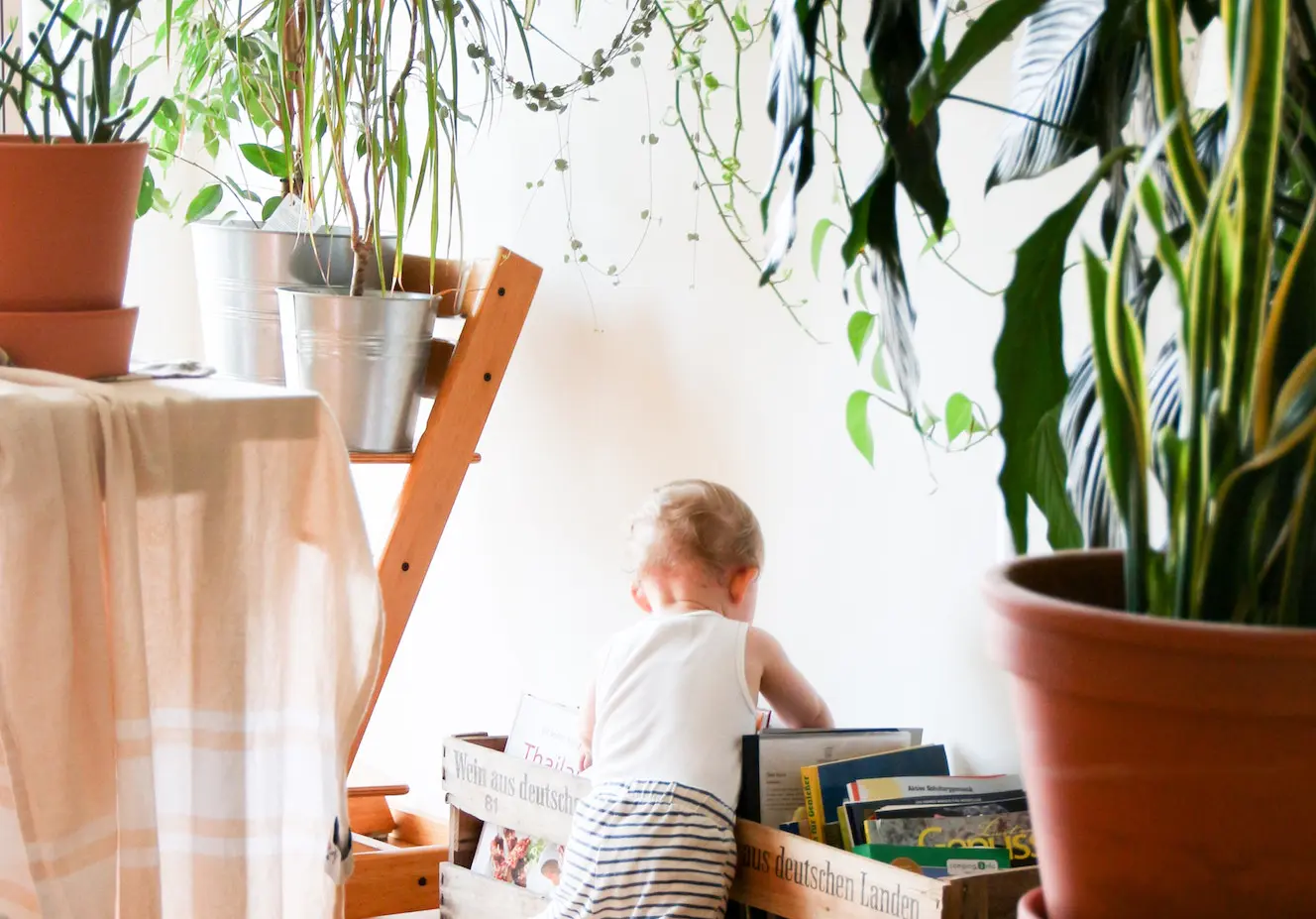
Photo by Brina Blum on Unsplash
Updated Nov 2026
To read the full article go to MyDeal.com.au
Original post by Hania Syed
The safest plants for a kids’ bedroom are non-toxic, low-pollen and easy to care for, such as spider plant, Boston fern, parlour palm, calathea, ponytail palm and African violet. Keep every plant out of reach of babies and toddlers, and leave lilies and other toxic flowers out of children’s rooms.
What Our Florist Recommends
Many parents love adding a soft touch to their child’s bedroom in the form of flowers, but the flowers you opt for must be chosen carefully as some of them can be toxic! Chief Plant Expert Ebony Andrews from Flowers Across Melbourne tells us:
“Lilies should be avoided for kids bedrooms as they are toxic if ingested. While lilies are extremely fun to watch open up and have beautiful colour, they can be dangerous, especially for babies and young children. You should always design a child’s bedroom to be a soothing place for bedtime and the fragrance of lilies can be extremely stimulating. Lilies are best to be avoided if you want your little darlings to get to sleep quickly and stay asleep! As for plants we recommend, the peace lily is perfect as it’s known for its air purifying qualities. However, peace lilies can be toxic if ingested, so be careful when designing with this plant and use for older children’s rooms only.”
Why Add Plants to a Child’s Bedroom?
A few well-chosen plants make a bedroom feel calmer and more natural. Caring for a plant also teaches children responsibility: watering a fern or checking a spider plant for new babies is an easy first job for a young gardener.
Plants won’t replace good ventilation, but green leaves, soft textures and a little routine around plant care can help a room feel like a restful place to wind down at night.
Safe Plants for Kids’ Bedrooms
These plants are generally listed as non-toxic to people by poisons information services, and they cope with indoor light:
| Plant | Why it suits a kids’ room | Care |
|---|---|---|
| Spider plant (Chlorophytum comosum) | Non-toxic, hardy, fun “baby” plantlets | Bright indirect light; water when dry |
| Boston fern (Nephrolepis exaltata) | Non-toxic, soft fronds | Indirect light; keep mix moist |
| Parlour palm (Chamaedorea elegans) | Non-toxic, tolerates low light | Water lightly; avoid soggy soil |
| Calathea | Non-toxic, patterned leaves kids love | Indirect light; humid spot |
| Ponytail palm (Beaucarnea recurvata) | Non-toxic, very forgiving | Bright light; water sparingly |
| African violet (Saintpaulia) | Non-toxic flowering option | Bright indirect light; water from below |
Child-Safe Flowers for a Bedroom
If you’d like cut flowers rather than plants, choose low-scent, non-toxic blooms and keep the vase on a high shelf so it can’t be tipped over. Good choices include:
Roses (remove thorns from stems within reach)
Gerberas and sunflowers, which are bright, cheerful and low-scent
Snapdragons and stock, kept for older children’s rooms
Orchids, such as the moth orchid, which last for weeks with little care
Change vase water every two days, and remove flowers once they start to drop petals so little hands don’t gather them up.
Plants and Flowers to Keep Out of Kids’ Rooms
Avoid lilies, peace lilies near young children, devil’s ivy, dieffenbachia, philodendron, oleander and anything with berries. For the full list, see our guide to poisonous plants and flowers in Australia.
Easy Plant Care Routine for Kids
Set a weekly “plant day” to check the soil with a finger and water only if it’s dry.
Wipe dusty leaves with a damp cloth once a month.
Turn pots a quarter turn each week so plants grow evenly towards the light.
Let older children keep a simple plant diary with photos of new leaves.
Placement and Safety Tips
Put plants on high shelves or hanging planters, out of reach of babies and toddlers.
Use heavy, stable pots that can’t be pulled over, and cover the soil with large pebbles.
Skip strongly scented flowers at bedtime; gentle greenery is more restful.
Teach older children not to eat leaves, and keep plant labels so you can identify a plant quickly.
If a child swallows part of a plant, call the Poisons Information Centre on 13 11 26 (24/7).
Looking for easy greenery? Browse our plants and choose a child-safe variety, with delivery when you order before the daily cut-off.