In short: give African violets bright, indirect light, water from below with room-temperature water, keep them at about 18–24°C, and feed lightly while they flower. They are non-toxic to cats and dogs, which makes them a great pet-friendly houseplant.
African violets are popular plants to grow indoors and are a good way to fill your home with colour.
While they are considered some of the easiest plants to grow, there are still a few things you need to know if you’re going to be growing African Violets successfully.
This guide is designed to take someone who knows nothing at all about African Violets and turn them into competent growers right away.
While you might not be ready to start winning awards (there are many African violet clubs around the world, including in Australia), this guide will put you on the right path to doing that, if you so choose.
So let’s get stuck in!
African Violets 101
African violets, long known as Saintpaulia for reasons that will soon be revealed, are a type of perennial plant native to the mountains of Tanzania and Kenya in eastern Africa.
While they’ve been in Africa for longer than there have been humans, they’ve only recently become popularised as house plants.
The man responsible for this is Baron Walter von Saint Paul-Illaire (hence the old scientific name), a German colonial official who found the plant in 1892 in what is now Tanzania and sent seeds back to Germany. Botanists now classify African violets in the genus Streptocarpus (since 2015), but they’re still sold as Saintpaulia.
How Big Do African Violets Grow?
Generally from 6-15cm tall and about 6-30cm wide. That said, there are a few different species that grow to different sizes.
This means that no matter how much space you have to display your African Violets in you’ll be able to find one that suits.
What Colour Are African Violets?
They tend to have flowers that are purple, pale blue, pink or white, and many have frilled or two-tone petals. Here are some examples: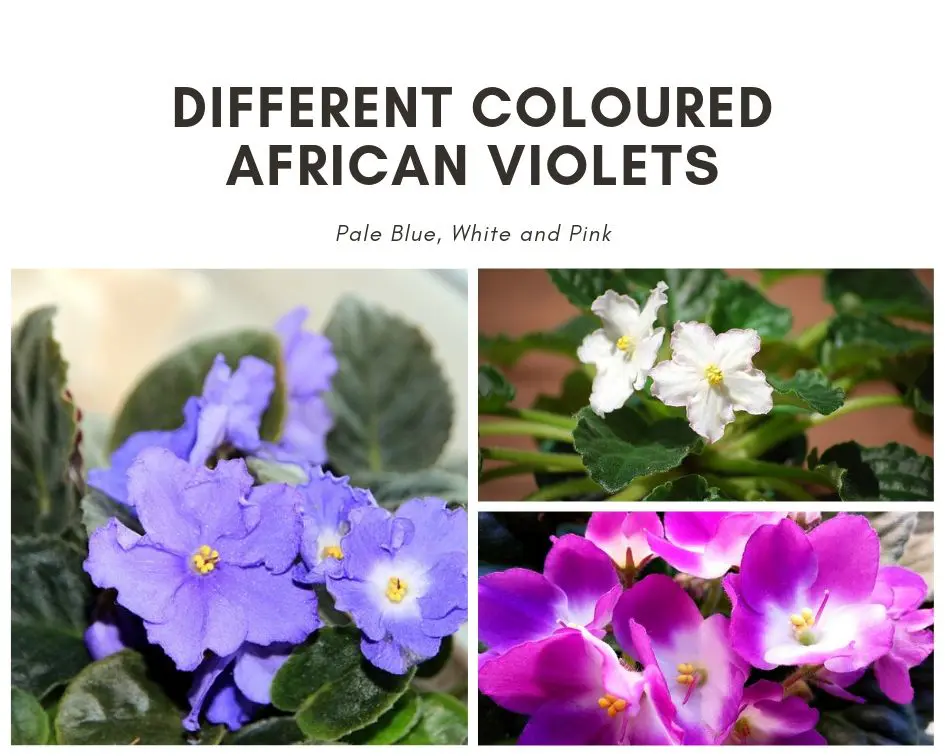
Image by Светлана from Pixabay
Image by Diana Jagitsch from Pixabay
Image by Peter Stanic from Pixabay
How to Grow African Violets
Now that we know a little bit about the flowers, it’s time to talk about techniques for growing them effectively.
Image by Janos Perian from Pixabay
Temperature
When thinking about the environmental conditions most favoured by African violets, you have to think back to their natural environment.
Eastern Africa is warm and so African violets tend to thrive in conditions that are also warm. They do best at about 18–24°C, and growth slows below about 15°C. Keep them away from cold windows in winter and from heaters and air-con vents.
While the plants can suffer if conditions get too warm, consequences are much more severe if the plants get too cold.
Humidity
In their natural environment in Eastern Africa, humidity is quite high. So if you’re going to grow African violets you’ll also need to ensure that your environment isn’t too dry.
Around 80% is what the plants love, which may be hard to achieve in dry, heated or air-conditioned rooms anywhere, but as long as it’s above 50% then you’ll generally do ok. During dry spells, stand the pot on a tray of pebbles and water (with the pot above the waterline) rather than misting the leaves.
You know that low humidity is a problem when buds fail to flower, plant growth is slow and leaves appear brown and dry (they just look and feel unhealthy).
If this becomes a problem for you, you may want to invest in a humidifier for your plants. This is particularly handy if you keep your plants inside and you tend to use a lot of air-conditioning.
Image by Jiří Kouřílek from Pixabay
Light
Getting the light right is important for the health of any plant and African violets are no exception.
What Sort of Light Do African Violets Need?
You’ll want to give them bright, indirect light every day: a bright east-facing window, or a metre back from a north-facing one (in Australia, north gets the most sun).
If your plant doesn’t get enough sunlight then it’s likely that its leaves will turn yellow and shrivel and it might not flower; the plant needs ample light for photosynthesis to occur.
That said, as with everything, there is a balance. Just as too little sunlight can be harmful to the plant, so can too much sunlight.
You know your plant has had too much direct sun if the leaves turn pale, bleached or crisp at the edges. Move it back from the window or behind a sheer curtain.
Image by Ian Lindsay from Pixabay
Watering
African violets require a moderate amount of water to stay healthy. You don’t want the soil they’re in to be dry, but nor do you want it to be completely soaked with water. You want to find the middle point somewhere.
Despite what many people think, overwatering can be just as harmful to the plant as underwatering, so do your best to keep this balance.
The roots of this plant require air to function well, but excess water stops this from happening and it can be harmful to the plant.
When you are watering African violets, keep water off the leaves. Cold water splashed on the leaves causes pale rings and spots, so water from below (stand the pot in a saucer of room-temperature water for 20–30 minutes, then tip out the rest) or use tepid water at the base.
How Often Should You Water African Violets?
The best way to ensure that you deliver the right amount of water to your plants is with the touch test; feel the soil and if it feels dry to the touch, then add some water. Eventually, you’ll get a feel for how often and how much water you need.
Fertiliser
African violets aren’t too fussy when it comes to fertiliser. You can get away with using just about any type that has balanced nitrogen, phosphorus and potassium (or a fertiliser made for African violets). You do need to ensure that the brand you use is water soluble; if it’s not, then the nutrients won’t break down and your plant won’t be able to use them.
Another important consideration is how much fertiliser to use and how often to do it.
Just as with all the other factors here, either too much or too little fertiliser can have harmful effects for your plant.
This can be tricky to figure out, because it depends, in part, on the type of fertiliser you use. The best guideline is to follow the instructions on the packet, feed lightly while the plant is flowering, and watch out for any adverse effects.
Getting African Violets to Rebloom
Remove spent flowers and their stalks as they fade to keep blooms coming. If your plant stops flowering, the usual causes are too little light, a pot that is too big, or no feeding. African violets flower best when they are slightly snug in their pots.
Containers
What makes the best pot for an African violet?
The first thing to consider is the size of your pot relative to the size of your plant. You don’t want to use a pot that is too small, otherwise, you’ll end up restricting the growth of the plant and how well it flowers.
A small pot can also result in messy and unhealthy root systems, so a helpful guide is to make sure that your pot has a diameter of about a third of the entire plant.
Another consideration is to use a pot that is slightly shallower than a normal flower pot. This is because the roots of an African violet plant tend to grow outwards rather than down.
Soil
African violets tend to prefer lighter soils that give their roots room to breathe. Many growers have made the mistake of using really heavy soils and thus halting some of the growth they otherwise would have seen.
A light, free-draining African violet potting mix (usually based on peat or coir with perlite) is ideal. You should be able to find this at your local garden centre.
Image by Sabine Frisch from Pixabay
Pests and Diseases
Sometimes despite your best effort, your plant might get attacked by pests or might get diseased. One thing you can do to prevent the bad stuff from ever taking hold is to disinfect anything that will come in contact with your plant. This means your hands, your pot and any tools that you may use.
Secondly, make sure that you don’t overwater your plants. Doing this can weaken them and also provide a nice environment for nasty things to take up residence. There are some watering guidelines above.
Another thing you can do is to maintain a decent amount of airflow. Some diseases flourish in environments without much air circulation.
If you keep your plants healthy and you keep a regular eye on them, then you can be confident that your plants will stay healthy. And if they do come under attack, you can take appropriate measures to fix them.
Brighten Your Home
African violets are one of the easiest ways to add year-round colour to a windowsill, and they’re safe around cats and dogs (ASPCA lists them as non-toxic). For more ideas, see our guide to indoor plants for Australian apartments, our list of pet-safe flowers for cats and dogs, and safe plants for a kid’s bedroom.
Want some instant colour? Browse our plants and pet-friendly flowers, with same-day delivery when you order before the daily cut-off.