Updated Nov 2026
Yes, one tree really can grow 40 different kinds of fruit, and flower in 40 shades in spring. The “Tree of 40 Fruit” is an ongoing art project by American artist Sam Van Aken, who grafts dozens of heirloom stone fruit varieties onto a single tree. Here’s how it works, when it blossoms, and how you can grow a smaller multi-graft tree in Australia.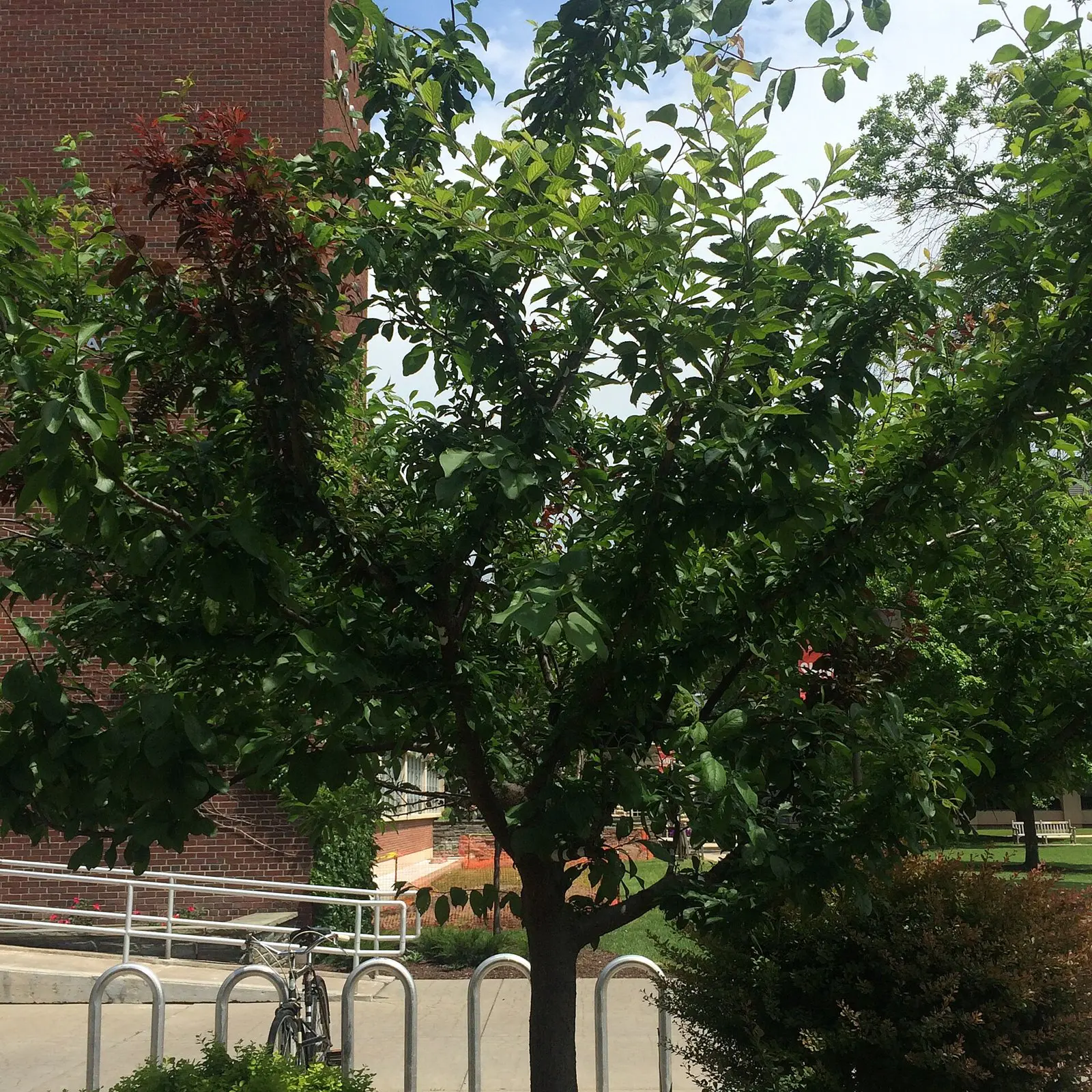
Photo by Lange.lea on Wikimedia Commons, CC BY-SA 4.0

What Is the Tree of 40 Fruit?
Sam Van Aken, an award-winning artist and professor at Syracuse University in New York, created the Tree of 40 Fruit. The project began when he took over an old experimental orchard that was due to close, home to hundreds of native, heirloom and antique stone fruit varieties. Rather than let those varieties disappear, he started grafting them onto single trees.
Each tree now carries peaches, plums, apricots, nectarines, cherries and almonds. Stone fruit was chosen because the varieties are largely compatible with one another, although cherries are a little trickier. Van Aken’s trees have been planted in public spaces, museums and private gardens across the United States.
How Grafting Works
Grafting joins a cutting from one plant (the scion) onto the root system and trunk of another (the rootstock), so the two grow as one. Van Aken uses chip budding: a small chip of bark holding a single bud is cut from one variety and slotted into a matching cut on the host branch, then wrapped until it heals over.
Grafts are made in late summer, when buds are mature and bark lifts cleanly.
The host branch is cut back the following winter so the new bud grows on as its own branch.
It takes several years, and many rounds of grafting, before one tree carries dozens of varieties.
Each branch is tracked on colour-coded diagrams so its age, variety and flowering time are known.
Why Grow 40 Varieties on One Tree?
Supermarkets stock only a handful of stone fruit varieties, chosen for shelf life and how well they travel. Thousands of other varieties exist, many of them heirlooms with better flavour that are slowly disappearing as old orchards are cleared. Van Aken’s trees act as living archives: each one keeps rare varieties growing and in use.
A multi-variety tree also suits a home garden better than a single-variety one. One mature peach tree can produce far more fruit than a family can eat before it spoils. A tree carrying many varieties ripens a few fruit of each type at different times, spreading the harvest across the whole summer.
Van Aken keeps colour-coded diagrams of every tree, so he knows how old each branch is, when it will flower and which variety it carries. He visits each tree a couple of times a year to prune it and maintain the grafts. Without that care, the most vigorous varieties would gradually crowd out the weaker ones.
An 18-year-old grafted peach tree.
Photo by Randy Everette on Wikimedia Commons, CC BY-SA 3.0

When Does It Blossom?
In spring the Tree of 40 Fruit flowers in a patchwork of white, pale pink, deep pink and crimson, because each grafted variety keeps its own blossom colour and timing. The display can last for weeks as early and late varieties open in turn. Through summer the tree then ripens small crops of many different fruits instead of a glut of one, so less goes to waste.
Can You Grow a Multi-Graft Tree in Australia?
Yes, on a smaller scale. Many Australian nurseries sell multi-graft or “fruit salad” trees with two to five compatible varieties on one trunk, such as stone fruit, citrus, apples or pears. They suit small backyards and courtyards, and some are available as dwarf trees for large pots.
Choose varieties that suit your climate zone and flower at similar times for good pollination.
Prune each graft so no single variety takes over the tree.
Keep the tag or a sketch of which branch is which, just as Van Aken does.
Try chip budding yourself in late summer once you’re comfortable with basic pruning.
Popular Multi-Graft Trees in Australia
Fruit salad stone fruit: peach, nectarine, plum and apricot on one tree.
Citrus: lemon, lime, orange and mandarin, ideal for warmer gardens and large pots.
Apples: two to four varieties that cross-pollinate each other, good for cooler climates such as Melbourne and Tasmania.
Pears: European and nashi pears grafted together for a longer picking season.
Plant in full sun with well-drained soil, water deeply through the first summer, and feed in early spring as the blossom opens. Most multi-graft trees start fruiting within two to three years of planting.
If you want to keep pests off your new grafted tree without harsh sprays, see our guide to using flowers instead of pesticides.
Love blossoms but short on space? Browse our indoor and outdoor plants for an easier way to bring something living into your home.